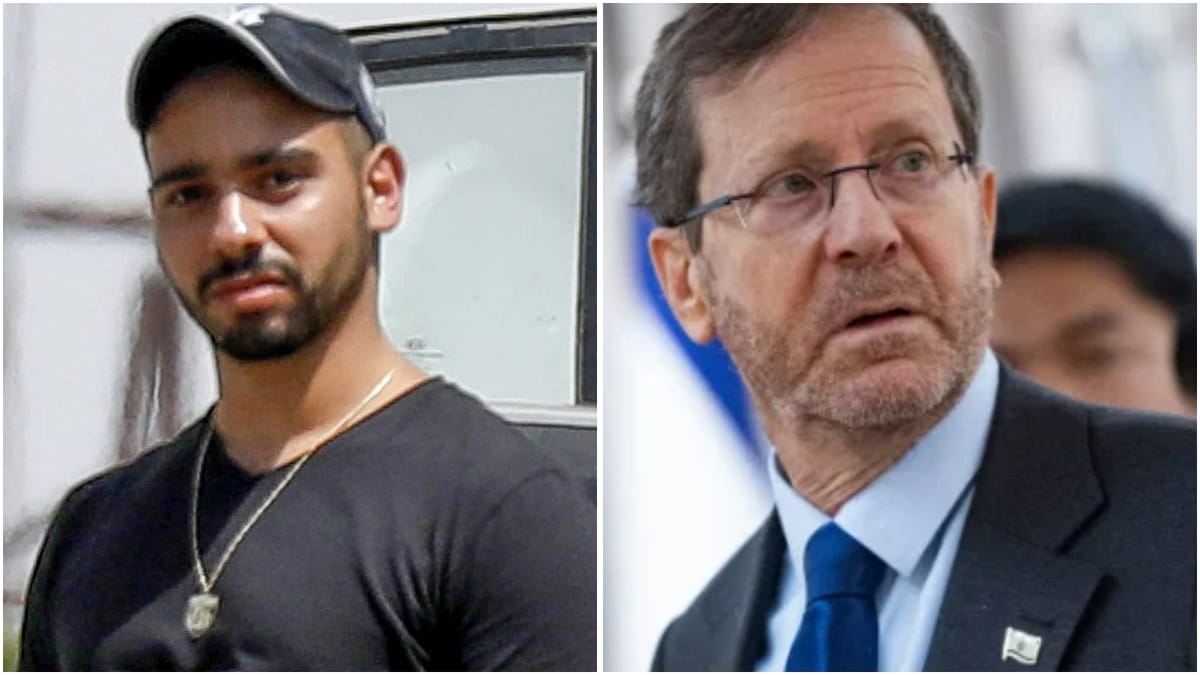
Katz noted in his letter that consideration should be given to Azaria's service as a combat soldier and distinguished combat medic in the Kfir Brigade, the circumstances of the incident that occurred during complex operational activity, and the heavy personal, family, and public price he has paid over the years. He also emphasized Azaria's efforts to rehabilitate himself, establish a family, and reintegrate into the labor market.
The president also took into account the complex medical circumstances that Azaria's family faced during the years since the affair erupted, and to the change that has occurred in Elor Azaria's life since then. Considering this, after a decade has passed, after Azaria bore his punishment and paid his debt to society, and after then-Chief of Staff Lt. Gen. Gadi Eisenkot shortened his sentence, the president believes the time has come to allow him to continue with his life.
The president emphasizes that his decision does not come to challenge or undermine the legal process that took place in the case and does not constitute a renewed examination of it. The president views the role of the military justice system as a vital tool in maintaining the rule of law, the values of the IDF, its principles, and particularly adherence to purity of arms. The president clarifies that the institution of pardon is an institution of mercy; it is not an appellate court. Azaria also clarified in his appeal that he has no intention of reopening the matter.
In light of this, also considering the positions presented on the matter in the past and present by relevant officials, President Herzog accepted the recommendation of Defense Minister Israel Katz to immediately shorten Elor Azaria's criminal record.