Get our mobile app
Download on the App StoreGet it on Google Play

Southern Lebanon

Iranian Officers Trapped in Lebanon Tunnels

Foreign reports claim senior IRGC personnel are besieged in underground fortifications on strategic southern Lebanon ridge, while Israel denies their presence and Tehran issues sharp warnings of retaliation

Lebanon
IDF prepares
IDF prepares (IDF)

Israeli Defense Minister Israel Katz announced this week that the Israel Defense Forces had completed its hold on the security zone in southern Lebanon following the capture of the strategic Ali Taher Ridge. The official statement sounded like the successful conclusion of a complex operation.

Behind that declaration, however, lies a far more complicated picture. A comprehensive investigation by Reuters reveals that inside the fortified underground complex, built with Iranian funding and planning over nearly two decades, more than a dozen members of Iran's Revolutionary Guard Corps (IRGC) are now besieged, including at least two senior officers.

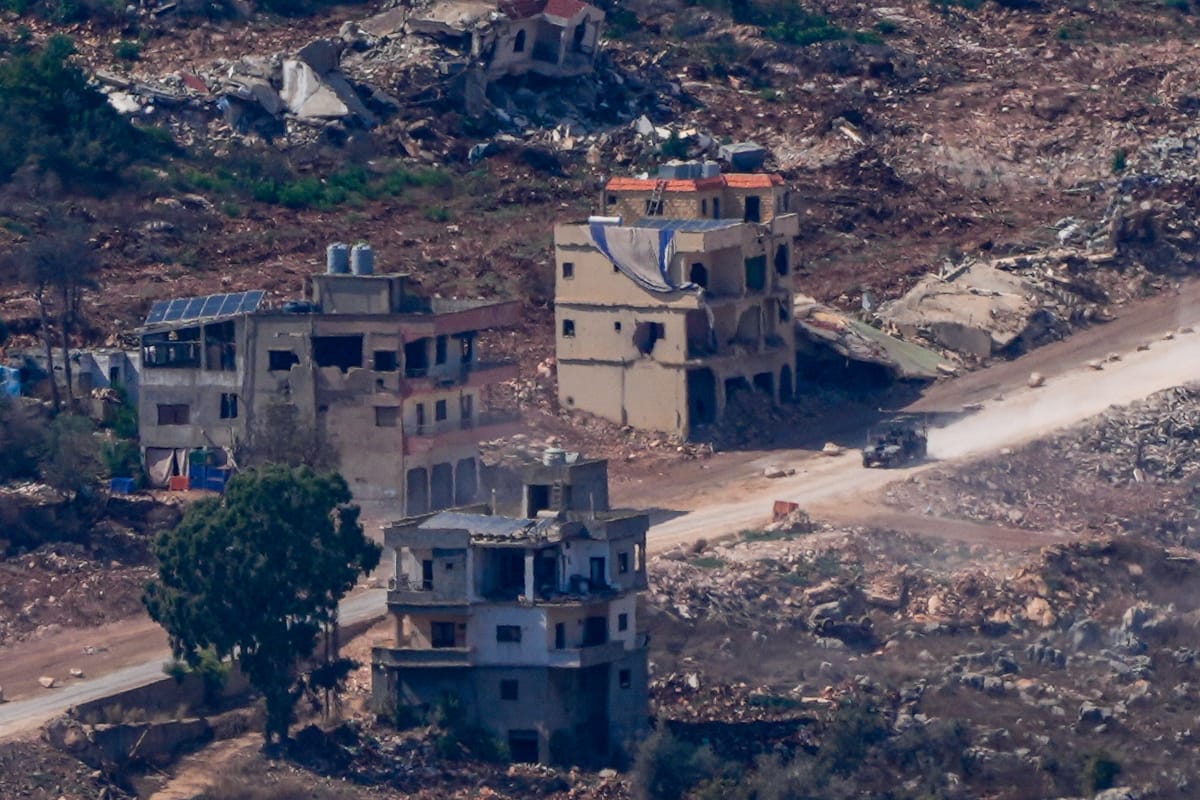
The Ali Taher Ridge rises approximately 600-700 meters above sea level in the Beaufort region, creating a clear geographical divide between the Litani River basin to the east and the Nabatieh plateau to the west. Control of the ridge provides observation and command over major transportation arteries. Hezbollah transformed it into a strategic command position, constructing a massive tunnel network that included command rooms, weapons depots, generators, fighter quarters, and kitchens, infrastructure designed to support prolonged underground stays.

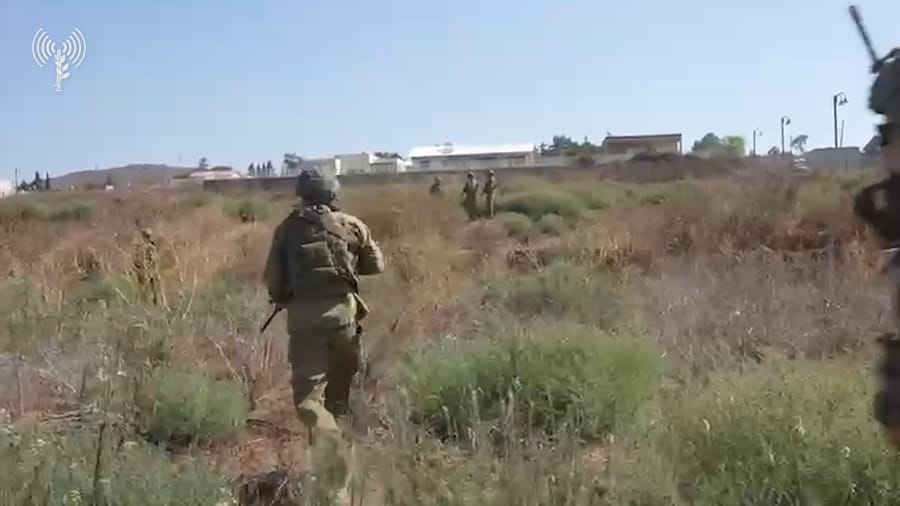
Forces from the IDF's 36th Division have encircled the facility in recent weeks, taking control of the surrounding area and cutting off supply routes. According to reports, dozens of terrorists remain trapped inside alongside the IRGC personnel. Israel maintains that while the tunnels were designed and funded by Iran, it denies the presence of senior Iranian officers during the final siege. Foreign sources, however, insist they were indeed there.

As early as August, Iran conveyed a severe warning to the United States through Oman: any Israeli move on the ridge would trigger a large-scale response from Tehran. That message led to heavy American pressure on Jerusalem and the postponement of a planned assault at that time. Iranian and Hezbollah attempts to send drones carrying food and water also failed, the aircraft were shot down.

Israeli security officials emphasize that extensive portions of the underground infrastructure have already been demolished, heavy casualties inflicted on the militants, and some have escaped. Forces continue tightening the siege and systematically neutralizing what remains, exercising maximum caution.

Defense Minister Katz presented the ridge's capture as "completion of the phase of securing the security zone," and delivered a sharp message to Tehran: an Iranian attack on Israel would free Israel from all constraints, enabling strikes on all of Iran's national infrastructure, both military and civilian, including energy facilities.

Analysts, including researchers from the Institute for the Study of War (ISW), view the incident as a game of mutual restraint. Israel denies direct Iranian presence to preserve operational freedom and avoid being drawn into all-out war with Tehran. Iran, for its part, inflates the incident's dimensions to deter and protect remnants of its "Badr Unit." In Lebanon, critics already accuse Prime Minister Benjamin Netanyahu of exaggerating the ridge's importance for domestic political purposes.

The tactical gain for Israel is clear, control of a commanding ridge that protects Galilee communities, but it also serves as a stark reminder that the campaign in southern Lebanon remains far from complete, and that Iran's threatening shadow continues to hover over every development on the ground.
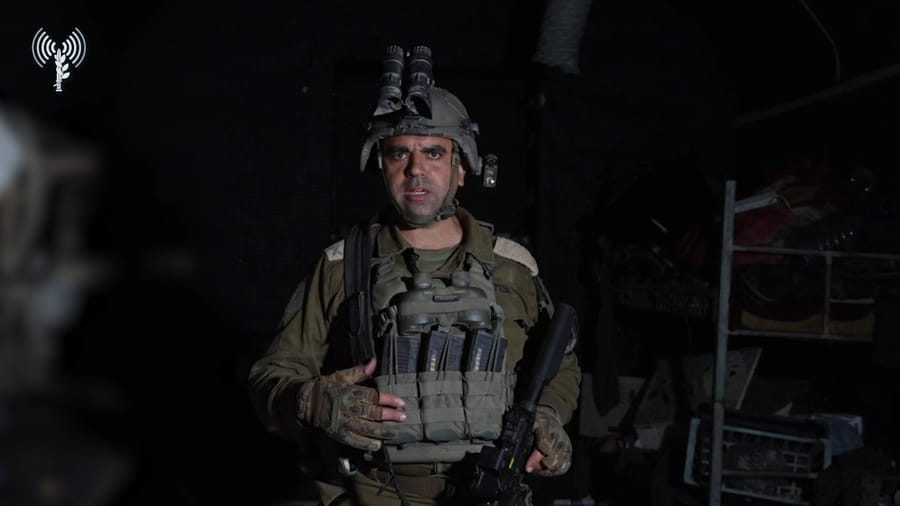

IDF forces, having captured extensive territory south of the ridge, effectively encircled the facility and took control of the surrounding area. Inside the complex, dozens of terrorists are trapped, and with them, according to a foreign source involved in the details who spoke to Reuters, more than a dozen IRGC members, including at least two senior officers.

Defense Minister Katz reported that the complex operation was completed successfully, and that the tunnels, which served as a command center for attacks on IDF forces and Galilee communities, have been completely cleared. "The conquest of the Ali Taher Ridge completes the phase of securing the security zone in southern Lebanon," Katz wrote in his statement. The minister emphasized that after maneuvering to the Litani line, capturing the Beaufort, and establishing IDF presence on the ridge that commands and protects eastern Galilee communities, the decision was made to advance toward the Ali Taher Ridge based on intelligence about Hezbollah command-and-control tunnels at the location.

According to a Channel 12 report, security forces continue the operation at high intensity, tightening the siege on the fortified target with the goal of completely degrading Hezbollah's capabilities in the area and systematically dismantling the "Badr Unit." As part of the operation, engineering and assault forces are neutralizing and completely destroying fortified compounds that were hidden for years.

IDF

Israeli military sources rejected claims of an Iranian presence in the tunnels during the siege and clearing operations, clarifying: "The tunnels were designed and funded by Iran, but the officers were not there."

In Lebanon, critics have already rushed to accuse Prime Minister Netanyahu of "inflating" the ridge's importance for domestic political purposes ahead of the approaching election day, according to reports on the Lebanese channel Al-Jadeed. Meanwhile, Tehran conveyed sharp warnings through Oman that any strike on the compound would trigger a broad Iranian response, and even attempted to send drones carrying food and water in unsuccessful efforts to break the siege, attempts that were shot down by Israel.

Defense Minister Katz delivered a blunt message to Tehran this week at a Rosh Hashanah toast ceremony at the Defense Ministry. "An Iranian attack on Israel will free Israel from all existing constraints on striking Iran," Katz stated. "We will strike all of Iran's national military and civilian infrastructure, including energy infrastructure, and return Iran deep into the stone age and darkness."

The minister noted that the ayatollah regime in Iran is well aware of the price it would pay if it chooses to attack. "The ayatollah regime in Iran knows very well why it has not attacked Israel after we struck them forcefully twice, destroyed the nuclear program, eliminated Khamenei, and severely damaged their strategic capabilities," he said. However, Katz warned of the possibility of desperate measures by the Iranian regime: "There are signs we see indicating that the heavy economic pressure they face and the fear of uprising and the regime's fall could push them toward desperate actions."

Ready for more?

Join our newsletter to receive updates on new articles and exclusive content.

We respect your privacy and will never share your information.

Enjoyed this article?

Yes (20)
No (1)
Follow Us:

Unmissable content


Loading comments...

Also of Interest