
Get our mobile app
Download on the App StoreGet it on Google Play

Defamation Lawsuit

Hostage's Mother Sues Over Defamatory Post

Iris Haim seeks 169,000 shekels in damages after Dov Halbertal published a Facebook post accusing her of exploiting her son Yotam's death for political gain

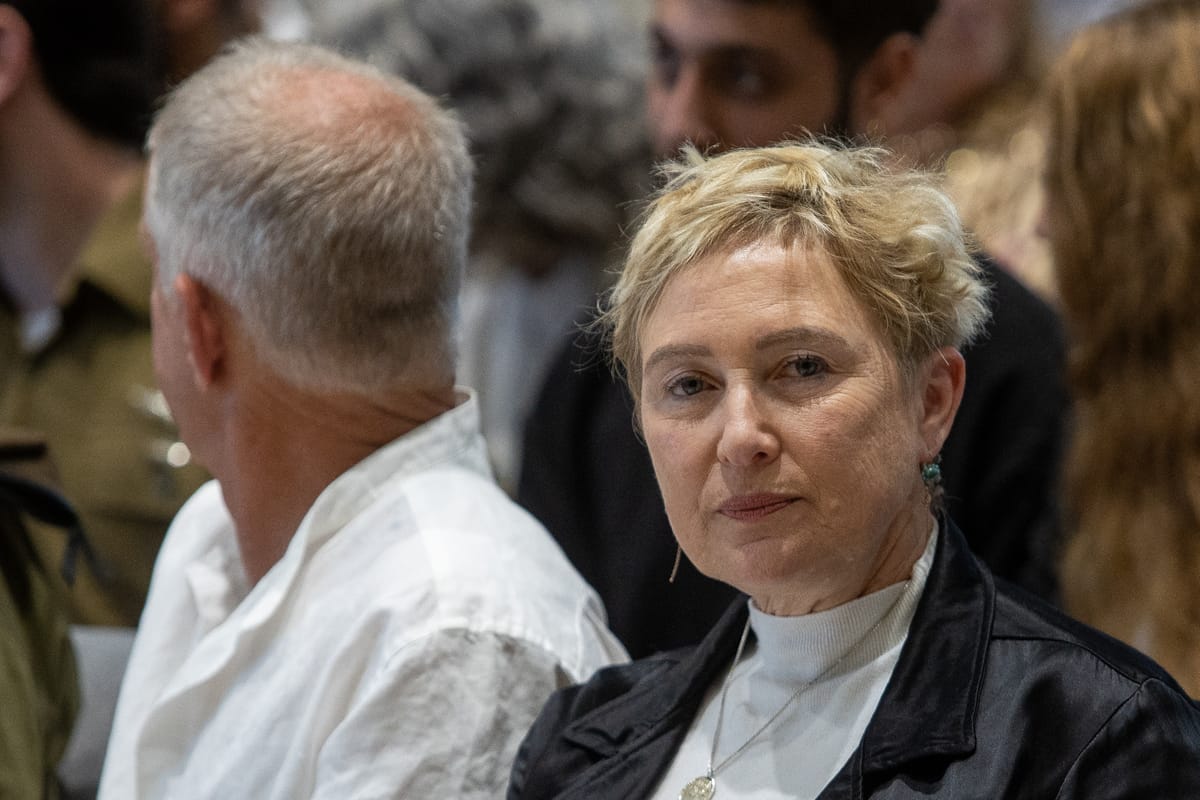
Iris Haim

Iris Haim, whose son Yotam was killed while held hostage by Hamas, filed a defamation lawsuit Monday in Jerusalem Magistrate's Court seeking 169,000 shekels (approximately $47,000) in damages from Dov Halbertal, an ultra-Orthodox publicist and attorney. The suit stems from a Facebook post Halbertal published after rumors circulated that Haim might receive a reserved spot on the Likud party's electoral list.

In his May 10 post, Halbertal launched a scathing attack on Haim, calling her "this despicable woman" and "a fame and publicity seeker who has only been glowing since her son's murder." He went further, claiming "it can be assumed she planned her entire path to politics in advance and is trampling on her son's blood, which granted her worldwide celebrity status." Halbertal concluded with the statement: "On her son's grave she will write: 'How good that you were murdered.' What a favor Hamas did for her."

Haim responded with her own Facebook post clarifying that she had received no offer to join Likud or any other political party. "No one approached me, not from Likud and not from any list or party whatsoever, and even if they do approach me, the answer will be negative," she wrote.

On May 26, Halbertal received a pre-lawsuit warning letter. In response, he did not deny writing the post but claimed that after a day or two he reconsidered the publication, concluded the wording was too harsh, and deleted the post on his own initiative. "I didn't change it, I simply deleted it," he wrote. According to Halbertal, the post had only garnered a few hundred views at that point, and only after Haim's response was a screenshot circulated online and picked up by media outlets. Halbertal also claimed the rumor about the reserved spot was not his invention, saying he had read about it in an article by journalist Anna Barsky in Maariv newspaper.


Halbertal
Halbertal (צילום:Yonatan Sindel/Flash90 )

Halbertal further claimed he suffered severe attacks following the publication, including from within his own community. "I paid a heavy price for publishing the post," he wrote. He offered to publish an additional apology, to meet with Haim, and even to host the family at his home for a Shabbat meal.

Haim's attorneys, Asaf Sharaf and Nili Shatz, rejected his explanations and characterized his response as "a peak of outrageous cynicism." The lawsuit argues that the words were not written in a moment of anger but with awareness and intent to harm Haim. It further contends that even the image attached to the post—showing Haim with a painting of her son Yotam behind her—was designed to intensify the harm and create a "shock effect."

A date for the first hearing in the case has not yet been set.

In response to the lawsuit, Halbertal stated:

"It's time to stop these lawsuits. Today terrible things are written about me on Twitter and I've never sued; it's time to give more space to freedom of expression. I wrote in a harsh manner and I'm aware of that, but is it forbidden to write that a woman is dancing on her son's blood? It's time to eliminate the phenomenon where people are sued for hundreds of thousands of shekels. You can file lawsuits over facts, but not over interpretations—even if they are harsh and biting. There's a matter of principle here concerning freedom of expression, and this is a flawed law that creates silencing lawsuits.

As for Iris Haim, from my perspective I reached a breaking point: an article came out that she was running for Likud and she didn't deny it, so I wrote what I wrote. A day or two later I understood it was too harsh, deleted the post, and thought the story was over.

But then someone took a screenshot, it reached Iris and she published it on her social media—which gave it tremendous momentum and drew harsh responses toward me. If she hadn't responded to it, no one would have heard about it. To sue for a hundred thousand shekels over something like this? She's responsible for it. By the way, I sent her a response in which I apologized, explained that I deleted the post, noted that I understand the grieving father, and invited her to sit together—and suddenly I find myself receiving a lawsuit."

Ready for more?

Join our newsletter to receive updates on new articles and exclusive content.

We respect your privacy and will never share your information.

Enjoyed this article?

Yes (24)
No (1)
Follow Us:

Unmissable content


Loading comments...

Also of Interest