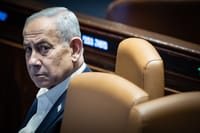
Two opposing approaches have emerged within Prime Minister Benjamin Netanyahu’s inner circle over how to proceed after an election that failed to deliver a clear victory for his bloc, Walla reported on Wednesday.
According to the report, the first approach, identified primarily with members of the Netanyahu family, favors continuing the campaign against the Arab parties, casting doubt on the election results and keeping up attacks on any government that would rely on their support. The second, associated with several of Netanyahu’s advisers, holds that the prime minister must recalculate his course and pursue a national unity government.
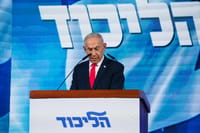
Walla said the tension between the two approaches was clearly visible in Netanyahu’s address at the swearing-in of the 26th Knesset on Tuesday evening. The prime minister sought to project national responsibility and called for unity, but also returned sharply to his warnings against a government backed by the Arab factions, a line he first took in his speech after the exit polls were published. According to the report, political officials viewed the attempt to combine the two messages as unsuccessful.
Following the October 27 election, Netanyahu’s right-wing bloc secured 53 seats while the parties opposed to him won 67. President Isaac Herzog has given Yashar leader Gadi Eisenkot the mandate to form the next government, with a December 6 deadline.
Alongside the debate in his circle, Netanyahu is investing significant effort in keeping United Torah Judaism from slipping away from his bloc, according to Walla.
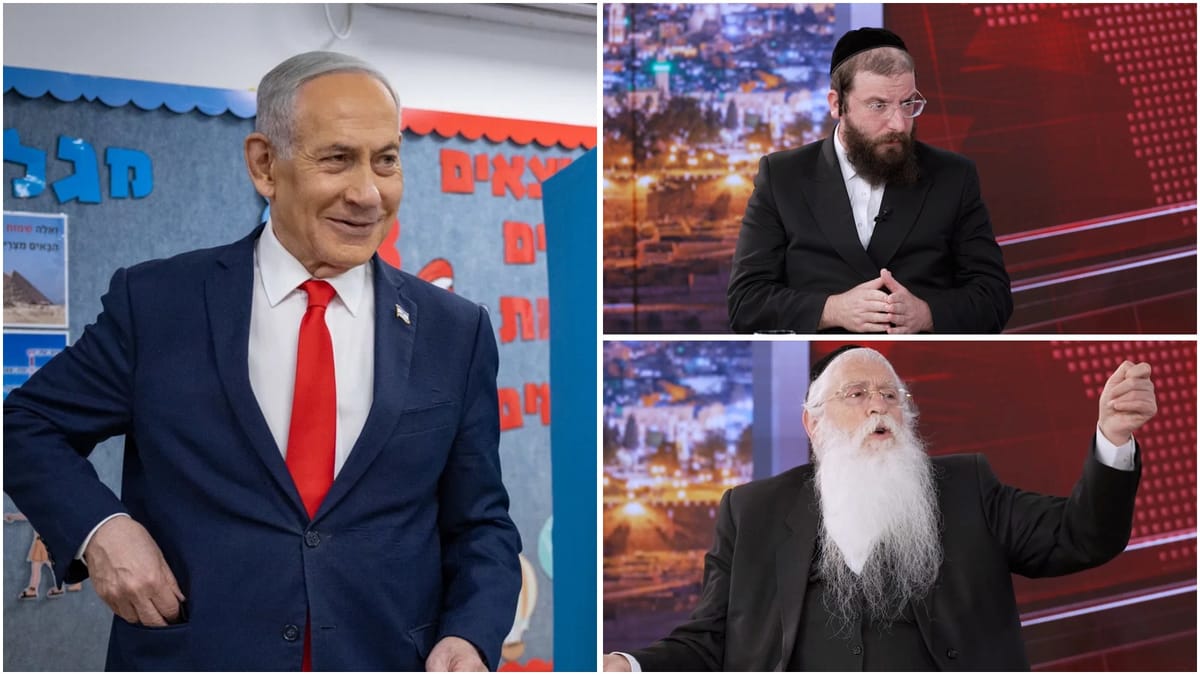
Early this week, MKs Meir Porush and Eliakim Stark met with Dovid Shapira, described in the report as the key figure in the household of Rabbi Dov Lando and in Degel HaTorah, who is managing contacts with the change bloc. Porush and Stark, seen as more closely aligned with the right-wing, nationalist wing of UTJ and less inclined to break the party’s long partnership with Netanyahu, sought to clarify how a draft law could be advanced in a government formed with opposition parties and whether a framework meeting their demands was possible.
Later that day, Stark met directly with Netanyahu. According to the report, the prime minister is working hard to keep Stark and UTJ’s right wing within his bloc, viewing their continued loyalty as critical to holding the national camp together and blocking an alternative government.
Porush and Stark broke away from Agudat Yisrael to establish a new faction within United Torah Judaism and were expected to recommend Netanyahu to the president. Degel HaTorah, by contrast, declined to endorse any candidate during Herzog’s consultations after Rabbi Lando instructed its MKs not to recommend either Netanyahu or Eisenkot.
Netanyahu’s efforts have extended to the rabbinic leadership. Channel 12 reported that he sought to meet Rabbi Lando and Rabbi Moshe Hillel Hirsch, two senior leaders of UTJ’s Lithuanian chareidi faction, or to send emissaries to them, but was rebuffed. According to that report, Netanyahu wants the chareidi parties to actively vote against an Eisenkot government rather than abstain.