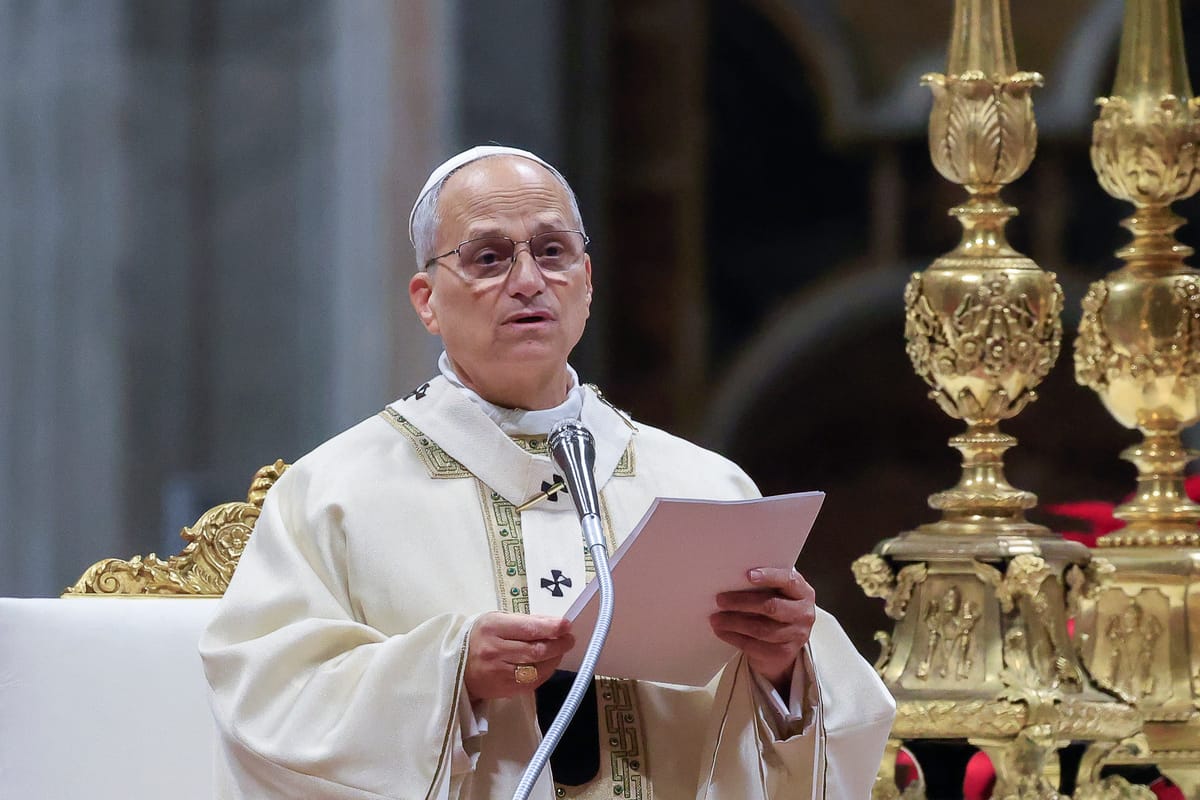
Pope Leo said on Wednesday that recent conflicts in the Middle East have tested relations between Jews and Christians, and that differing views of the violence have strained dialogue between the two faiths without breaking it.
The statement came in a new decree marking six decades of the Catholic Church's efforts at interreligious dialogue since Nostra Aetate, the landmark 1965 declaration of the Second Vatican Council. The decree was developed by three senior Vatican offices and approved by the pope, Reuters reported.
"The conflicts that have erupted in the Middle East in recent years have ... left their mark on Jewish-Christian dialogue," the decree said.
The document describes the fight against antisemitism as a "shared struggle" for Jews and Christians. It also reiterates the Church's condemnation of Islamophobia, saying such attitudes fail to distinguish between cases of extremist violence and the everyday lives of the world's Muslims.
Nostra Aetate, Latin for "In Our Time," was promulgated by Pope Paul VI on October 28, 1965. It was the Church's first formal denunciation of antisemitism, and it rejected the charge, used for centuries to justify persecution of Jews, that the Jewish people as a whole were responsible for the death of Jesus.
Leo, the first American pope, marked the declaration's 60th anniversary last October with an interfaith gathering at the Vatican and a general audience in St. Peter's Square. There, he said that all of his predecessors since 1965 had clearly condemned antisemitism, and affirmed that the Church does not tolerate antisemitism and fights against it on the basis of the Gospel itself. He also acknowledged at the time that there had been misunderstandings and conflicts between Catholics and Jews, but said they had never stopped the dialogue from continuing.
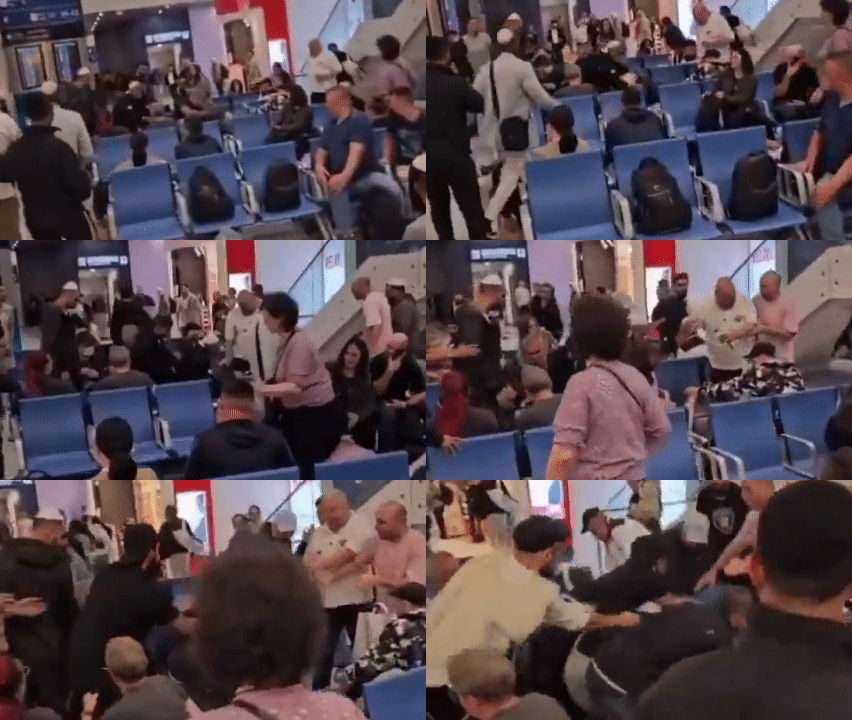
The new decree comes amid a sharp rise in antisemitic incidents worldwide since the October 7, 2023, Hamas attack.