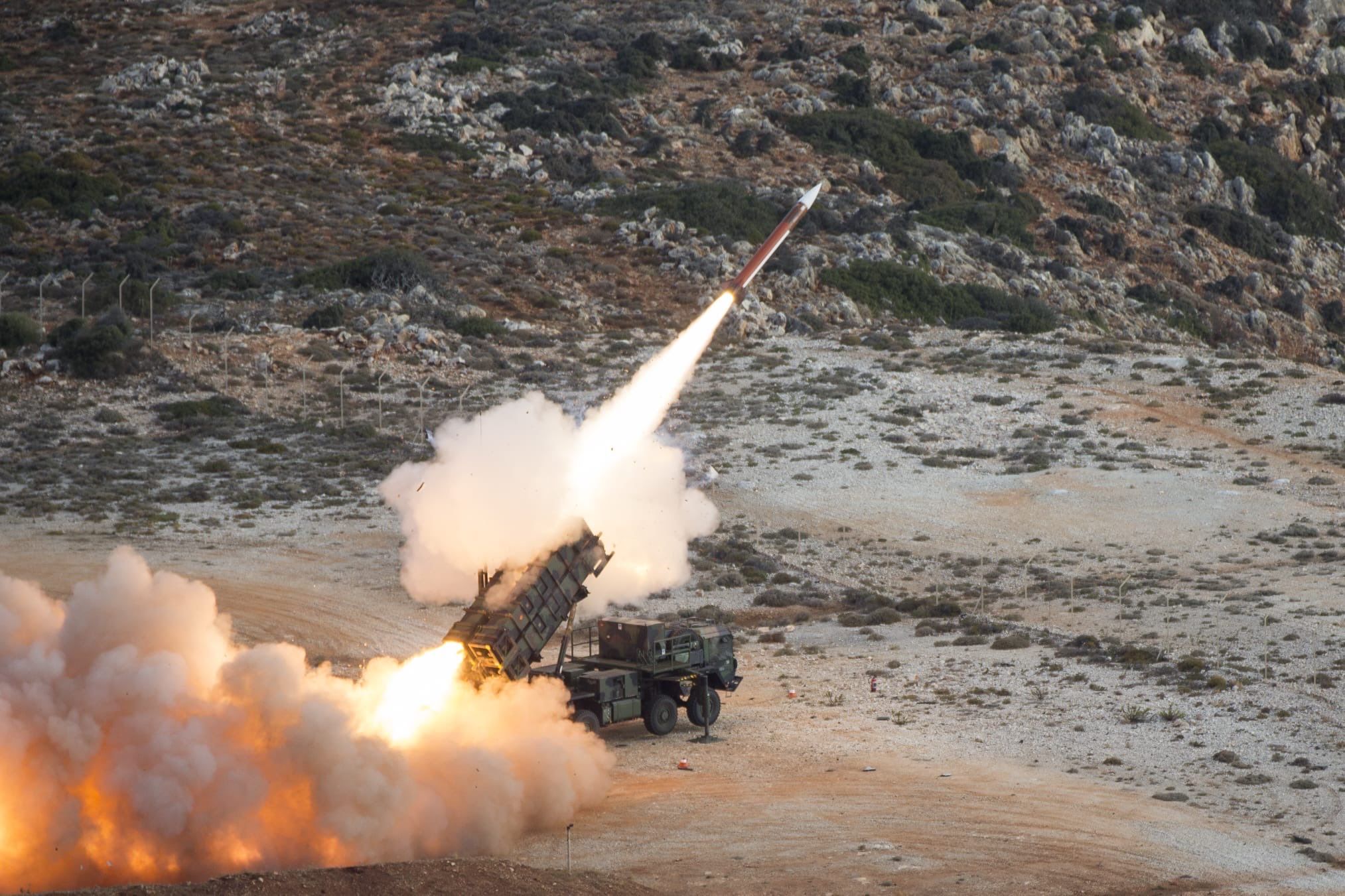
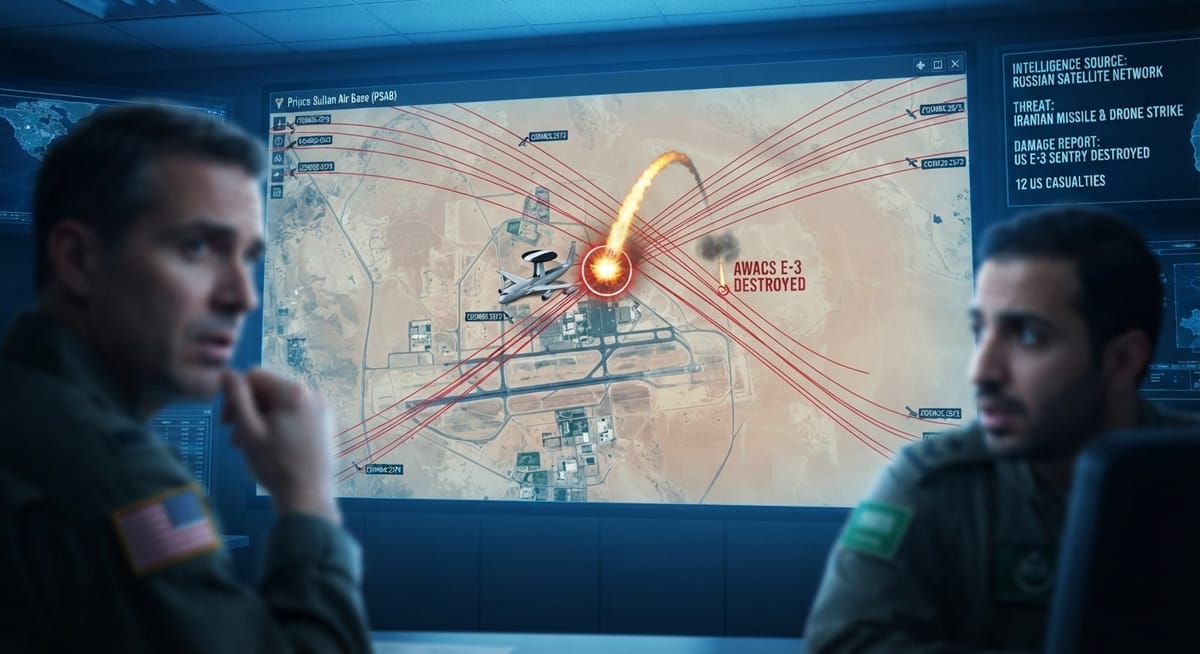
An Iranian strike on the joint U.S.-Saudi Prince Sultan Air Base near Riyadh in late March left behind unprecedented strategic damage: 12 American service members wounded and an advanced E-3 Sentry (AWACS) command-and-control aircraft worth hundreds of millions of dollars almost completely destroyed. But the central question occupying Washington's security establishment wasn't just how the base was hit—it was how the Iranians managed to pinpoint a moving aircraft with such precision.
According to an investigation by Militarnyi and CNN, the answer points to close intelligence cooperation between Russia and Iran. Analysis of orbital data reveals that in the two days preceding the attack, no fewer than 14 Russian Cosmos-series spy satellites passed over the base in a coordinated sequence. Leading the array was the advanced Cosmos 2573 satellite, equipped with high-resolution imaging capabilities, synthetic aperture radar (SAR) that can see through darkness and clouds, thermal sensors, and systems for locating radio signals.