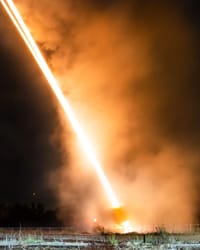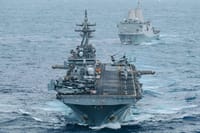
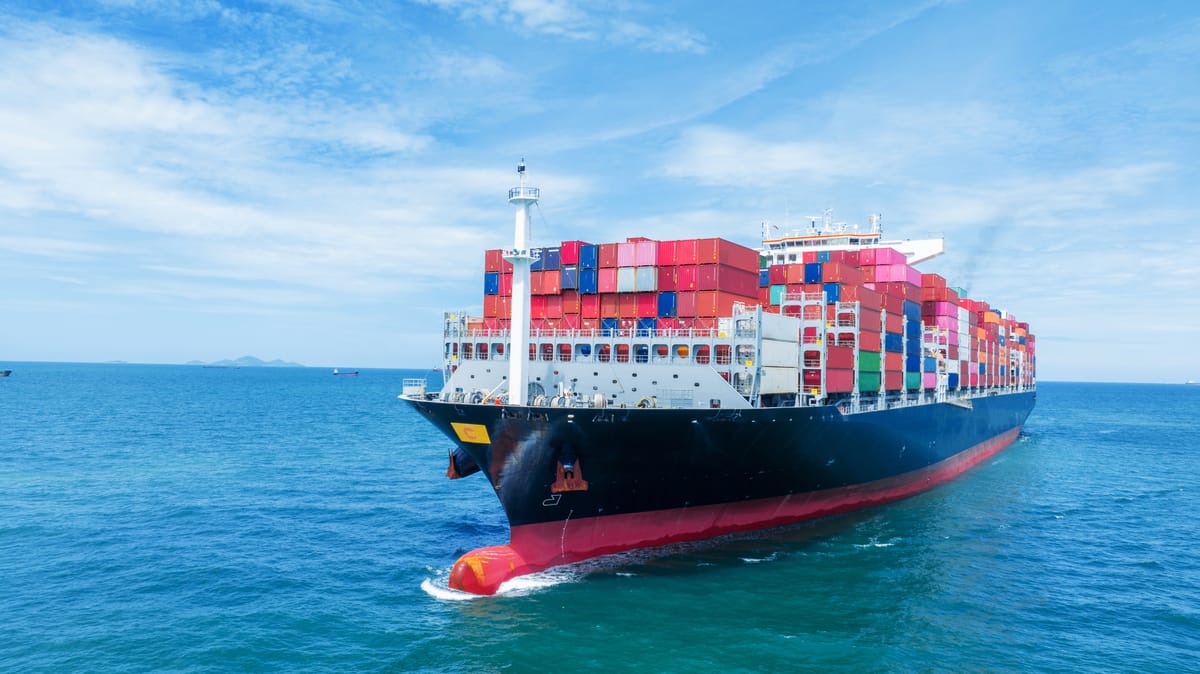
The United States launched a new wave of powerful strikes inside Iran overnight Tuesday into Wednesday after a series of attacks on commercial tankers near the Strait of Hormuz, sharply escalating tensions just weeks after Washington and Tehran reached a temporary memorandum of understanding.
U.S. Central Command confirmed that American forces had begun striking Iranian targets in response to attacks on three commercial vessels transiting the strategic waterway.
Explosions were reported overnight in the southern Iranian port city of Sirik, on Qeshm Island, in Bandar Abbas and on Kharg Island, one of Iran’s most important oil hubs. CENTCOM said the operation was intended to impose a “heavy price” on Iran for attacks against ships crewed by innocent civilians.
The U.S. military described the Iranian actions as “unprovoked, dangerous and a clear violation of the ceasefire.”
One American official told CNN that the U.S. response was intentionally “not proportional.”
“This is punishment,” the official said. “And it is not going to end soon.”
Air defenses, missiles, drones and ports targeted
U.S. officials cited by Reuters and the Associated Press said the strikes were targeting a wide range of Iranian military infrastructure, including:
Air-defense systems, coastal surveillance systems, surface-to-air missiles, anti-ship cruise missiles, drone launch sites and Iranian port facilities.
The operation was expected to continue for several hours.
Iranian media reported that several people were injured in strikes on a commercial pier in Sirik in southern Iran.
Additional targets were reportedly hit in Bandar Abbas, Qeshm Island and the village of Ziarat. Reports said a fishing pier, civilian vessels and possibly a communications tower were among the sites damaged.
Several fishing boats were reportedly set on fire in Bandar Abbas.
Iranian state television later claimed that conditions in Bandar Abbas and Qeshm had returned to normal, although explosions were said to be continuing in Sirik.
U.S. revokes Iranian oil relief
The military strikes came after Washington canceled a license that had allowed Iranian oil sales under the recent memorandum of understanding.
A U.S. official said the decision followed attacks on at least three tankers and warned that Iran’s actions in the Strait of Hormuz were “completely unacceptable” and would have consequences.
The warning was followed hours later by the American strikes.
Oil prices surged approximately 5% after Washington restored the restrictions.
Iranian President Masoud Pezeshkian denied that Tehran had violated the agreement.
“We emphasize the importance of maintaining lasting stability and will not accept any violation of promises or deviation from the memorandum of understanding,” Pezeshkian said.
He claimed Iran had fulfilled its commitments “in good faith and with a sense of responsibility,” while accusing Washington of failing to honor its obligations.
Iran’s Foreign Ministry also condemned the renewed oil sanctions, saying the United States would bear responsibility for the consequences.
Tehran warned that it would take whatever steps it considered necessary to protect its national interests and security.
Tanker may be at risk of explosion
The escalation followed a series of dangerous attacks against commercial shipping.
A source cited by Reuters said a gas tanker struck by Iranian missiles in the Strait of Hormuz could potentially explode after a fire broke out in its engine room.
A Saudi tanker and a Qatari tanker were also reportedly struck overnight.
Later, the United Kingdom Maritime Trade Operations agency reported another incident involving a tanker hit by a drone launched by Iranian forces.
The Qatari LNG tanker Al-Raqayat was carrying liquefied natural gas when it was struck on its port side. The vessel reportedly transmitted distress signals and requested assistance.
Qatar condemned the attack, calling it a serious violation that threatened regional security and undermined efforts to establish stability.
“We demand that Iran immediately stop anything that endangers maritime security,” Doha said.
Iran’s Foreign Ministry spokesman rejected the Qatari accusations as “dubious” and inconsistent with the principle of good neighborly relations.
The Qatari vessel was struck near the coast of Oman as it was leaving the Strait of Hormuz.
At least four commercial vessels hit since agreement
Since Washington and Tehran agreed to the memorandum intended to restore safe passage through the strait, at least four commercial vessels have reportedly been attacked or damaged.
The latest attacks came after U.S.-Iran talks in Qatar last week failed to produce significant progress toward a permanent agreement.
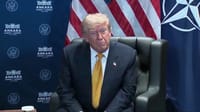
U.S. President Donald Trump had nevertheless sounded optimistic following the talks, saying Iran’s nuclear dismantlement was progressing well.
“There were very good meetings,” Trump said. “We’ll see.”
Negotiations were later paused while Iran held mass funeral events for former Supreme Leader Ali Khamenei.
Large crowds have gathered in Tehran and other Iranian cities, with demonstrators calling for revenge against the United States and Israel.
Hegseth reportedly heading to Israel
Meanwhile, CNN reported that U.S. Defense Secretary Pete Hegseth plans to visit Israel on Wednesday in what would be his first trip to the country since taking office.
According to three sources familiar with the matter, Hegseth is expected to meet Prime Minister Benjamin Netanyahu and Defense Minister Israel Katz.
One purpose of the visit is reportedly to ease Israeli concerns over the possibility that Washington could sell advanced F-35 fighter jets to Turkey.
Hegseth is currently attending the NATO summit in Turkey alongside Trump.
The timing of the visit is particularly significant as the United States intensifies military operations against Iran, commercial shipping faces renewed attacks in the Strait of Hormuz and the fragile U.S.-Iran understanding appears close to collapse.