The United States military completed a heavy wave of strikes against Iran overnight, resuming attacks after a days-long pause and sharply escalating its response to Tehran’s missile fire against American forces in Jordan.
US Central Command said the operation lasted approximately two hours and struck dozens of targets belonging to Iran’s Islamic Revolutionary Guard Corps. The targets included military command centers, missile and drone facilities, and coastal surveillance and defense sites.
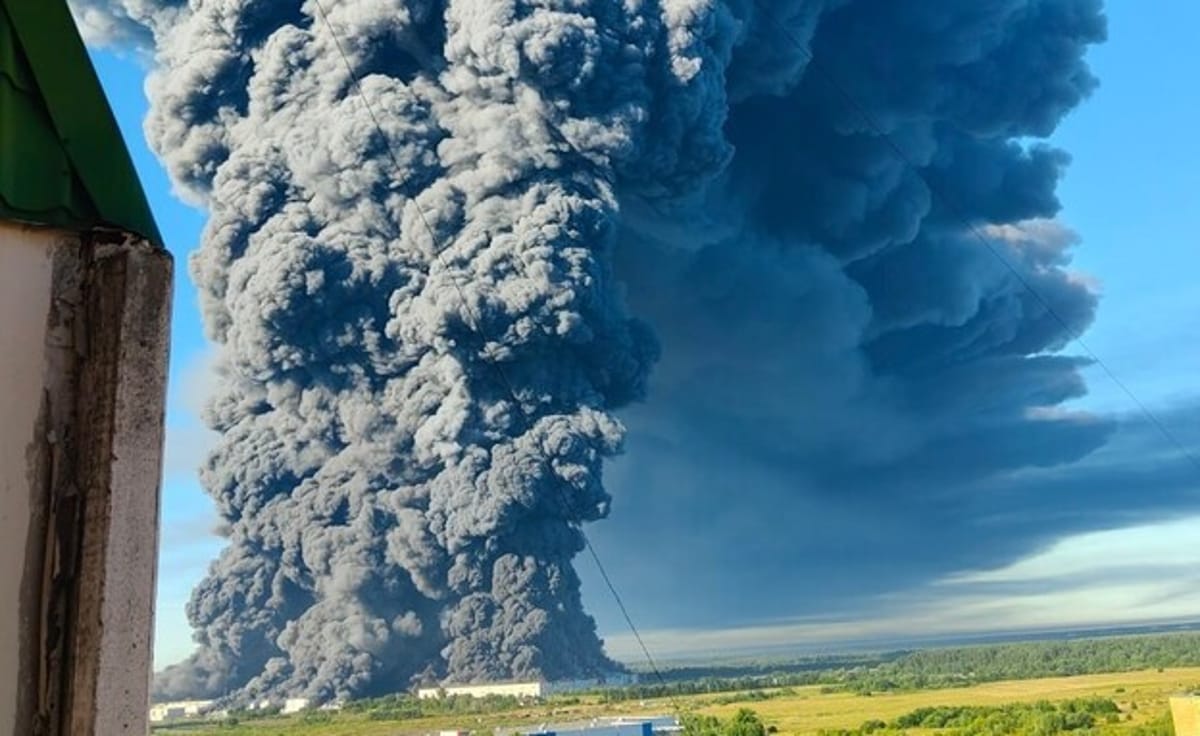
Iranian media reported explosions in several parts of the country, particularly in southern Iran, including near Nurabad in Fars Province.
The strikes followed an Iranian ballistic missile attack targeting a US military base and another American military facility in Jordan. Jordan’s military said five Iranian missiles were intercepted and destroyed.
Hours before the strikes, President Donald Trump warned that a forceful American response was coming.
“We’re going to be hitting them very hard. Because it’s our turn to hit them. They know it’s coming,” Trump told reporters in the Oval Office. He said Iran had asked the United States not to retaliate.
Trump said Washington could still eventually reach an agreement with Tehran, “but we’re going to hit them very hard.”
The president said all five incoming missiles had been intercepted but emphasized that Iran had nevertheless attempted to strike American forces.
Trump also responded to a Reuters report that Iran is expected to receive an initial shipment from China as part of a possible delivery of up to 400 Chinese-made shoulder-fired air-defense missile launchers.
“Well, that would be surprising,” Trump said. Referring to Chinese President Xi Jinping, he added: “He told me very strongly he wouldn’t partake, but he knows I’d be quite disappointed.”
Meanwhile, The Wall Street Journal reported that CENTCOM commander Adm. Brad Cooper has prepared an option for a significantly expanded air campaign against Iran.
The proposed operation would involve 10 to 14 days of intensive airstrikes intended to cripple Iran’s missile capabilities. The plan has not been presented as an approved operation, and any decision to implement it would ultimately belong to Trump.
Cooper reportedly believes the limited exchanges of strikes conducted so far have failed to deter Tehran, which has continued launching attacks against American forces and threatening shipping in the Strait of Hormuz.