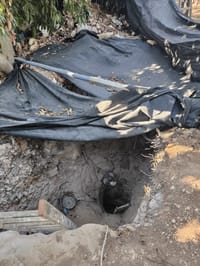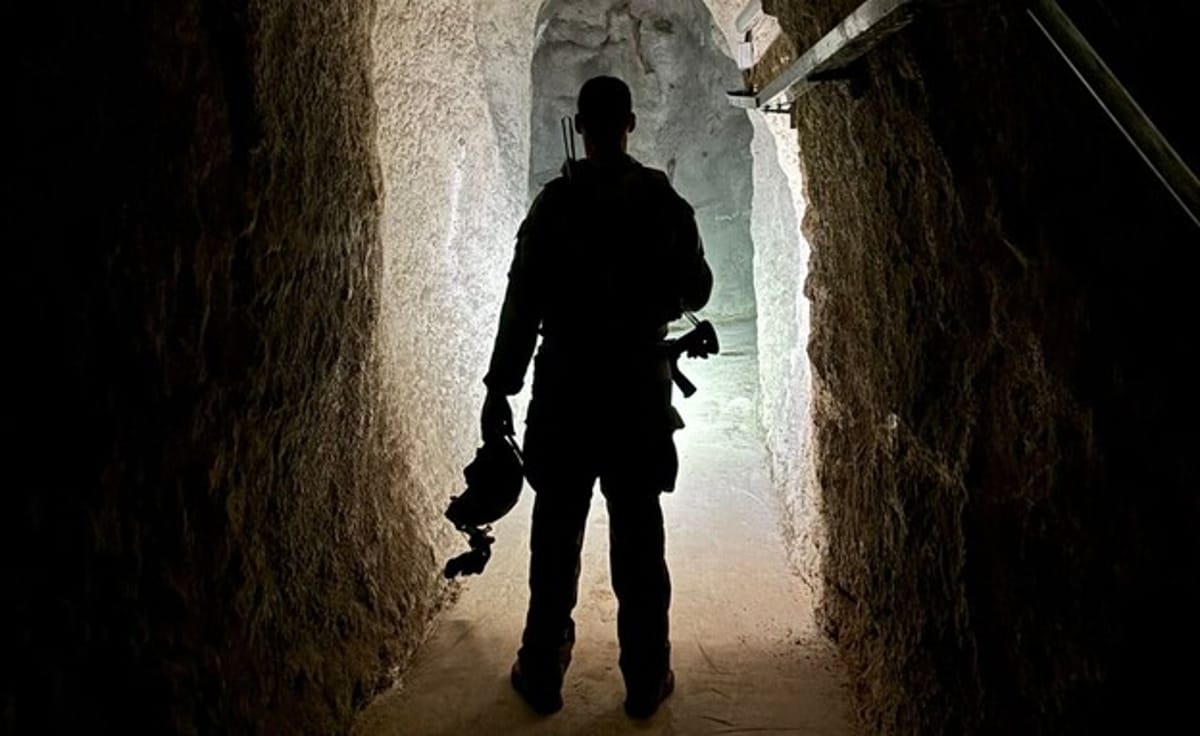
An extraordinary strategic escalation has reoriented international diplomatic relations, following intense policy disclosures regarding the United States' willingness to shift the foundational nature of foreign partnerships. Operating units are currently maintaining total geographic dominance over a massive, fortified subterranean complex belonging to Hezbollah, situated directly along the strategic Ali al Tahir ridge south of Nabatieh. The expansive compound, which took roughly twenty years to construct beneath the surface, is heavily engineered as a reinforced underground headquarters. Security assessments indicate that the complex is being utilized to store Iranian made ballistic missiles, making its neutralization a vital security priority.
Despite the immense strategic value of the installation, defense planners have frozen active subterranean maneuvers due to direct guidance from the political echelon. This operational halt stems from a desire not to disrupt ongoing diplomatic talks between the United States and Iran currently taking place in Switzerland. Security officials confirmed that units are waiting for official directives, noting that the terrorists hidden within the tunnels do not pose an immediate threat because they are entirely trapped underground.
The village of Tabnit has rapidly emerged as a primary focus of localized military maneuvers, with intelligence data confirming that between 30 and 40 Hezbollah terrorists are currently holed up inside the sprawling subterranean network. While forces completely control the surface territory above the compound, units are refraining from entering the tunnels due to active ceasefire terms. The massive defensive complex spans across the Beaufort and Ali al Tahir sectors, forming a highly sophisticated web of deep underground tunnels. Although destroying this specific network remains the primary focus of operations in southern Lebanon, units continue to hold their positions on the ridge without advancing inside.
Instead of launching a direct assault, top defense and political leaders are discussing a highly unique proposal to hand operational control of the surrounded complex over to the Lebanese armed forces. This potential policy shift has been thoroughly reviewed during internal defense consultations and is highly likely to be introduced during the upcoming round of diplomatic negotiations scheduled for Tuesday. Security planners believe that transferring the responsibility of clearing the site could serve as a definitive, visible test of the Lebanese army's actual capabilities and long term willingness to openly confront Hezbollah elements.
Briefing on the internal logic behind the proposition, an official Israeli source stated, "this can be a test of the ability and motivation of the Lebanese army to publicly and unprecedentedly handle Hezbollah". However, experienced defense officials caution that historical precedents raise serious doubts about the viability of the plan. Past security operations have repeatedly demonstrated that the Lebanese military struggles immensely when attempting to curtail the terror group's movements, a persistent failure driven either by severe operational limitations or a total lack of political will.
Concurrently, the Chief of Staff has issued strict warnings in separate closed briefings, reinforcing that maintaining a firm presence along the yellow line remains a non negotiable requirement for northern security. The military leadership maintains that the physical presence of defensive troops is the sole factor that successfully removed the threat of cross border raids. Security officials argue that any premature withdrawal from these dominant territorial positions would instantly allow hostile elements to return to the border fences, shattering the security of front line civilian communities.