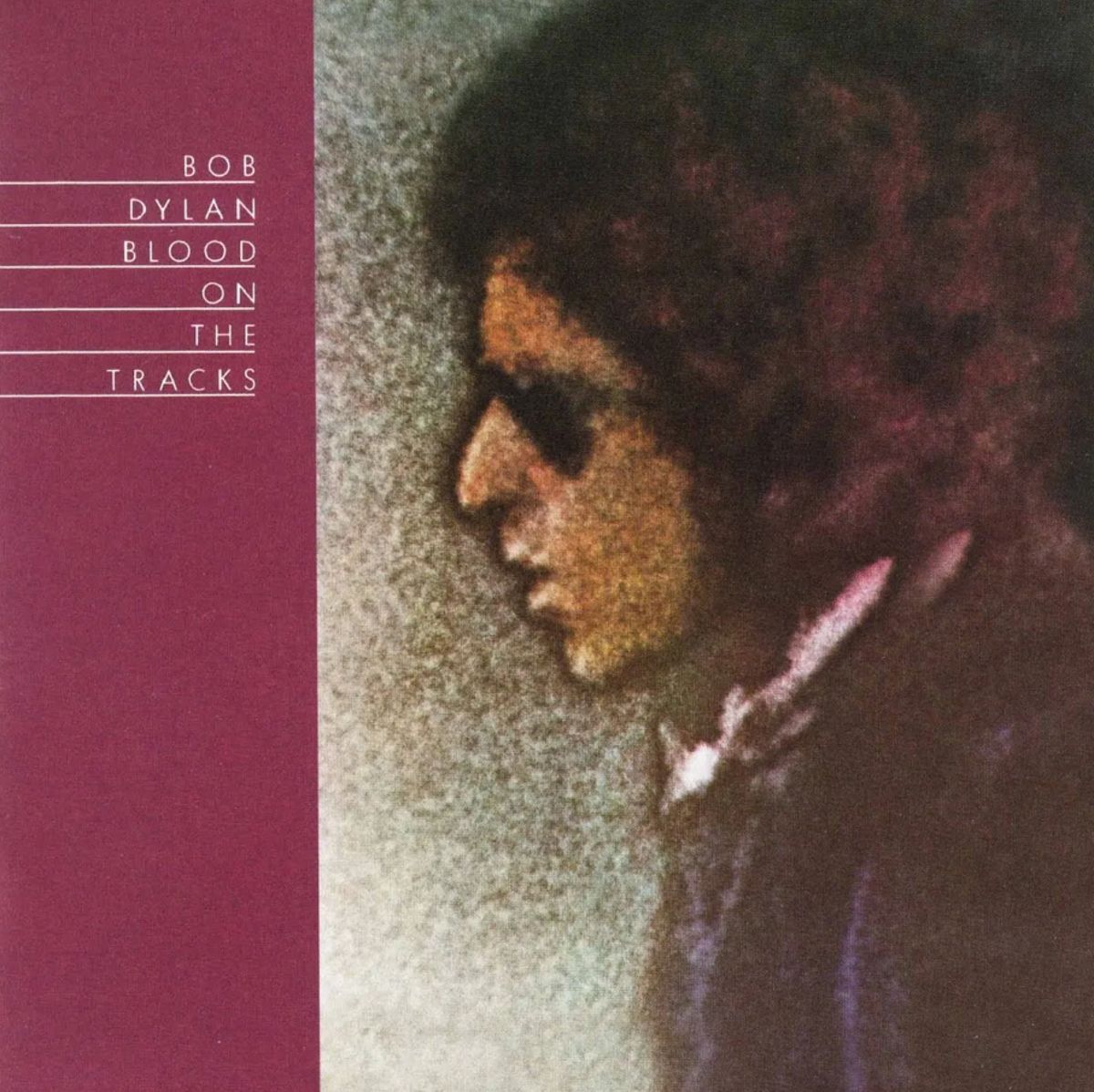
It was, perhaps, the greatest album of the '70s. Yet only years after its release did it receive the recognition it truly deserved. It marked the undeniable fact that '60s Dylan was far from the only Dylan the world can enjoy. But more than anything, it was the greatest love album in history.
Two weeks ago, the world marked 50 years since the release of Blood on the Tracks.
It seems there isn’t a single superlative that hasn’t been used to describe this towering masterpiece. From the deep bass notes that open Tangled Up in Blue—arguably the greatest troubadour ballad of the 20th-century, with its seven long stanzas carved into the mind of every Dylanologist, to the shattering Shelter from the Storm, narrating an impossible love story of a drifter roaming the American fields in an evasive and impossible search for love, and the psychedelic upbeat romantic rollercoaster of You're Gonna Make Me Lonesome When You Go.
As the album progresses out of the mystic shadows following Simple Twist of Fate, and right before the desperately cheeky and bluesy meet me in the morning, a story of cosmic heartbreak reveals itself with the piercing, agonizingly beautiful You're a Big Girl Now, offering a raw portrait of the unraveling and collapse of Bob Dylan’s marriage to Sara Dylan.
As one story goes, the falling apart all began on some day in 1972, when Dylan came home and felt as if his wife no longer understood him, this, after a fateful encounter with a Jewish bohemian mystic in New York City that deeply moved the now-Nobel laureate.
Years later, Jakob Dylan, who was just six years old when the album was released, would say that listening to Blood on the Tracks was like “watching my mom and dad splitting up", Perhaps a realization reaching its peak with the now famously Jeff Buckley covered and monumental If You See Her Say Hello.
The album as a whole exposes Dylan at his rawest and most fragile point of his life. Almost too broken for his signature '60s sarcasm which he had already shed in Nashville Skyline (1969). A special place for the schism, anger and vengeance of the falling, reaches a tragic peak in the eight-minute Idiot Wind, an unforgettable act of reckoning, mixing bitterness and compassion towards the woman who would soon become his ex-wife.
When the album was released, Dylan embarked on a tour alongside his former lover Joan Baez, The Rolling Thunder Revue introduced the world to a new Dylan: his face painted ghostly white, dressed flamboyantly, infused with the sounds of Spanish violins and Gypsy mysticism (which would reach their zenith on his next album, Desire), and above all, a musical iteration of folk which transcended the industry's known boundaries.
A few years ago, several songs that didn’t make it onto the original album were finally released, including Up to Me, a ballad of love and departure through reimagined time.
Up to me, like Blood on the Tracks as a whole, is quintessentially Dylanesque, in its cubist, painterly style where each verse flickers like a moving scene in a film. Some argue that on this album and its follow-up, co-written in part with Jacques Levy, Dylan reached some of the highest peaks of his songwriting career.
So much more could be said about this monumental 52 minute treasure, every song is worthy of an essay, every musical composition an act of audacious genius, and every live remake more surprising than its predecessor. And perhaps, someday, we’ll have to do just that.
But for now, we’re just here to mark the date.
And you? You can simply go to YouTube, type Blood on the Tracks, and let the genius speak for itself.
And for those wondering, fear not. This week, at the age of 83, Dylan announced a new tour across America: Ohio, Kansas, Wisconsin, Illinois, Indiana, Michigan, and more.
Or, as he wrote in Tangled Up in Blue: "The only thing I knew how to do, was keep on keeping on, like a bird that flew."