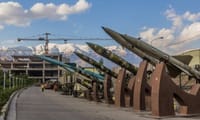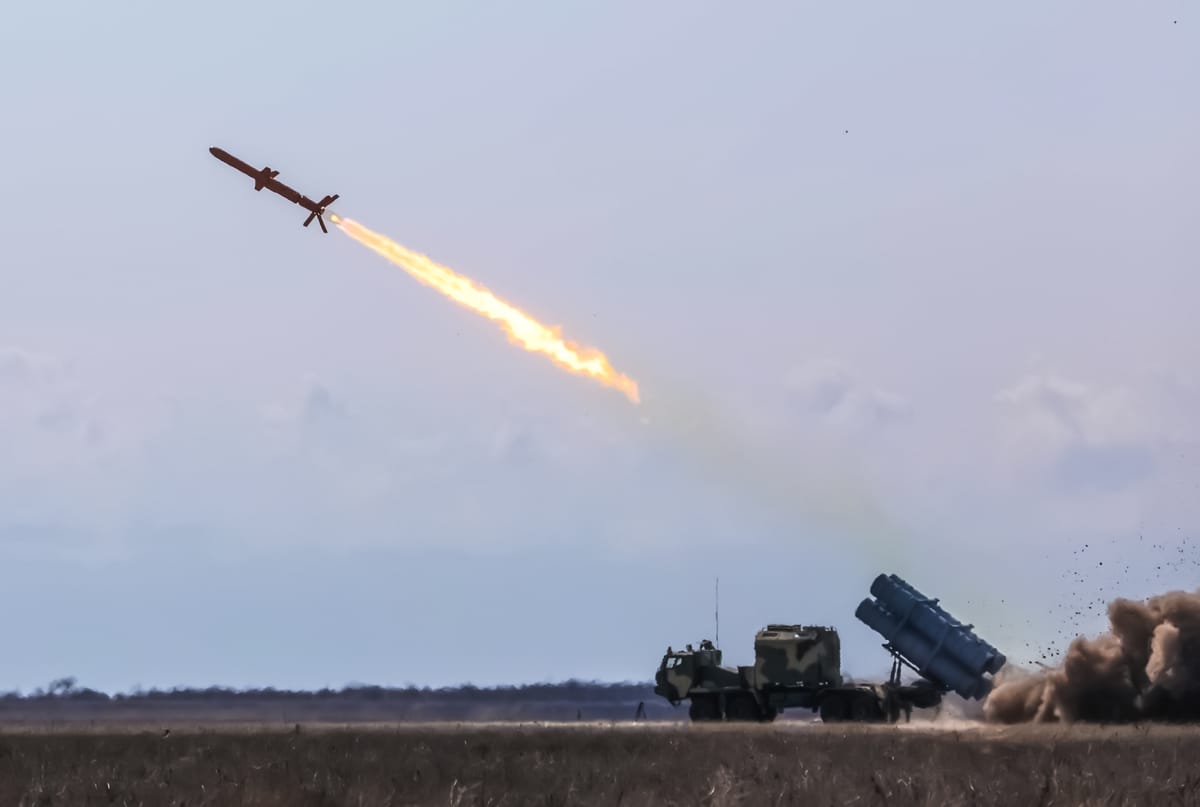
The maritime corridors of the Middle East have experienced a direct military escalation after Iranian forces launched three Abu Mahdi al-Muhandis cruise missiles toward United States naval vessels operating near the strategic Strait of Hormuz. According to confirmed naval updates released late Thursday evening, the advanced anti-ship missiles failed to record any direct impacts on the American deployments, leaving maritime operations intact. The aggressive rocket launch coincided with intense, behind-the-scenes diplomatic developments in Washington, where senior officials confirmed that the text for a sweeping regional accord with Tehran is nearly complete.
The dual realities of active bombardment and diplomatic drafting have placed the White House at a definitive crossroads, with senior advisors clarifying that everything now depends entirely on what the president wants to do. Behind the scenes, American negotiators confirmed that the vast majority of treaty stipulations were successfully hammered out over the past week, but the entire process hit a sudden pause when Donald Trump delayed immediate authorization. The American negotiating team provided a comprehensive brief to the president, who is reportedly assessing the accord not merely as an isolated nuclear deal, but as a mechanism for a total regional realignment.
The domestic messaging surrounding the potential breakthrough was managed on Thursday by the Treasury Secretary, who filled in for White House Press Secretary Karoline Leavitt during her maternity leave, following similar proxy appearances by Vice President JD Vance and Secretary of State Marco Rubio. The acting spokesperson clarified that no concessions will be implemented until the Strait of Hormuz is fully verified as open to international transit and the Iranians formally agree to export their entire stockpile of highly enriched uranium. The administration has achieved something no previous team managed by forcing the regime to negotiate their nuclear program and potentially commit to its total termination, the secretary stated.
The White House spokesperson further emphasized that the administration has no intention of signing an unfavorable agreement, pointing to communication difficulties within the Iranian leadership chain as the reason for showing tactical patience. We do not have infinite patience, the secretary warned, clarifying that while President Trump always prefers a peaceful treaty, all actions executed thus far remain purely defensive. If the president concludes that a peaceful resolution is mathematically impossible, the military apparatus will immediately transition back to active combat operations, the briefing concluded.
Meanwhile, state media in Tehran rapidly moved to dampen global expectations regarding an imminent diplomatic breakthrough, with the Tasnim news agency, an outlet directly affiliated with the Islamic Revolutionary Guard Corps, citing insider sources who claim the memorandum of understanding remains unapproved. Simultaneously, security teams in Jerusalem are monitoring the situation with immense trepidation, utilizing quiet intelligence channels to convince American planners to harden verification protocols, secure Israeli freedom of action, and eliminate the uranium threat. Trump has reportedly linked the pending accord to the expansion of the Abraham Accords, threatening to abandon the treaty entirely if regional actors like Saudi Arabia and Qatar refuse to finalize formal normalization agreements with Israel.