Get our mobile app
Download on the App StoreGet it on Google Play

Yemen Government Forces Retreat

Saudi-Backed Forces Quit Bab al-Mandab Front

The pullback ends a six-week counteroffensive against the Iran-backed Houthis and raises fears the rebels will push south toward Aden, the seat of Yemen's government.

Houthis | Bin Salman

Saudi-backed forces fighting for Yemen's internationally recognized government withdrew on Sunday, November 15, from the strategic area around the Bab al-Mandab Strait and shifted their focus to defending the southern city of Aden. The move marks a major setback in the campaign against the Iran-backed Houthis and raises concern that the rebels will exploit it to expand their control in southern Yemen.

According to Reuters, the announcement came from southern forces fighting alongside the government. They said they were leaving Dhubab airport and the area near the strait, west of Taiz province, in order to bolster the defense of Aden and the surrounding provinces.

The withdrawal effectively ends a counteroffensive of about six weeks aimed at pushing the Houthis off the Red Sea coast and restoring government control over the areas near the strait. In September the rebels advanced rapidly along the coast and seized strategic positions, and in October the Saudi-backed forces launched an operation to reverse those gains.

The offensive failed to drive the Houthis out of the area entirely or to retake the port city of Mocha. At the same time, intensifying fighting in Taiz province made it harder for Yemeni forces to sustain the military effort along the coast.

The gravest risk from the pullback is that it may open the way for the Houthis to advance south toward Aden. The Yemeni government has been based there for more than a decade, since the rebels took over the capital, Sanaa.

Yemeni military sources told Reuters that the withdrawing forces were redeployed to the al-Suqiyah area, about 150 kilometers west of Aden. The Houthis, meanwhile, continue to entrench themselves in the mountainous areas north of the city and, according to the same sources, are near Tur al-Bahah district, about 80 kilometers from Aden.

Taiz, Yemen's third-largest city, remains under a prolonged Houthi siege. Fighting there has escalated in recent weeks, causing a severe humanitarian deterioration. According to the report, aid cannot get into the city and residents are struggling to leave. Some 300,000 people across Yemen have been displaced by the current round of fighting, roughly half of them in the Taiz area.
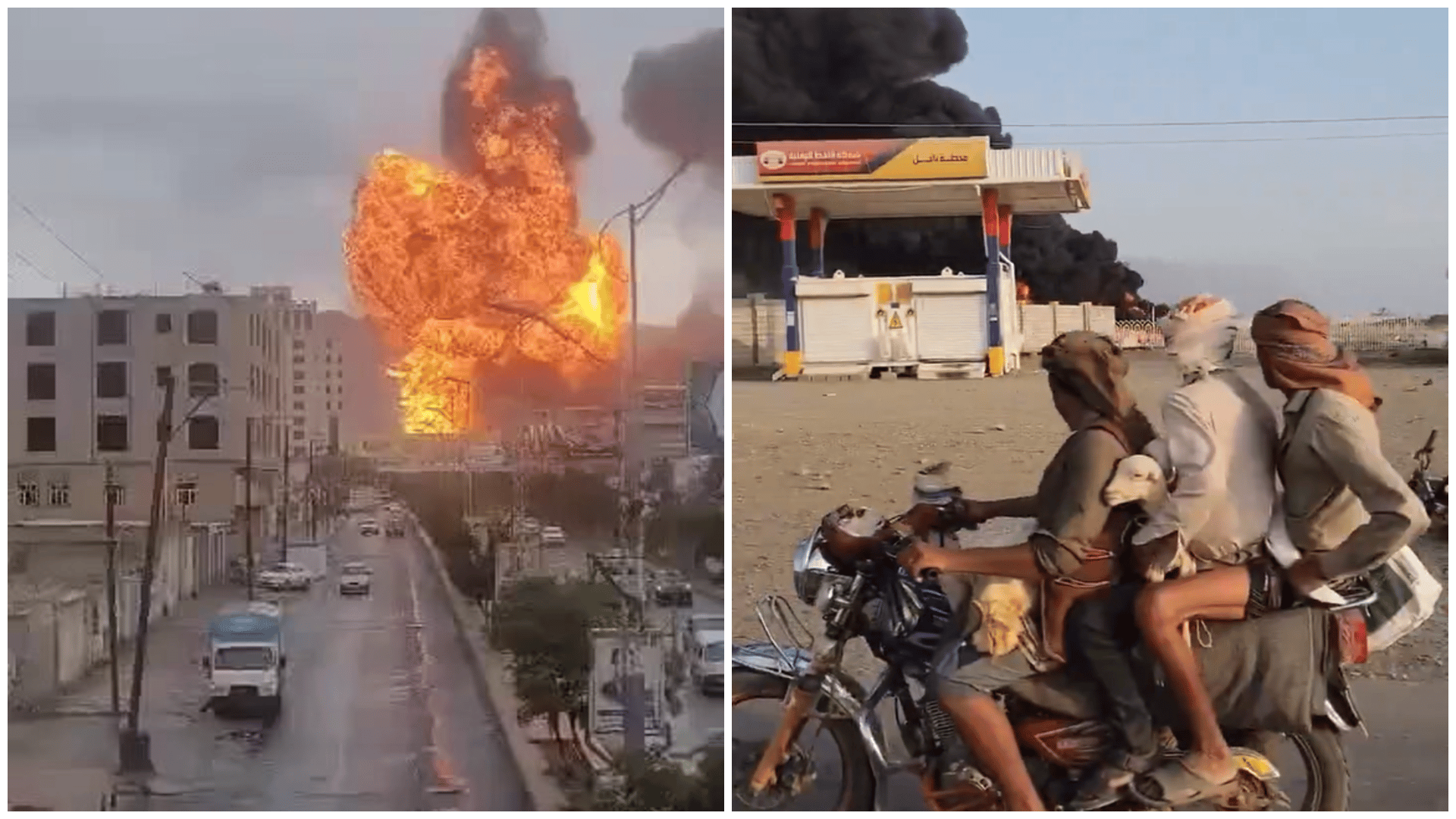

Militia fighters
Militia fighters (Photo: Arab social media)

The developments in Yemen come as the Houthis have stepped up missile and drone attacks on targets in Saudi Arabia in recent months, including airports and energy infrastructure.

On Sunday the Houthis claimed to have struck King Khalid International Airport in Riyadh, a financial center in the city and two pumping stations on the Saudi pipeline linking the east of the kingdom to the Red Sea coast. Saudi Arabia has not confirmed the claims.

The pipeline has taken on added importance amid disruptions in the Strait of Hormuz. Saudi Arabia moves about four million barrels of oil a day through it to the Red Sea port of Yanbu, bypassing the Persian Gulf shipping route. Damage to the pipeline could further strain Gulf oil exports and destabilize global energy markets.

With Iran applying pressure in the Strait of Hormuz and the Houthis strengthening their position near Bab al-Mandab, two of the world's most important shipping lanes are under threat at the same time. International media have reported that Israel is providing Saudi Arabia with intelligence assistance in the campaign against the Houthis.

Bin Salman
Bin Salman (Photo: Shutterstock)

The latest withdrawal highlights how difficult it has been for Saudi Arabia and its allies to achieve a decisive result against the Houthis despite military support and aid to government forces. The rebels, who seized Sanaa in 2014, have held on to large parts of the country through years of fighting against a Saudi-led coalition.

The war in Yemen, which largely calmed after a UN-brokered ceasefire in 2022, reignited last summer against the backdrop of the regional war between the United States, Israel and Iran. Also on Sunday, the Houthis announced the unilateral release of 600 detainees. The International Committee of the Red Cross confirmed it was one of the largest prisoner releases in recent times.

Ready for more?

Join our newsletter to receive updates on new articles and exclusive content.

We respect your privacy and will never share your information.

Enjoyed this article?

Yes
No
Follow Us:

Unmissable content


Loading comments...

Also of Interest