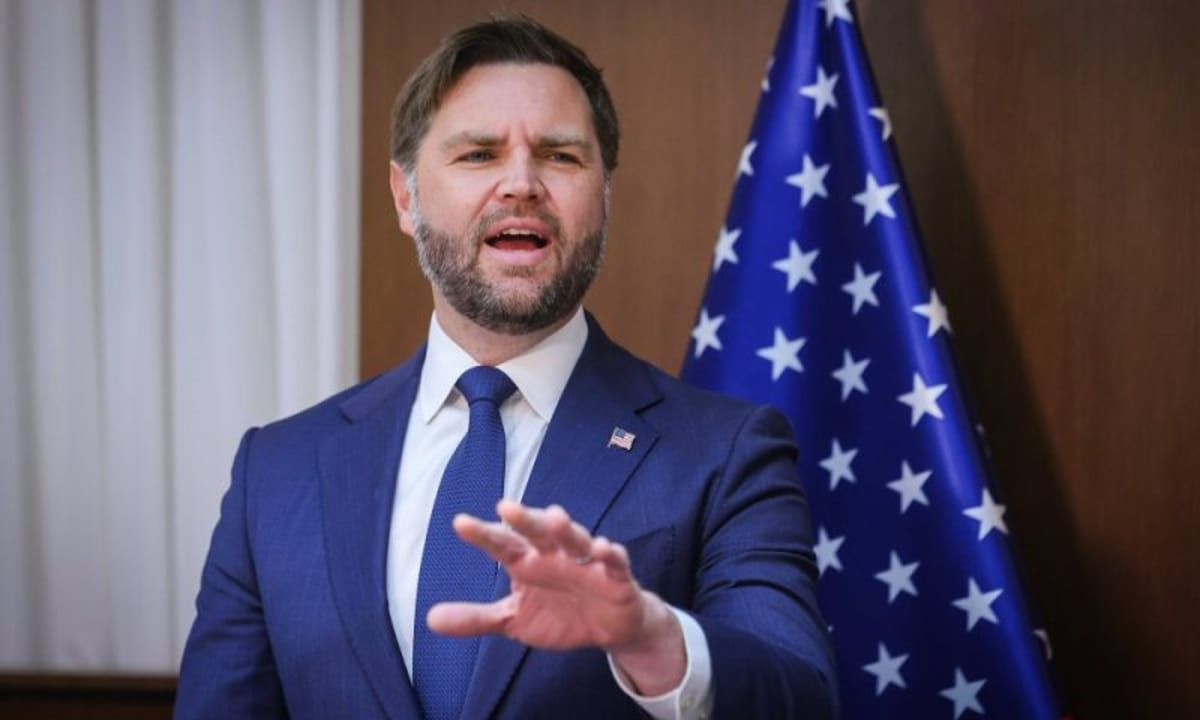
The United States executive branch has launched a coordinated diplomatic offensive aimed at curbing aggressive Israeli military operations along its northern border, with Vice President JD Vance publicly demanding that Jerusalem align its defense strategies with the newly established international peace framework. Speaking directly with prominent correspondents from the New York Times before conducting a formal press briefing at the White House, Vance expressed profound bewilderment regarding the wave of security hysteria and deep rooted mistrust rippling through the Israeli political system.
The vice president sought to isolate hardline elements within the governing coalition, specifically naming right wing cabinet ministers Bezalel Smotrich and Itamar Ben Gvir. Simultaneously, he noted that Prime Minister Benjamin Netanyahu has noticeably refrained from launching public broadsides against the diplomatic roadmap, suggesting that the prime minister possesses a deeper technical comprehension of the specific structural parameters.
Addressing the fierce domestic backlash originating from the security cabinet, Vance delivered a sharp rhetorical rebuke regarding the limitations of unilateral military force along the northern front lines. The vice president pointedly challenged the dissenting ministers by asking, "what exactly is your proposal?" before asserting that "you cannot just kill your way out of a solution of every national security problem that you have."
Vance emphasized that the United States government has consistently earned the geopolitical trust of the region through decades of robust strategic support. He argued that the intense panic within the Israeli defense establishment assumes a flawed reality where the international community would prematurely lift crippling economic sanctions without demanding verifiable behavioral modifications from regional adversaries.
Turning his attention specifically to the volatile theater of Lebanon, Vance articulated the White House's strict behavioral expectations for both the Israel Defense Forces and Hezbollah combatants as the regional ceasefire takes effect. Vance stated bluntly, "I expect that the Israelis will not go wild in Lebanon, they must respect the agreement and this peace process," while confirming that Washington concurrently expects that Hezbollah will entirely cease the launching of cross border rockets and explosive unmanned aerial vehicles against Israeli civilian populations.
The vice president openly acknowledged the inherent fragility of the current pause in hostilities, explaining that "as you know, these ceasefires can be a bit messy sometimes." He revealed that President Donald Trump had previously experienced immense operational frustration when sudden kinetic strikes in densely populated sectors of Beirut killed unintended targets, temporarily derailing fragile diplomatic breakthroughs. Despite predicting that localized flare ups will inevitably transpire during the transitional phase, Vance insisted that the overarching diplomatic process is successfully yielding dramatic progress, resulting in a quantifiable reduction of missile launches and a stabilized northern frontier.