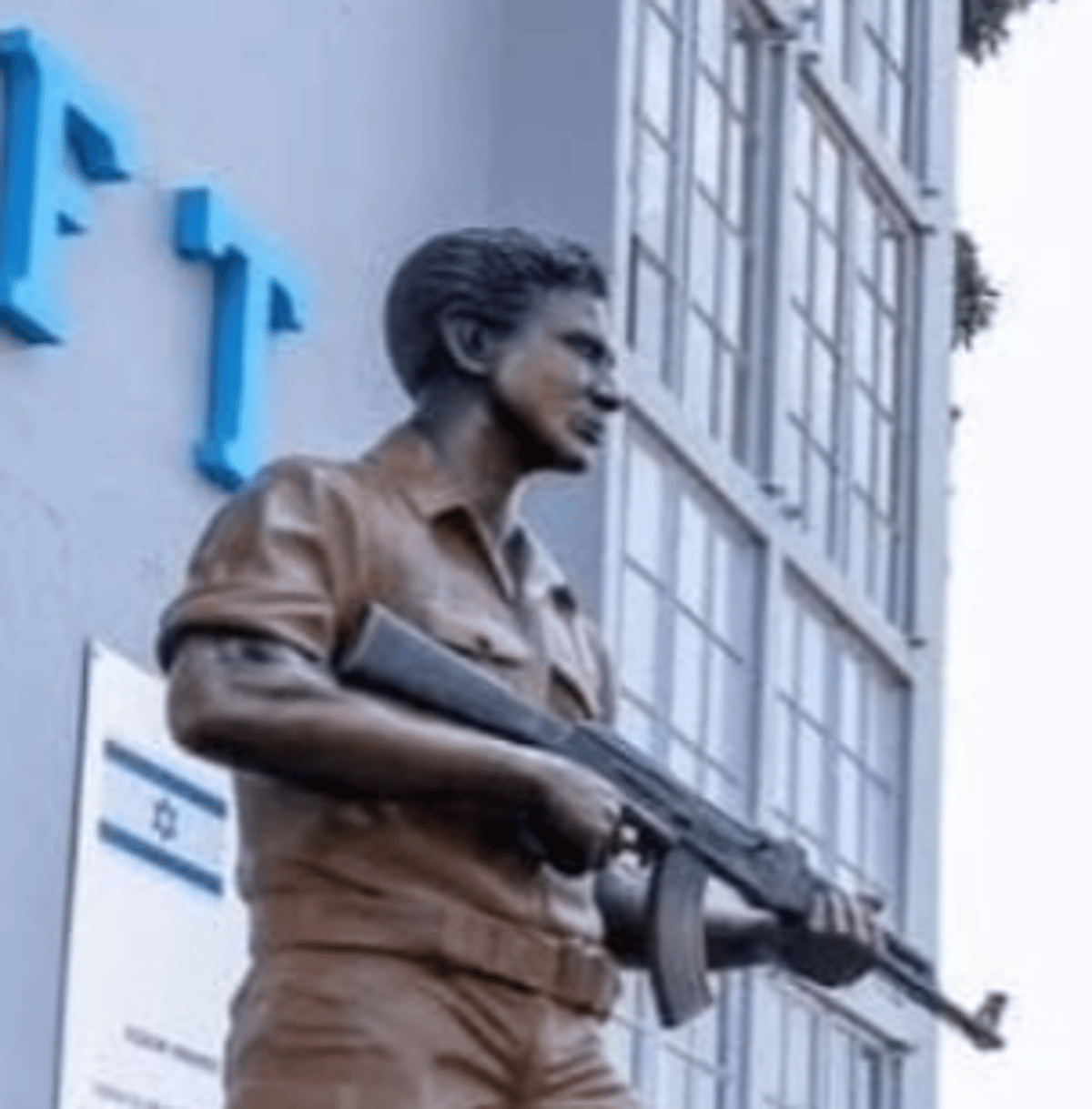
On Saturday, Uganda unveiled a monument to Yonatan Netanyahu at the spot where he died 50 years ago.
Yoni Netanyahu is a nationl hero, as the commander who led the rescue at Entebbe in 1976. He was also Prime Minister Benjamin Netanyahu's older brother. He died saving 102 hostages, the only Israeli IDF casualty that night. And yesterday, Uganda's military chief Muhoozi Kainerugaba stood at the old terminal and unveiled a memorial to him.
This matters because of what Uganda's military was in 1976. Idi Amin's dictatorship didn't just allow the hijackers to land. They welcomed them. Amin personally sided with the terrorists holding Israeli and Jewish passengers hostage in that terminal.
So when Uganda's government erects a statue to the Israeli soldier who died liberating those hostages, on the very ground where Amin's regime committed that act, that's not small. That's a country saying: we're not that anymore.
Kainerugaba didn't dance around it. "Today, Uganda is a constitutional democracy," he said, pointedly. The subtext was loud.
The ceremony also honored the victims who were killed during or shortly after the hijacking and rescue operation by name: Jean-Jacques Maimoni, Pasco Cohen, Ida Borochovitch, Dora Bloch.
Netanyahu himself visited Entebbe for the 50-year anniversaries. The operation is woven into Israeli memory the way D-Day is in America. But it's also a wound, one soldier, one family, one brother who didn't come home.
Yesterday Uganda made a bold statement in light of the current international antisemitic and anti-Israel sentiment: we remember what happened here. We remember who he was. And we're honoring him.