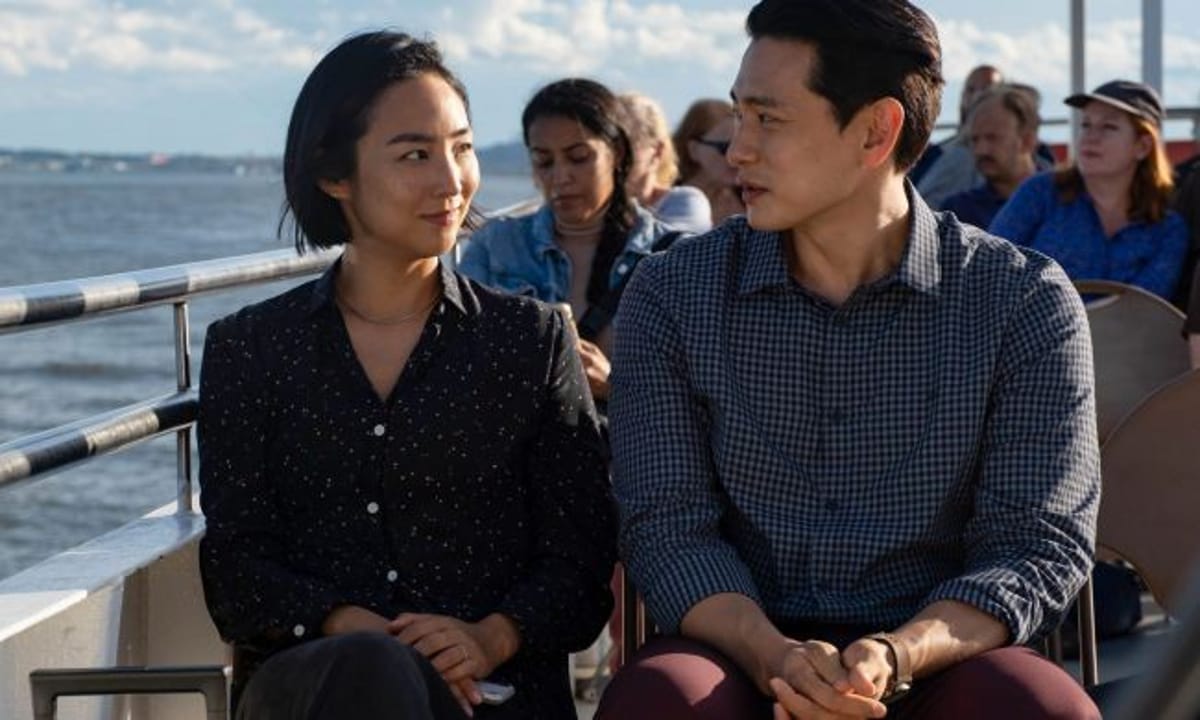
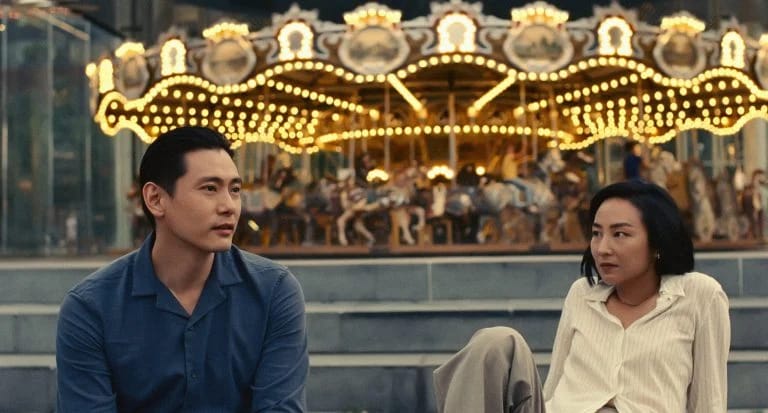
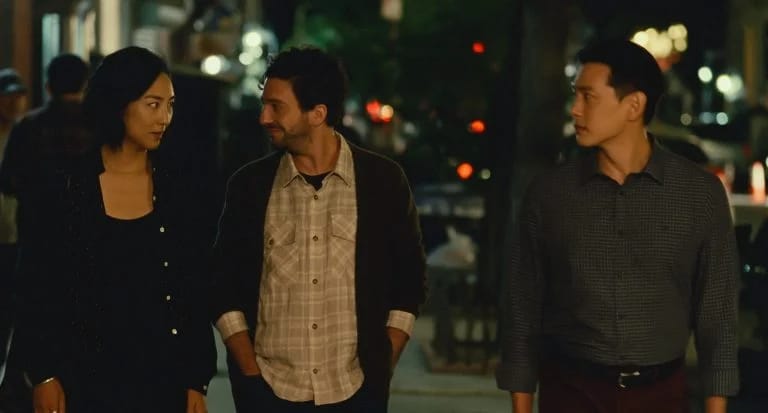
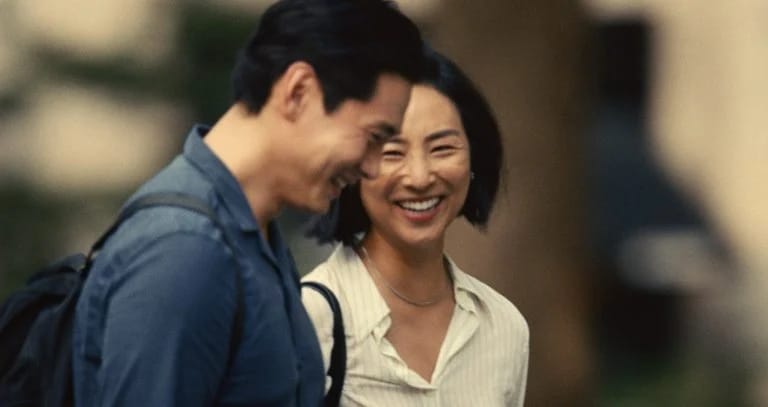
They meet up again through Skype (remember?), and the mutual excitement quickly rekindles. However, the price exacted by the distance between them and the time that has passed plant their signs and erect barriers that hinder the blossoming of their romance. Until the two meet again, their lives will diverge several more times, and new relationships will sprout.
"Past Lives" is the debut film of creator Celine Song, and in many ways, it is based on her own life story and experiences as a Korean-American. Song is unapologetic in discussing her American partnership or her complex emotions towards her lost Korean identity that has become somewhat foreign to her. The fact that the film is a personal confession makes it an intriguing and inviting project, at a time when it could have seemed somewhat too confined as a purely fictional creation trying to stand on its own.
Either way, Song isn't just seeking to delve into her own biography or the romantic plot, but also into fate and the mysterious and delicate ways in which it is determined and unfolds. The film is accompanied by the expression "In-Yan," a Korean concept referring to the connection that every person has with everyone they encounter in their life journey.
Every person you encounter – whether they pass you by in a hurry or if they are one of your dearest loved ones – has already been connected to you in some way in the reincarnations of your past lives. All of Nora's relationships in the movie are examined in light of this principle: what kinds of connections did she have with Ha-Song in previous incarnations? Is there also a realization of romantic love in this incarnation's In-Yan destiny for them?
The movie's merit lies in the fact that it does not surrender to In-Yan, nor does it succumb to examining the alternative sequences of their relationship in previous or future incarnations. The question of what would have happened had either of them not followed the path that advanced their lives remains unanswered. In this sense, "Past Lives" is a tribute of resistance to films like "Everything Everywhere All at Once" or the equivalent universe-spanning films of DC and Marvel.
Nora lives only once, and all her choices are determined and derived from one another. The alternatives, the "what if's," are always placed at the characters' threshold – but inevitably, only one option must be chosen. This resistance against the prevailing trend in commercial Hollywood certainly earns the movie several points.
The above statement enhances the significance and weight of opportunities and missed chances for the characters in the movie. True to her playwright roots, Song places in the mouths of her characters lengthy dialogues pondering fate; yet, in the movie's stronger moments (and in one scene in particular), it is precisely the barrier of speech and heavy silence that elevates it to its peak, presenting the audience not only with the question "what if," but also with the much pressing query, "what will truly be."