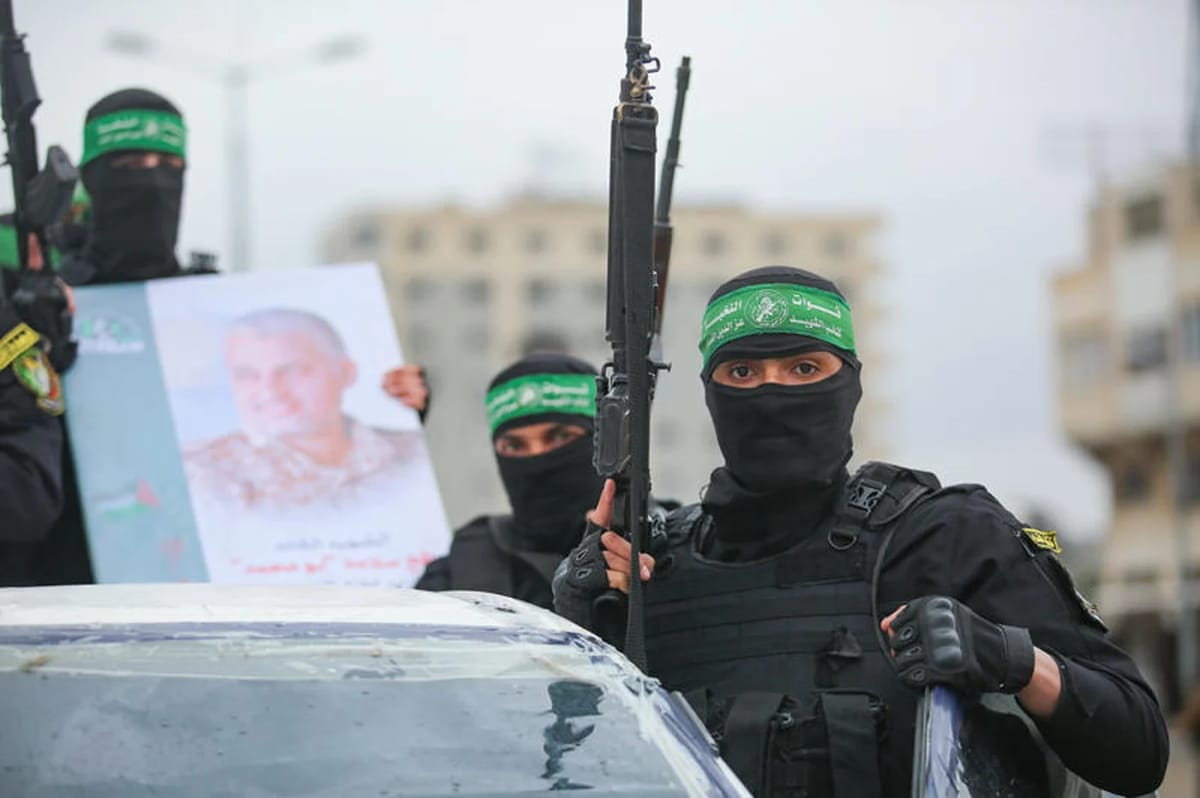
The influx of hundreds of aid trucks daily into the Gaza Strip has caused market prices to drop dramatically, with basic goods becoming affordable again. However, reports from Gaza residents confirm that one crucial reality remains unchanged: Hamas terrorists have re-established their control over the economy, maintaining their grip on cash flow, manipulating currency, and taxing incoming relief to bolster their coffers.
On the surface, Gaza's markets appear to be recovering. Goods are plentiful, and prices have fallen to their lowest point since the war began. For example, a kilogram of sugar that cost 250 shekels during the fighting now sells for just 20 shekels. The price of a single egg dropped from 11 shekels to two shekels, and bread, which was scarce, is now available, with one pita costing only about ten agorot.
Taxing the Aid and Controlling the Currency
Beneath this appearance of recovery is an economic reality meticulously managed by Hamas. The terrorist organization controls the entire supply chain, extracting revenue at every turn. They levy taxes on merchants, regulate the currency flow, and oversee the pricing of essential commodities via their established mechanisms. The relief aid entering Gaza is then sold in markets at "supervised" prices dictated by the organization.
One Gaza resident stated that while prices fell sharply due to the large quantities of aid, the primary problem remains currency control. "There is currency trading on the black market, and no solution has been found for it. We need cash money, and there is none in Gaza."
She elaborated that Hamas is exploiting this scarcity and the distribution of aid: "Hamas is exploiting this, and also the aid that enters, and distributing it only to certain people. Everything flows through them: the money, the aid, and the profits." Despite the control, she admitted that due to the massive volume of goods entering, the situation is tolerable, and prices are reasonable.
The Theatre of the Market
Another Gaza resident confirmed that Hamas is actively finding new ways to generate revenue. They are reportedly still demanding rent for the land used by displaced persons to erect their tents and are devising novel methods to acquire money. The source stressed that an agreement clearly exists between the major merchants and Hamas because the terrorist group “controls the situation here.”
The resident further detailed the black market activity: "You find it on the street, at the stalls and in the tents where goods are sold. These goods are sold at higher prices." He confirmed that Hamas is running a tax system through central merchants, collecting funds from them to increase its war chest, which then drives up the cost of goods.
He added a darker layer to the market manipulation: "Afterwards, Hamas takes those same goods and sells them again at very high prices in the market, through its own people and supporters, who naturally sell at prices that are convenient for them." He emphasized that any independent merchant who is not associated with Hamas is subject to additional taxes levied by the group.
Residents describe the current market stability as a carefully orchestrated performance. The abundance of goods and seemingly reasonable prices are merely the "set design" of a play written and directed entirely by Hamas, which controls the script, the scenes, and the revenue stream, ensuring that regardless of how much aid enters, the real power and cash remain in the terrorists' hands.