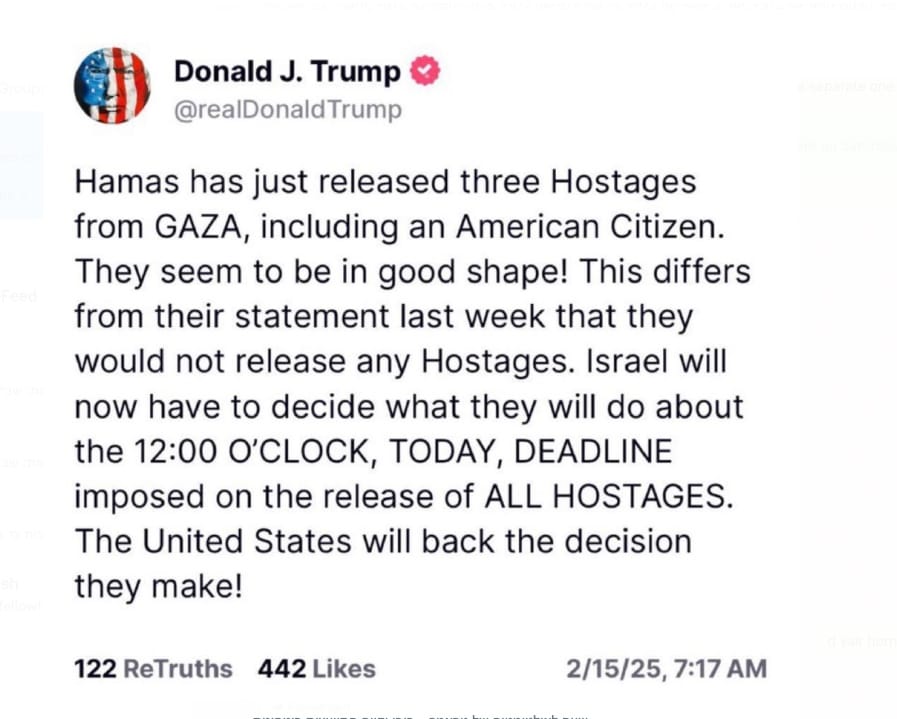
The deadline's passage without full compliance has created a diplomatic quandary. Trump, who had previously encouraged Israel to take decisive action if his demands weren't met, appeared to modulate his stance, stating that the U.S. would support whatever decision Israel makes regarding the ceasefire's continuation.
Israel has shown no immediate signs of abandoning the fragile truce, likely prioritizing ongoing negotiations for the remaining hostages. The situation is particularly poignant for families like the Horns - while Yair gained freedom today, his brother Eitan remains in captivity.
Hamas staged a propaganda-heavy ceremony in Khan Younis during the exchange, seemingly dismissing Trump's ultimatum while maintaining their strategy of using the remaining hostages as leverage in negotiations.
The missed deadline creates a complex diplomatic scenario. While Trump's administration has yet to detail specific consequences, his previous statements promising unwavering support for Israel suggest potential backing for military action. However, the successful release of three hostages today indicates that diplomatic channels remain functional, if slow-moving.
The situation leaves over 100 hostage families in continued uncertainty. Advocacy groups have redoubled their efforts to maintain pressure on both governments, emphasizing the human cost of prolonged captivity while supporting diplomatic solutions over military escalation.
Israeli National Security Minister Itamar Ben Gvir criticized Prime Minister Netanyahu today, urging immediate military action against Hamas.
"Prime Minister - stop missing opportunities. They didn't return everyone!" Ben Gvir posted on social media, responding to today's exchange that saw only three hostages freed while over 100 remain in captivity.
The far-right minister explicitly referenced Trump's recent statements, arguing that "a right-wing government must adopt President Trump's words and rain hell on Hamas." His comments came hours after Trump's noon deadline for total hostage release passed with only partial compliance from Hamas.
Ben Gvir's statement adds to growing pressure on Netanyahu from his right-wing coalition partners to end the current ceasefire and resume military operations in Gaza, despite ongoing negotiations for remaining hostages.
Meanwhile, Netanyahu has convened an emergency assessment meeting at 7:00 PM Israel time (12:00 PM EST) - exactly when President Trump's deadline for Hamas to release all hostages comes into effect.
Two parallel negotiation efforts are underway:
Israeli officials believe Trump's statements could help pressure Hamas to release the six remaining living hostages from the current phase together in a single release, either by Saturday or potentially earlier. Some suggest the return of deceased hostages could be arranged sooner. Israel has currently suspended humanitarian aid convoys into Gaza - one of its last remaining pressure points before returning to combat.
Meanwhile, behind-the-scenes efforts focus on convincing mediators that all parties benefit from continued releases. This proposal, dubbed "Ramadan releases," would extend Phase A of the deal and the ceasefire in exchange for freeing more hostages, particularly those known to be in poor health.
The negotiating team and senior defense officials emphasize that completing Phase A is crucial, warning that another week of tension could collapse the deal at its most fragile stage. They argue discussions about Phase B must begin, even in a different format, both to prevent the agreement's collapse and to enable talks about extending Phase A, as reported by Yaron Avraham.
As night falls in Gaza, the ceasefire remains intact but precarious. The coming days will likely determine whether Trump's deadline becomes a turning point toward escalation or merely another chapter in the ongoing negotiation process.