Get our mobile app
Download on the App StoreGet it on Google Play

Two years since his elimination

How Sinwar was killed: new details emerge

IDF releases operational account of the Rafah encounter that ended with the Hamas leader's death: the hand wound, the chase through the rubble, and the decision made before his body was identified

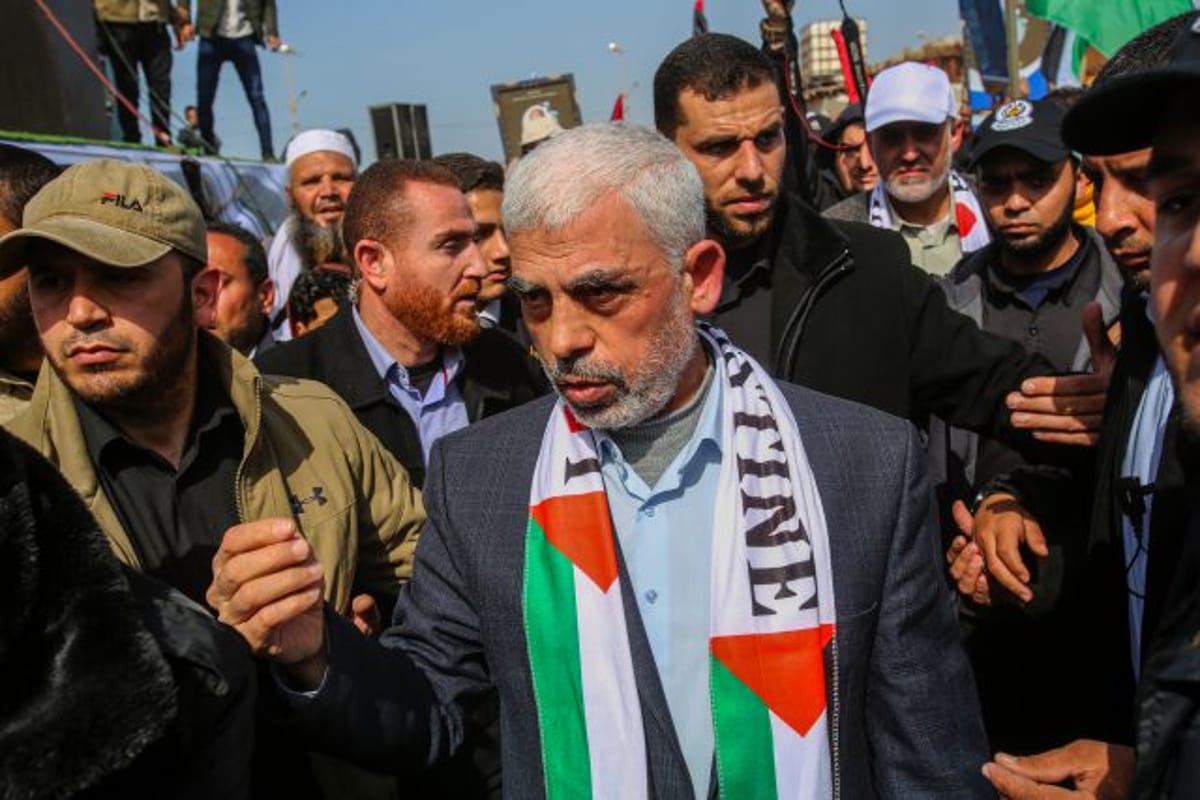
Yahya Sinwar (Photo: Attia Muhammad/Flash90)

Two years after the elimination of Hamas leader Yahya Sinwar, the IDF has released an operational account of the encounter that led to his death in the Tel Sultan neighbourhood of Rafah on 16 October 2024. The details show that Sinwar was first wounded in the hand by fire from a battalion commander, fled into a building, and was later killed after forces identified a blood trail and came under grenade attack.

Several weeks before the elimination, the Gaza Division assumed responsibility for the Rafah sector from the 162nd Division. Under its command operated combat teams from the Nahal Brigade and the 828th Bislamach Brigade, acting on intelligence that pointed to areas where senior Hamas figures were suspected to be present.

On the day of the operation, an observation force identified three terrorists in a destroyed area under IDF operational control. The three were approximately 300 metres from a large-scale engineering operation underway in the zone. Two of them were carrying a blanket; the third wore a vest.
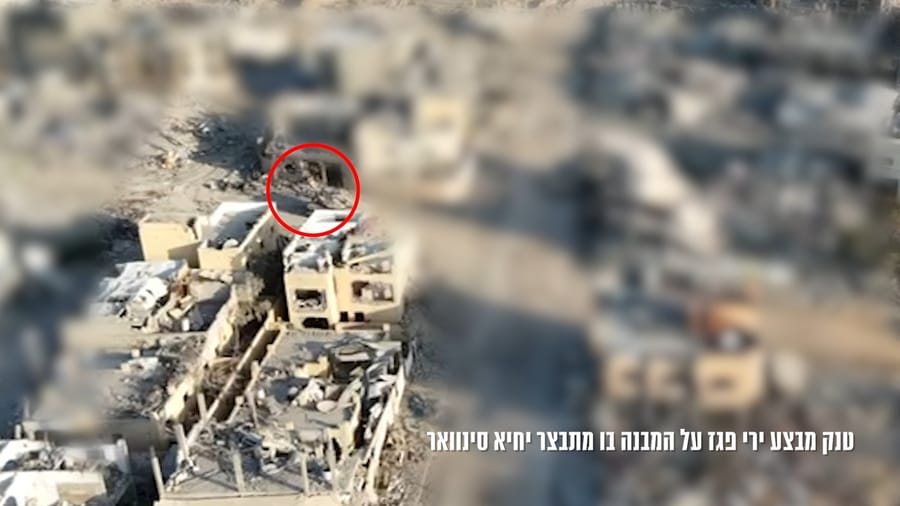
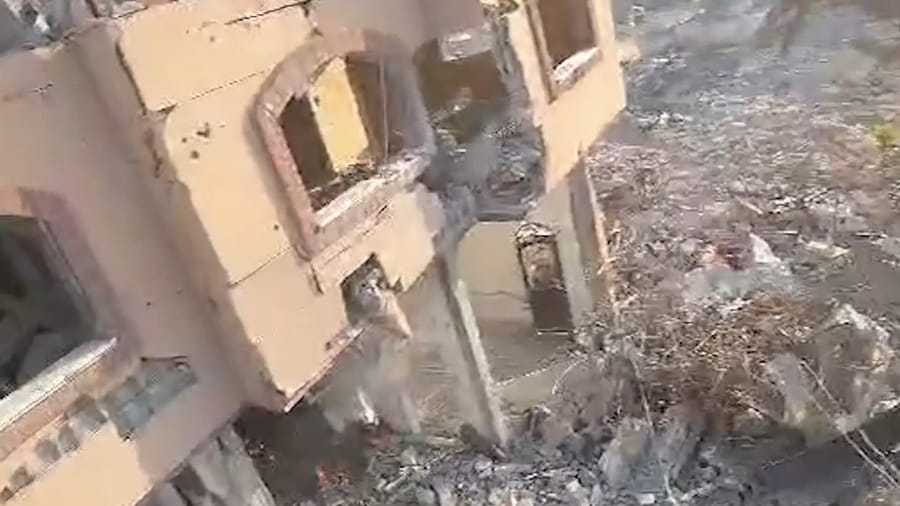
Tank fire on the building where Sinwar hid
Tank fire on the building where Sinwar hid (Photo: IDF Spokesperson)

Following the sighting, forces began sweeps of the area. During the operation, the battalion commander spotted the terrorists and opened fire. One was hit in the hand; only later was it confirmed that this was Yahya Sinwar.

Forces closed in on the area using tanks and deployed drones for reconnaissance. During the engagement, a soldier from the 450th Battalion was seriously wounded and evacuated for medical treatment under fire.

Sinwar, wounded in the hand, fled together with the two other terrorists. The three split into two buildings: two of the terrorists entered one structure, while Sinwar escaped into another.

At this stage, a paratroop company from the battalion entered to sweep the building where Sinwar had taken refuge. During the sweep, the platoon commander noticed a pool of blood and understood that a wounded terrorist was in the vicinity of the force.

Shortly afterwards, two grenades were thrown at the soldiers, one of which detonated. In response, forces opened fire on the building, including tank rounds, machine-gun fire and small arms. During the engagement, Sinwar was killed, though at this stage the forces still did not know they had eliminated the Hamas leader.

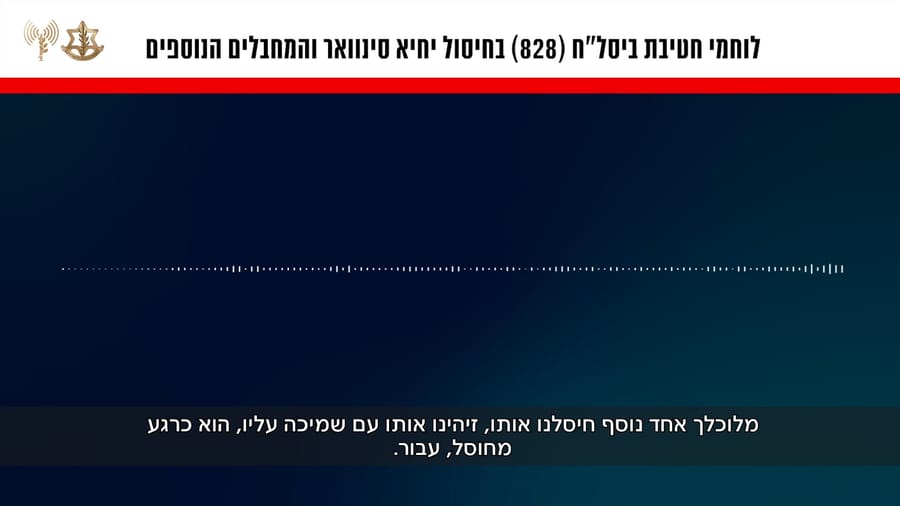
Radio transmissions from the moment of elimination
Radio transmissions from the moment of elimination (Photo: IDF Spokesperson)

Towards evening, a drone was sent into the building and a body was identified through its camera. However, due to field conditions and concern over additional threats, the decision was made not to enter the building during the night and to wait until morning.

Only the following day, when forces returned to sweep the building, was the body of Yahya Sinwar identified and his elimination confirmed.

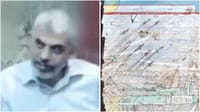
Alongside the operational details, excerpts were released from a handwritten document by Sinwar, previously published and recovered during operations in the Gaza Strip. The document deals with planning for the 7 October attack and includes instructions to document acts of killing and destruction in order to spread images of terror.

"It must be emphasised to those responsible for the units that they must cause these things to be carried out with prior intent. That is to say, to document and broadcast the images as quickly as possible: trampling on the heads of soldiers, shooting at point-blank range, slaughtering people with a knife, blowing up tanks, captives kneeling with their hands on their heads and so on."

Drone footage moments before his elimination
Drone footage moments before his elimination (Photo: IDF Spokesperson)

In another passage, Sinwar wrote: "Events must be planned in advance from which images of terror will emerge. Several burning car bombs that exploded inside an outpost or building and caused terrible destruction. Heart-rending scenes. Enormous fire. Five or ten such images will break their hearts."

Later in the document there is explicit reference to setting fire to communities: "Preparations must be made for two or three operations whose purpose is the burning of entire neighbourhoods, a kibbutz and so on. Spray the place with fuel or diesel from a special tanker, burn the place and broadcast the images."

Sinwar, who was released from Israeli prison, played a central role in building Hamas's military capacity and its operational readiness. In 2017 he was elected leader of the organisation in the Gaza Strip, and was among those chiefly responsible for planning and leading the 7 October 2023 attack.

According to information released to mark two years since his elimination, Sinwar's death marked a turning point in Hamas's conduct. In the short term, his absence was felt in decision-making processes and in the organisation's coordination capacity.

Subsequently, changes were observed in the operational patterns of the military wing, alongside gaps in leadership, erosion of command capabilities, and difficulties in maintaining organisational cohesion.

Ready for more?

Join our newsletter to receive updates on new articles and exclusive content.

We respect your privacy and will never share your information.

Enjoyed this article?

Yes
No
Follow Us:

Unmissable content


Loading comments...

Also of Interest