Get our mobile app
Download on the App StoreGet it on Google Play

Kippot Barzel

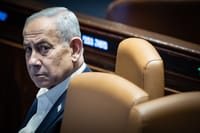
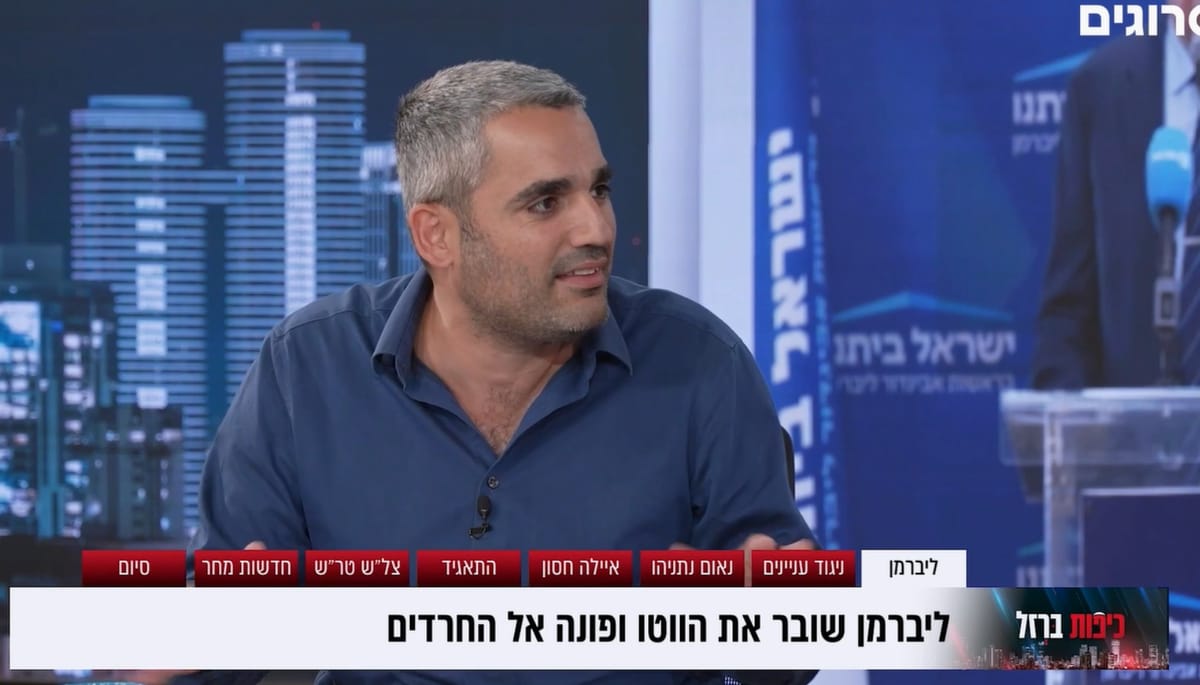
Lieberman's gamble on the haredi veto

The Kippot Barzel panel discussed Lieberman's political gamble in lifting his veto on sitting with haredim, the conflict-of-interest questions around Yachad's candidate for Finance Committee chair, the storm over Netanyahu's toast speech, and the broadcaster's own-goal in losing Ila Hasson

Moshe Shtarit on Kippot Barzel
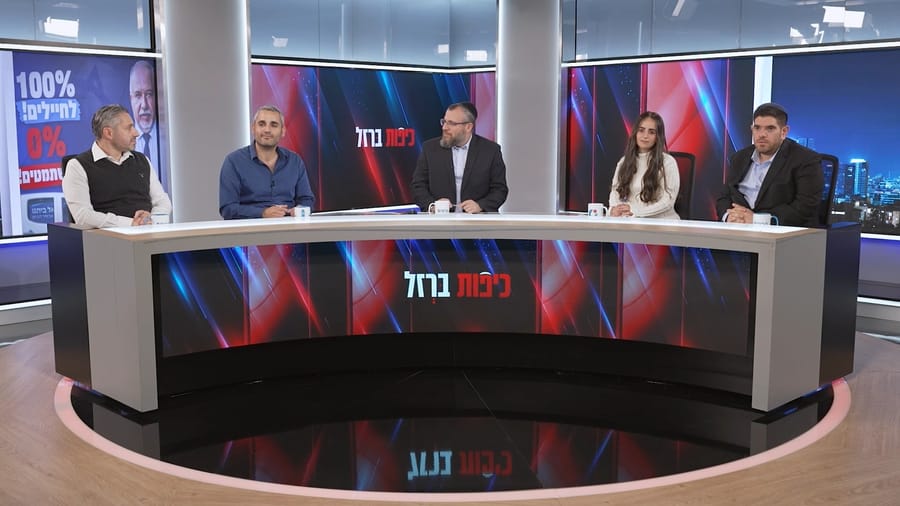
Kippot Barzel panel on Lieberman, conflicts of interest and Ila Hasson
Kippot Barzel panel on Lieberman, conflicts of interest and Ila Hasson (Srugim studio)

The Kippot Barzel panel convened in the Srugim studio to review and debate the events of the past week.

Lieberman breaks the veto on haredim

Host Aryeh Yoeli opened the discussion with Yisrael Beiteinu chairman's surprise move: "Our first topic: Avigdor Lieberman breaks the veto. After we raised it here last week as an option, the Yisrael Beiteinu chairman dropped a political bomb and announced he is canceling his veto on a government with haredim. Ironically, at the hour Lieberman tweeted on X about the possibility of a draft law, his profile image read '100% for those who serve, 0% for draft dodgers.' So are we for the first time on the way to a left-haredi government?"

Strategic adviser Avi Widerman explained the logic of the move from the change bloc's perspective: "It really is no simple event, because at the end of the day the central election promise of the change bloc was 'just not haredim.' But I think Lieberman did well to describe it when he said: 'Guys, we promised, we didn't get the 61... so we need to give up something from the sides of the triangle.' If we have to choose between forming a government without Netanyahu and stopping what's happening now versus the haredim, we're giving up on that side for now. But the haredim will make a mistake if they go only with Lieberman, because Lieberman is a small event and not the heart of the change camp, whereas if Eisenkot gives them the achievement it has more consensus."

Srugim's political commentator Yossi Ben Atar analyzed Lieberman's electoral calculation and the response in the haredi street: "Lieberman in the end looks at the results. His public understands he's much more right-wing. What in the end interests him, haredi draft or right against Arabs? In the end what interests him is right against Arabs. They'll be able to swallow a handshake with haredim rather than a handshake with Arabs, which really would be the end of Lieberman's political story. MK Moshe Rosenthal from Degel HaTorah told me yesterday: 'United Torah Judaism will definitely go,' and in closed conversations in United Torah Judaism they're certain that Shas will also be dragged after them."

Srugim's legal correspondent Hani Adri focused on the haredi trap and the change bloc's tactics: "If you look at the Sephardi haredi public, it's over for them with the arrests. They want to fly abroad, they want to have the option to continue being in yeshivos without a draft law. Lieberman in the end can come and say: 'True, we broke a serious promise here, but what's the option? The option is that Netanyahu will also go and give this draft law to the haredim. Let us break a promise, give what will happen anyway, and at least Netanyahu won't be in power.'"

Deputy mayor of Beit Shemesh Moshe Shtarit expressed sharp protest on behalf of the reservist public: "I have very many friends, I did very many reserve days, people are in complete shock from the move because they thought we were really going to make a covenant of those who serve here. What Lieberman did is a move it will be very hard for him to walk back from. If we go to repeat elections in this situation, the right-wing camp is going to deliver a very, very nice blow of mandates, because very many people won't forgive them for this."


Conflict of interest at the Finance Committee chairmanship

Host Aryeh Yoeli raised the moral issue that rattled the corridors before the Knesset swearing-in: "The one who captured most of the attention is MK Liran Avishar Ben-Horin, who is designated to be appointed chair of the temporary Finance Committee. This appointment raised question marks because her husband, Itai Ben-Horin, owns one of the largest public relations firms in the economy, the spokesman for Strauss, Fox, Africa Israel, Mizrahi Tefahot Bank and dozens more companies. How will she even be able to manage the committee when in half the discussions she's forbidden to participate because of conflict of interest?"

Hani Adri attacked the double standard in the public discussion: "Especially striking is the silence. Suddenly everything's fine, there's no problem with it. What made me laugh most was seeing responses from left-wing people claiming 'what does she have to do with her husband, she's an independent woman.' There's a sharp conflict of interest here, and I can't understand it because they can come and appoint so many other people. It's simply a stumbling step by Bennett and Eisenkot at the start."

Avi Widerman presented a balancing position: "Conflict of interest touches everyone, but I think it's good we're talking about it and good it's out there. In my view the American solution is preferable: I want there to be people with conflicts of interest because it brings more experienced people to the front of the stage, but that everything should be out there. She'll sign a conflict-of-interest agreement and our criticism will be accordingly."

Moshe Shtarit, a Beit Shemesh city council member, came out against selective enforcement and hypocrisy: "Everything here is from position. My assistant in the role for seven months wasn't approved and was denied a salary because his mother is an aide in the municipality for 25 years. And here her husband is represented with dozens of companies and lobbyists, and they say 'her husband isn't a Likud central committee member so there's no conflict of interest.' Here in this case it's screaming. There's nothing more about the substance, not in the press and not in substantive issues, everything here is from position."

The Knesset toast: Netanyahu's speech and the explosion in negotiations

The discussion moved to Prime Minister Benjamin Netanyahu's sharp speech at the Knesset toast ceremony. Aryeh Yoeli wondered: "Netanyahu exploited the speech that was supposed to be ceremonial for an attack on the heads of the left bloc and especially on their intention to cooperate with the Arab parties. Yair Golan left the hall, and in the Yashar party they announced they're canceling the negotiation meeting. Should Netanyahu have exploited a state and unifying ceremony to attack?"

Moshe Shtarit responded: "I was in the session when the speech was delivered. Netanyahu said the things inside: 'Guys, where are you going?' A few minutes before that Amir Ohana delivered the most unifying speech I've heard in the Knesset, but nobody gave it compliments. We're conducting a political campaign in which everything is already slaughtered and found in dispute."

Yossi Ben Atar explained the political motive: "Netanyahu is speaking to his base. His base sees what's happening in the world and fears a government with Arabs. From his perspective he's speaking to the base and he knows this is what brought him a huge achievement in Likud compared to expectations."

Hani Adri added an insight on behind the scenes: "Netanyahu wouldn't deliver such a speech if he knew it was going to a crystallizing place. He knows there are negotiations and that they won't sit with him, and therefore allows himself to go with such a speech."

Avi Widerman surprised with a prediction: "I won't be surprised if in the end we find ourselves in a unity government. I'll surprise you, even that Netanyahu will give up on rotation first. When Netanyahu understands the event is going to 4 years in opposition, he'll do his calculations. In my assessment Eisenkot prefers it."

Upheaval at the broadcaster: Ila Hasson ends her role

In the "Good, Bad and Unnecessary" segment the panel dealt with journalist Ila Hasson's departure from the public broadcaster (Kan 11) after she refused to read an apology text dictated to her by management.

Moshe Shtarit defined the event as "bad": "Bad for Kan 11, the broadcaster shot itself in the foot. She's one of the most interesting journalists today in Israel, and she moved many viewers to the seven o'clock slot. This will lower their ratings, and in the end we're talking about a broadcaster that leans on 900 million shekels a year from the public."

Hani Adri saw the event as "good": "It's good both for the broadcaster and for her. For her, because if she had apologized according to what they dictate to her it would have lost from her value as an independent journalist. And for the broadcaster, because until today they held her as a fig leaf of the right, and she was like a bone in the throat for them. Good that they're freeing themselves from it."

Avi Widerman also supported the decision: "It's good. From my perspective racism is a red line, and whoever expresses themselves in racism, I don't care who it is and what their opinion, needs to fly."

Tarsh to Aryeh Deri; Tzalash to Avigdor Lieberman

To close the program the panel members awarded the weekly Tzalashim and Tarshim:

  • Moshe Shtarit (Tzalash): To the Knesset members of Israel for the standing ovation given to Elisha Madan in the Knesset. "At this time, the people want unity and unifying things. We're sick of the ego and the stupid quarrels, and to see everyone applauding instills hope."
  • Yossi Ben Atar (Tarsh): To Aryeh Deri. "The man didn't bring Shas an achievement, and still 300,000 people voted for him. All this running away after the elections and the unnecessary briefings instead of coming and saying thank you to the activists and voters, that's not leadership."
  • Hani Adri (Tarsh): To journalist Amit Segal. "Amit Segal brought a bombshell exposure on the Boaz Belet recordings at the police, but two days later the coverage was blurred. When he says on the radio he hurried home and didn't stay to open a panel in the edition, that's a miss. When there's such a bomb you need to make sure it's the center of the discussion."
  • Avi Widerman (Tzalash): To Avigdor Lieberman. "For sober and courageous political conduct. It takes unusual courage to come and look voters in the eyes and say we need to be flexible to achieve the goal."
Ready for more?

Join our newsletter to receive updates on new articles and exclusive content.

We respect your privacy and will never share your information.

Enjoyed this article?

Yes
No
Follow Us:

Unmissable content


Loading comments...

Also of Interest