Get our mobile app
Download on the App StoreGet it on Google Play

Israel Elections 2026

Ex-Shin Bet Chief: No Coalition Without Draft

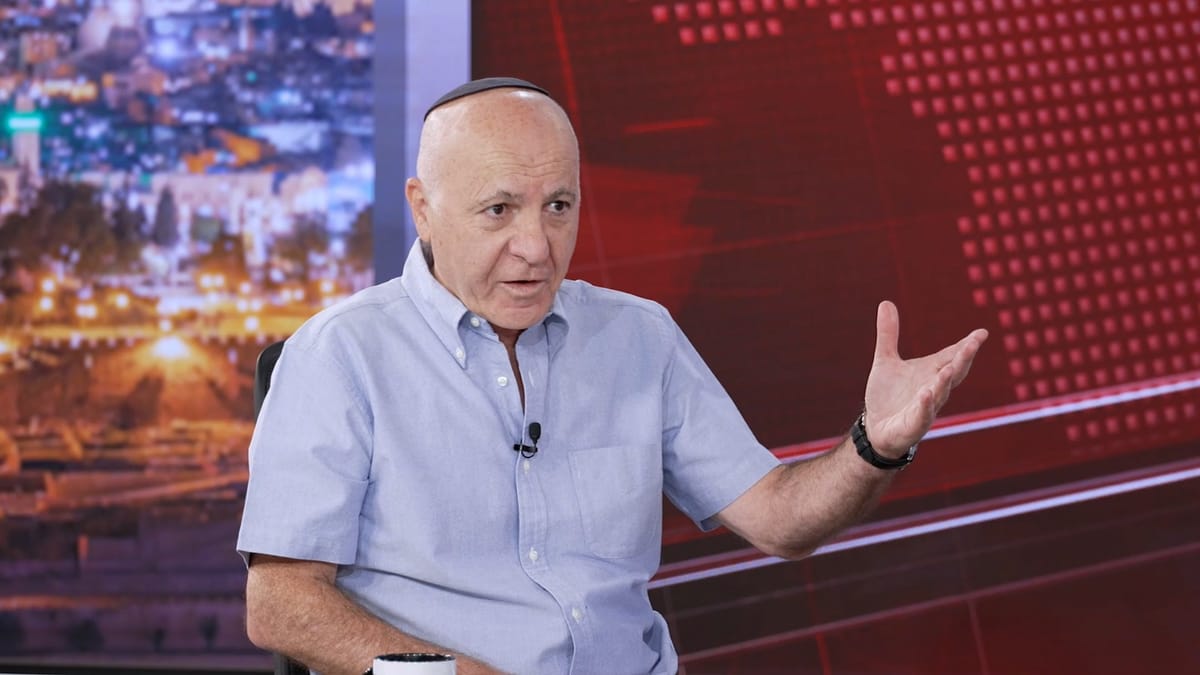
In his first interview with haredi media, Yoram Cohen, number two on Gadi Eisenkot's party list, says door is closed to ultra-Orthodox parties unless they accept mandatory service for all citizens — even if it means repeat elections

Former Shin Bet Chief Yoram Cohen Opens Up about Haredi Draft, October 7th and the Future
Ful interview
Ful interview

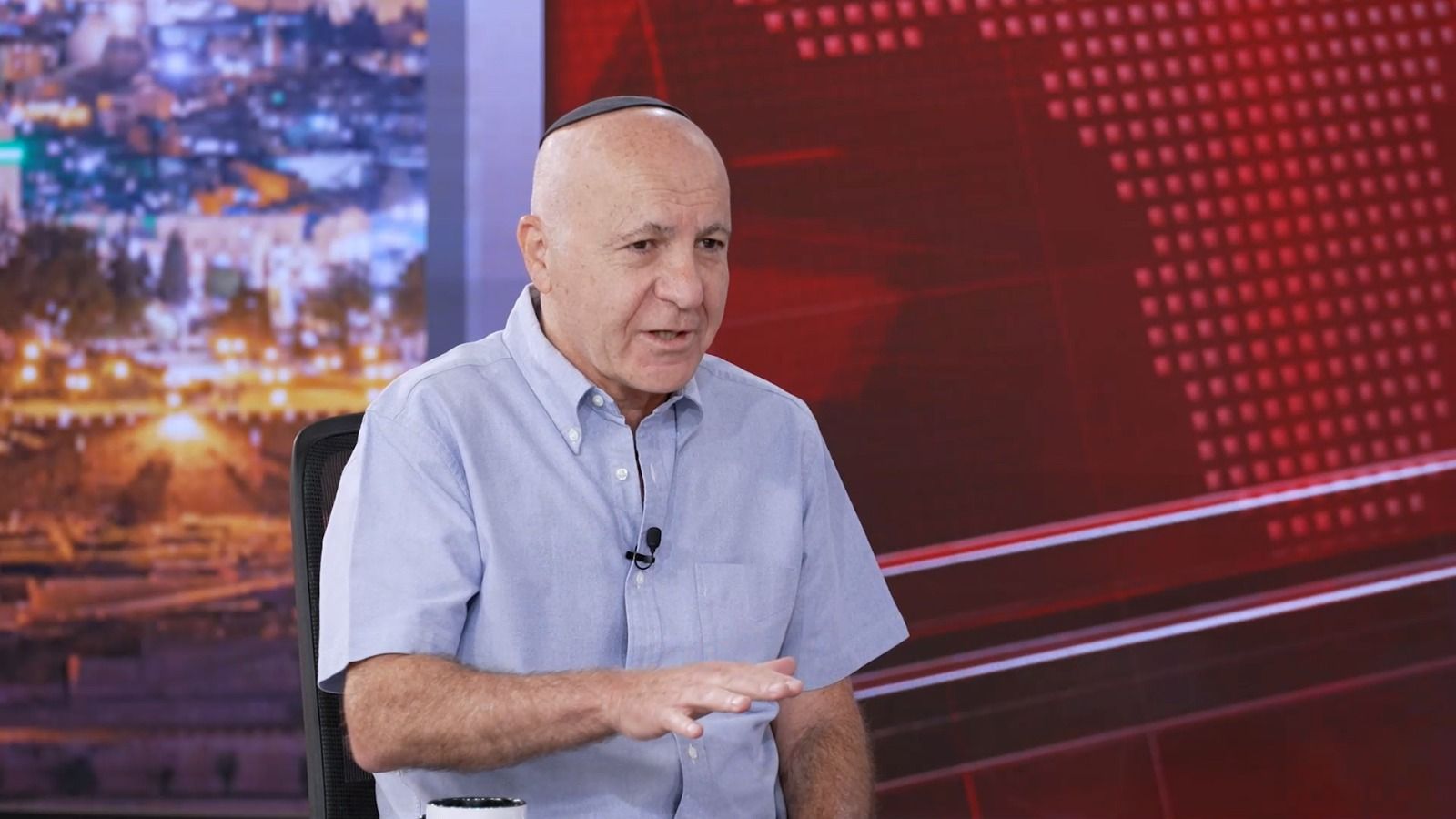
In his first interview with haredi media outlets, former Shin Bet director Yoram Cohen, who holds the second spot on Gadi Eisenkot's "Yashar" party list, has drawn a firm red line for ultra-Orthodox political leadership.

Cohen made it clear that from his party's perspective, without explicit agreement to mandatory military or civilian service for all citizens, haredi parties have no path into any future coalition government. He pledged not to compromise on the principle of universal service even if it means going to repeat elections, and flatly rejected claims by Knesset Member Moshe Gafni that these are empty campaign promises that will evaporate when the moment of truth arrives.

He detailed his party's position on the burden-sharing issue, emphasizing that his party is not acting out of vengeance but from an urgent existential need for combat manpower in the Israel Defense Forces. According to Cohen, the framework proposed by Eisenkot includes exemptions for up to 3% of each age cohort for Torah "prodigies," out of respect for Torah scholars but without undermining the principle of equality.

Regarding the events of October 7, the former Shin Bet chief divided responsibility between the professional and political echelons. He argued that the central failure in providing early warning and the collapse of defensive systems falls primarily on the IDF and Shin Bet, which failed in their situational assessments. However, he placed significant weight on Prime Minister Benjamin Netanyahu, who for years shaped the containment policy toward Hamas and approved the flow of Qatari funds into the Gaza Strip.

Asked about recent reports in Haaretz claiming that the president of the United Arab Emirates warned Netanyahu before the October 7 attack with specific intelligence about Gaza, Cohen said he has no intimate knowledge of that particular incident. "Such a report could be true, but I think it would be appropriate, let's say for everyone's benefit, for this to be verified by an international body," he said.

"Our problem, I think, is Mr. Netanyahu, the prime minister, who has already been caught multiple times in lies and not telling the truth about events that certainly occurred. And the second thing: he did receive warnings from both the Shin Bet chief and the head of Military Intelligence before the war, not warnings specifically about Gaza, but warnings about war. And these things, either he dismissed them as we saw on Channel 14, or he didn't attach importance to them."

When asked how he divides responsibility for the failures that led to the surprise attack, Cohen said: "I think the weight of responsibility first falls on the professional echelon, primarily the IDF and Shin Bet, because they failed to generate a sufficiently dominant, good warning about Hamas's intention to invade the State of Israel, and that's a very major failure. The Mossad also bears responsibility, not regarding Gaza but regarding meetings that took place in Qatar, Beirut, and Damascus, in the context of the coordinated attack that ultimately wasn't coordinated.

"But the central failure is obviously a failure in not providing warning. The second thing: our defense collapsed, and after that our combat wasn't effective enough. But there's also significant weight on the political echelon, led by the prime minister, because the prime minister intensively shaped Israel's security concept for years, both the containment concept toward Hamas and other much more terrible things, such as giving approval for the Qataris to fund Hamas for years in very large amounts."

Asked if he supports former Prime Minister Naftali Bennett's call to declare Qatar an enemy state on day one of a new government, Cohen replied: "I think they should have been defined long ago as a state hostile to Israel. Where to define them, under what title, that needs to be brought to a discussion with the relevant institutions: the Foreign Ministry, the National Security Council, Shin Bet, all the relevant bodies. And if that's the decision, it will be an accepted decision. But it's not a decision just for the media."

Yoram Cohen
Yoram Cohen

Addressing Prime Minister Netanyahu's claim that if he had been woken up on the night of Simchat Torah everything would have looked different, Cohen said: "I think there was reason to wake him. The problem was this: both the Shin Bet leadership and the IDF leadership, generally speaking, didn't think we were facing such an event. It's not that they thought we were facing an attack and decided not to wake the prime minister --- that's not true!

"I'll explain why that's factually incorrect: all the information that Military Intelligence and Shin Bet had was passed to the National Security Council and to the prime minister's military secretary around three or four in the morning, all the information in their possession. The second thing: their assessments were also passed, which were mistaken assessments. They weren't correct assessments, they were mistaken assessments. So they didn't hide anything from the prime minister.

"The third thing: I saw the memorandum, the summary that Ronen Bar made when he brought his entire staff unusually to Tel Aviv, they discussed the matter, at five in the morning he summarized all the options they saw, and that summary, he instructed his chief of staff to pass it to the prime minister."

On his decision to join politics and specifically Gadi Eisenkot's party, Cohen explained: "I had meetings and offers from almost all the Zionist party leaders. I rejected them for various reasons. I think we're in a crisis period following the war, with challenges both in Israeli society internally and in security.

"I chose Gadi because I've known him for 30 years. I know his personal capabilities, his character, his operational independence, the depth of his thinking, and especially two important qualities that today are almost not common currency: first, he's a trustworthy person. I'm not saying others aren't trustworthy, but his reliability is at a very high level. And second, he has personal integrity that I greatly appreciate."

Asked if he already knows what position he wants the day after elections, defense minister or national security advisor, Cohen said: "It's clear I came into politics to make an impact, and to make an impact you need to fill central roles. I didn't set any conditions with Gadi and didn't sign any contract or memorandum with him regarding a position or number. Our job, and we're working hard for this: to win the elections, to lead the bloc, for Gadi to be prime minister (and he'll be an excellent prime minister) and after we see the results and the coalition."

Regarding the day after elections, the former Shin Bet chief said: "We want to rise above 61 seats so we'll have stability, but we want to do this and create or shape a coalition with parties that will stand with us on three important principles, which are also important to haredi society: they'll recognize that the state is a Jewish and democratic state. The values of the Declaration of Independence. Service for all. Service for all means service for all: men will serve three years either in military service or civilian service. And from our perspective currently, unfortunately (I say this unfortunately, I'm very sorry about it) neither the haredi parties, nor, separately, the Arab parties, accept these three principles, and therefore they're not relevant."

Cohen addressed the draft issue again: "I think it's a very serious mistake by the haredi political leadership and even the rabbinic leadership, that they don't grasp the gravity of the hour and the need, and don't go and say 'something has happened, we need to enter negotiations and see how we help a public that needs combat manpower.' Combat! We don't need kashrut supervisors, and we don't even need people for IDF Radio."

He emphasized: "We didn't come with a framework, I don't want to say the word populist, but we know that starting from zero to reach 100 is something that will take... it's a process, it will take a very long time. So therefore we came, and Gadi already published a year ago, even before I entered politics when he was at the beginning of his independent political path, he said: we'll go, or I believe, in a line of up to 3% deferment per age cohort. That's not 30%, that's something else! That means out of 150,000 people who enlist per year, 3% of them will receive exemptions - the prodigies. These prodigies will probably mostly be haredim, but there will be musicians, and there will be athletes, and there will be other people that a committee will determine who these prodigies are and give them deferment."

According to him: "Out of respect for Torah we see this as necessary, we see it as important, not to cut down the entire tree from the bottom. But we think we have a need. We're not coming from a direction of revenge."

When told that Shas says "we're with Netanyahu through fire and water" while United Torah Judaism's discourse is different, saying they're open to negotiations with Eisenkot after elections, Cohen was asked if the door is open to UTJ the day after, or if without universal draft they have nowhere to go.

"They have nowhere to go! Universal service for all citizens of the State of Israel, Jews and Arabs, is our central flag because it's an existential need. We also want to make moves in education, toward state education, core curriculum and so on. But on the security issue, what you asked, that's the cornerstone of joining the coalition. Whoever doesn't think carefully and do soul-searching, and forgive me for saying, repent on this matter, and do practical action and not just study, I think they're not part of the coalition."

In other words, you're telling United Torah Judaism: friends, you're not threatening Netanyahu because you don't have an open door on the other side.

"Certainly, I'm not getting into the tensions and leverage they're applying on Mr. Netanyahu and such extortion with jobs, money and so on, which we haven't talked about at all. About the terrible thing, about the image that the haredi public has in the eyes of the secular public --- doesn't that bother people? What a bad image there is! They need to go back and do homework on everything: on the image of haredim, on the partnership of haredim."

When told that Gafni says these are pre-election declarations and that after elections they won't reach 61 seats and will give haredi parties no less than Netanyahu gives them because they'll need a coalition, Cohen responded: "I'm willing to commit that this won't happen. I'm willing to commit that this won't happen!"

Even at the cost of repeat elections?

"Even at the cost of repeat elections! And there's an option... we'll reach above 61, 63, and we'll form a government. And I'm already telling you here that in conversations we're having, in contacts we have — we have contacts also with people from within the current coalition. And I believe that in the current situation, some of them will also find a door to us the day after elections."


Ready for more?

Join our newsletter to receive updates on new articles and exclusive content.

We respect your privacy and will never share your information.

Enjoyed this article?

Yes
No
Follow Us:

Unmissable content


Loading comments...

Also of Interest