F-35-Turkey Standoff Explained.

Trump Eyes F-35 Sale to Erdogan, Israel Pushes Back

Trump signaled he will offer Turkey F-35 jets at the Ankara NATO summit, reviving a six-year ban and drawing a firm red line from Israel over shared technology.

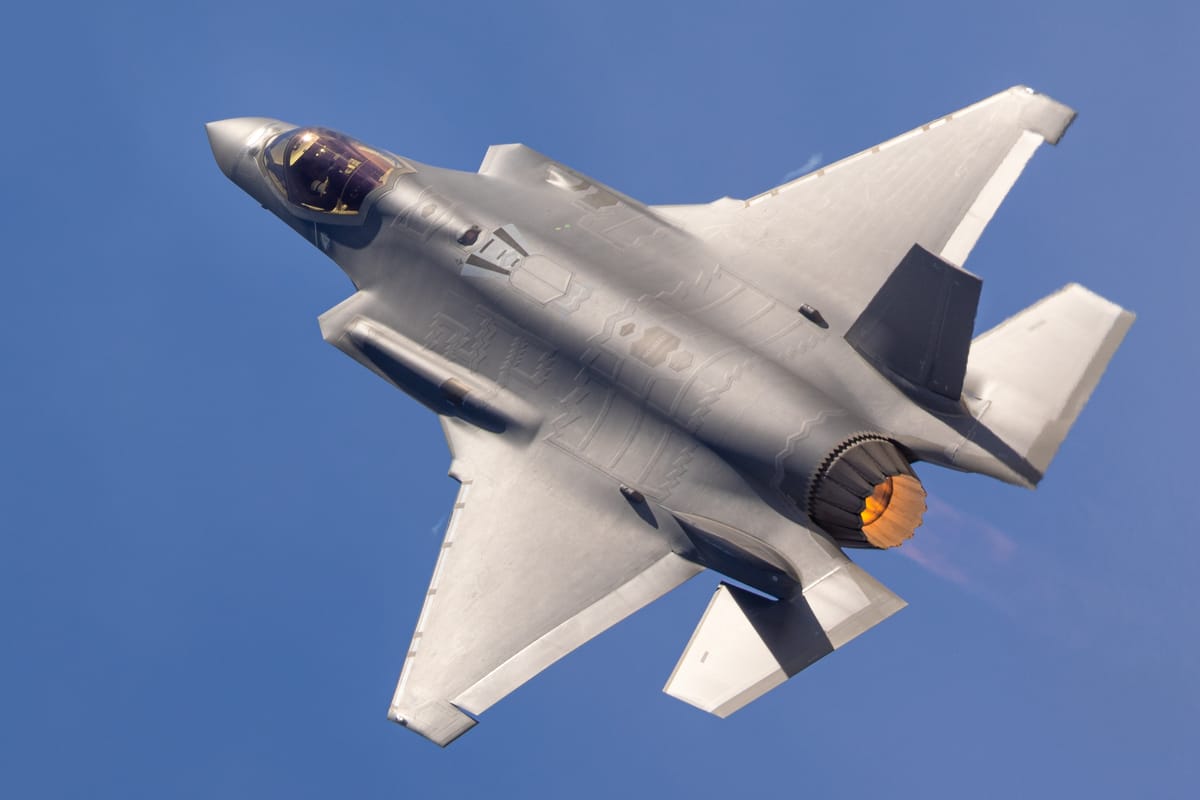
F-35A Lightning II  with afterburner on

President Donald Trump strongly signaled Wednesday that he intends to reward Turkish President Recep Tayyip Erdogan with American F-35 stealth fighter jets ahead of next month's NATO summit in Ankara, a move that would reverse a six-year exclusion and is already drawing concern from Israel.

Speaking alongside NATO Secretary General Mark Rutte at the White House, Trump was asked whether he would be arriving in Ankara with "a big gift bag" for Erdogan, including approval for Turkey's request for F-110 jet engines and F-35 fighter aircraft. "Yeah, I think so," Trump replied. "He's a strong member of NATO. I'm going to probably do something that's going to make him very happy."

Trump framed the potential deal as a reward for Erdogan's restraint during the U.S.-Iran conflict. "He's a friend of mine, and he stayed out of the war," Trump said, adding that he had personally urged Erdogan not to become involved. "He was a prime candidate to go into the war with Iran, maybe on the Iran side, because he's not a big fan of Israel, as you know. And I asked him to stay out; he stayed out."

Trump's claim that Erdogan was poised to enter the war on Iran's side came even though Turkey gave no indication it was preparing to join the conflict, and in fact came under Iranian fire at one point.

Why Turkey Was Kicked Out

Ready for more?

Turkey was expelled from the F-35 program in 2019 after acquiring the Russian-made S-400 air defense system, which the United States said undermined the security of allied military technology. As the White House stated at the time, "The F-35 cannot coexist with a Russian intelligence platform that will gather information about its advanced capabilities."

The legal barrier remains significant. Under Section 1245 of the National Defense Authorization Act, Turkey cannot rejoin the program unless the president certifies to Congress that Ankara no longer possesses or operates the S-400 and that the system poses no risk to the F-35.

Vice President JD Vance signaled that certification process is underway. "We're running the traps and confirming that's happened," Vance said. "This is really a congressional thing, and ensuring that Turkey has complied with American law so they can get the F-35s." He said the administration would make an announcement once the review was complete.

  • Israel's Red Line

    The prospect of American F-35s in Turkish hands has triggered a firm response from Jerusalem. Israel's Deputy Foreign Minister Sharren Haskel publicly stated that Israel will not allow the transfer of Israeli-developed technology embedded in the F-35 to Turkey, even if the United States approves a sale. "A lot of the technology inside the airplane is technology produced by Israel," Haskel said. "And obviously this is not something that we will share with them."

    Israeli firms produce key subsystems for the aircraft, including outer wing components and helmet-mounted display technology. Even if those components were excluded from a Turkish-configured aircraft, Israel's concerns remain relevant because U.S. law requires a qualitative military edge assessment before approving major arms sales in the Middle East, meaning Israeli opposition can still influence U.S. decision-making even without a formal veto.

    Israel's anxiety is not purely technical. Israeli officials view Turkey's irredentist policies as a strategic threat, especially in Syria, where the two countries have increasingly clashing interests. Erdogan has ramped up hostile rhetoric toward Israel in recent months, with Turkey's interior minister calling for action against the Jewish state.

    Congressional opposition has also surfaced. Sen. Rick Scott wrote that Turkey "funds Hamas and the Muslim Brotherhood, hates Israel, and loves Russia and Iran," adding: "Good luck buying F-35s, F-16s, and other American-made defense platforms."

    Trump, asked whether Erdogan's fraught relationship with Israel was a complication, was dismissive. "We're not going to have any problems, nothing is going to happen," he said, calling Erdogan "a very good friend."

  • The NATO summit in Ankara is scheduled for July 7-8 and is expected to focus on implementing the alliance's new defense spending commitments, expanding defense industrial production, and coordinating continued support for Ukraine. Turkey, which sits at the strategic crossroads of Europe, the Middle East, and the Black Sea, has long leveraged that geography for maximum diplomatic return.

    Despite being excluded from the F-35 program, Turkey has significantly expanded its domestic defense industry, producing its own drones, missiles, and naval vessels, and is developing the KAAN, an indigenous fifth-generation stealth fighter intended to replace its aging F-16 fleet in the 2030s.

    For now, the F-35 question remains unresolved, with the White House promising an announcement after its legal review is complete and Congress and Israel each holding cards that could complicate or block a deal Trump clearly wants to deliver.

  • Ready for more?

    Join our newsletter to receive updates on new articles and exclusive content.

    We respect your privacy and will never share your information.

    Enjoyed this article?

    Yes (21)
    No (1)
    Follow Us:

    Unmissable content


    Loading comments...

    Also of Interest