The American airman who spent two days alone in the mountains of Iran after his fighter jet was shot down in April will give his first public account of the ordeal this weekend, in an interview that also brings together the senior commanders who ran the operation to bring him out.
CBS said Tuesday that Norah O'Donnell interviewed the officer for the season premiere of 60 Minutes, airing Sunday, September 13. He is identified only by his mission call sign, Dude 44 Bravo. The colonel describes ejecting from the aircraft, the injuries he sustained, how he evaded Iranian forces on the ground, and what he said to the commandos who finally reached him. O'Donnell also interviewed Defense Secretary Pete Hegseth, Joint Chiefs Chairman Gen. Dan Caine, and Adm. Brad Cooper, the head of US Central Command who served as operational commander of the war with Iran.
The aircraft was an F-15E Strike Eagle, shot down over southwestern Iran on Friday, April 3, the first crewed American warplane lost over the country in more than five weeks of fighting. Trump said afterward that it had been hit by a shoulder-fired heat-seeking missile. Days earlier, he had said publicly that American and Israeli operations had left Iran without functioning anti-aircraft equipment or radar.
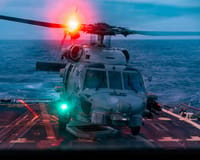
Both crew members ejected and came down in different places. The pilot, call sign Dude 44 Alpha, was recovered by an HH-60W helicopter on Friday afternoon. Caine later told reporters the aircraft came under fire from what he described as everyone in Iran with a small arms weapon, and that a trailing helicopter took several hits, leaving a crew member with a minor injury.
The weapon systems officer was still on the ground. He hiked to a crevice high in the mountains and activated an emergency beacon. The Revolutionary Guard searched the area around the crash site, and Iranian officials publicly offered a reward of 60,000 dollars to locals who found him. Search parties formed in nearby villages. According to reporting in the New York Times at the time, American aircraft bombed convoys that moved toward where he was hiding.
He was reached in the early hours of Sunday, April 5, roughly 48 hours after the shootdown. Trump said the operation involved more than 170 American aircraft and around 200 troops, with assistance from the CIA. Special operations units including SEAL Team 6 and the 160th Special Operations Aviation Regiment took part, working from a temporary forward site established inside Iran.
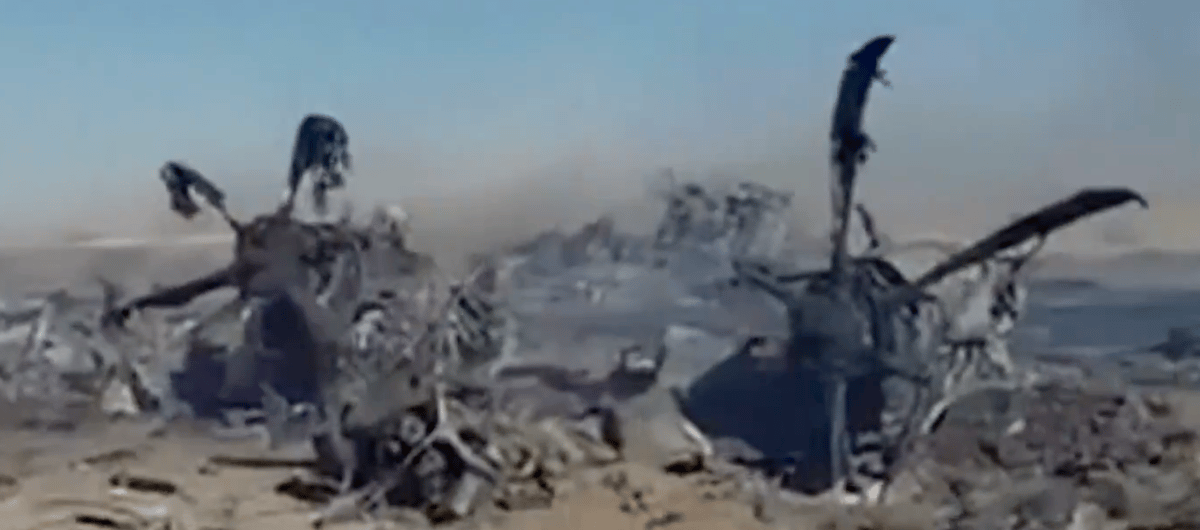
The extraction did not go smoothly. Two MC-130J aircraft waiting to fly the airman out malfunctioned on the ground, and American forces destroyed the two disabled planes along with four helicopters rather than leave them. The commandos and the injured officer were loaded onto three replacement aircraft. Trump announced shortly after midnight that the airman was safe, describing him as a highly respected colonel who had been hunted behind enemy lines. He said there were no American fatalities in the operation.
CBS has described the mission as one of the largest and most complex rescue operations in US military history.