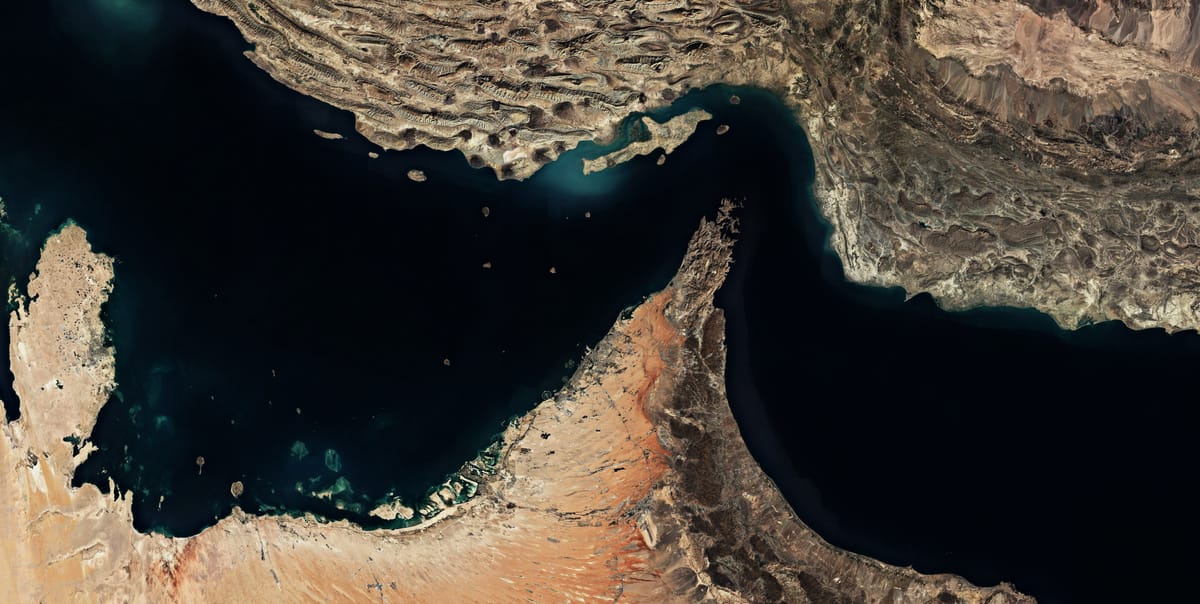
Iranian media pushed back on US President Donald Trump’s claim that an emerging agreement to end the Iran war would include reopening the Strait of Hormuz, saying the waterway would remain under Iranian control.
Trump wrote on Truth Social that an agreement with Iran had been “largely negotiated” and that final details were being discussed. He said the deal would include reopening the strait, the key route for global oil and liquefied natural gas shipments that Iran has largely restricted since the war began in late February.
“Final aspects and details of the Deal are currently being discussed and will be announced shortly,” Trump wrote.
He said he had taken part in a call with leaders and officials from Saudi Arabia, the United Arab Emirates, Qatar, Pakistan, Turkey, Egypt, Jordan and Bahrain, and had also spoken separately with Prime Minister Benjamin Netanyahu. Trump said the call with Netanyahu went “very well.”
But Fars, a semi-state Iranian outlet close to the Islamic Revolutionary Guard Corps, dismissed Trump’s description as “incomplete and inconsistent with reality.” The outlet said the strait would remain under Tehran’s management under the latest draft text exchanged between the sides.
Ebrahim Zolfaghari, a spokesman for Iran’s military command, also rejected Trump’s claim.
“Hormuz will stay fully under Iranian control. We decide who passes, when, and how,” he wrote on X.
The dispute points to one of the central tensions in the talks. Iran has effectively restricted the Strait of Hormuz since the war began, rattling global energy markets and increasing pressure on Gulf states and Washington to secure a deal.
Iran has proposed creating a Persian Gulf Strait Authority to regulate shipping and impose transit fees, according to regional officials and diplomats involved in the talks. Gulf states and Western governments have expressed concern that Tehran is trying to establish long-term control over one of the world’s most important maritime chokepoints.
Five Gulf states, Bahrain, Kuwait, Qatar, Saudi Arabia and the United Arab Emirates, have reportedly warned international maritime authorities against recognizing any Iranian-controlled mechanism in the strait.
Tehran and Washington are exchanging proposals through Pakistani mediators. A Pakistani official involved in the negotiations told Reuters that an interim deal to end the war was in its final phase and was “fairly comprehensive,” while cautioning that “it is never over till it is done.”
Iranian officials have said the current talks are focused on a cessation of hostilities, sanctions relief, guarantees against future military action and the status of the Strait of Hormuz, while broader nuclear issues would be addressed later.
The United States has pushed for a more comprehensive agreement that would also address Iran’s nuclear program, uranium enrichment and its stockpile of highly enriched uranium.
Trump said earlier Friday that there were even odds of either securing a “good” deal or renewing the US bombing campaign.
“One of two things will happen: either I hit them harder than they have ever been hit, or we are going to sign a deal that is good,” he said.