Iran's Islamic Revolutionary Guard Corps ran parallel procurement operations through the United Arab Emirates and Chinese suppliers to covertly acquire advanced military technology used to target American forces and US-allied infrastructure across the Middle East, according to two Financial Times investigations published in April and May 2026. Taken together, the revelations describe a systematic campaign of sanctions evasion operating through Gulf free zones, front companies, and Chinese commercial firms with links to the People's Liberation Army.
Investigation 1: The spy satellite (April 2026)
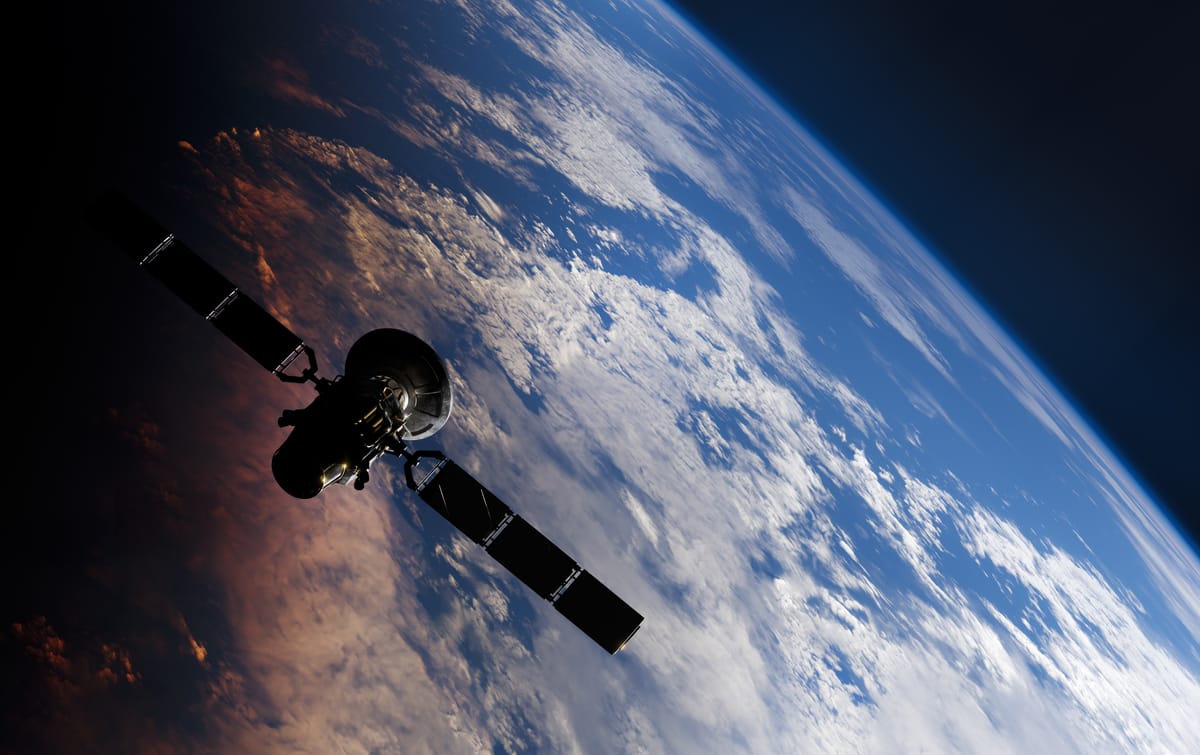
The first FT investigation, published April 15, revealed that the IRGC Aerospace Force secretly acquired a Chinese-built reconnaissance satellite called the TEE-01B, also known as Earth Eye 1, in late 2024 at a reported cost of 250 million renminbi, roughly $36.6 million. The deal was priced in Chinese currency and executed directly by the IRGC Aerospace Force, signed by a brigadier general within that structure.
The satellite was built and launched by Chinese company Earth Eye Co. from the Jiuquan Satellite Launch Center on June 6, 2024, and operational control was then transferred to the IRGC after launch through a post-launch transfer model designed to avoid conventional export procedures. As part of the arrangement, the IRGC received access to commercial ground stations operated by Emposat, a Beijing-based satellite services company linked by a US Congressional report to the People's Liberation Army Aerospace Force. That network of ground stations, distributed across Asia and Latin America, gave Iran a geographically dispersed satellite control capability that its own domestic stations could not provide.
What the satellite could do
The TEE-01B captures images at half-metre resolution, comparable to Western commercial satellites and far superior to Iran's previous best military satellite, the Noor-3, which operated at roughly five-metre resolution. It allowed Iran to independently verify target status before and after strikes, reducing its reliance on other intelligence channels.
Leaked documents obtained by the FT showed Iranian military commanders used the satellite to conduct surveillance of major US military sites across the region. Logged targets included Prince Sultan Air Base in Saudi Arabia, monitored on March 13, 14 and 15. President Trump confirmed on March 14 that US planes at Prince Sultan had been hit. The satellite also surveilled Muwaffaq Salti Air Base in Jordan, sites near the US Fifth Fleet naval base in Bahrain, Erbil airport in Iraq, Camp Buehring and Ali Al Salem airbase in Kuwait, and Camp Lemonnier in Djibouti. Gulf civilian infrastructure monitored included the Khor Fakkan container port and a power and desalination plant in the UAE.
China's foreign ministry denied the report, calling it fabricated. Earth Eye Co. and Emposat did not publicly comment.
Investigation 2: The UAE front company (May 2026)
The second FT investigation, published today, May 24, reveals a separate but complementary layer of the same procurement architecture. According to leaked records, the IRGC used a company called Telesun, registered in the UAE's Ras al-Khaimah free zone, as a front to import approximately 1.8 metric tons of military-grade satellite antenna equipment manufactured by China's StarWin.
The shipment traveled from Shanghai to Dubai's Jebel Ali port, then onward to Iran, carried on a vessel called the Rama III that spoofed its tracking signal to conceal its route. The equipment was ultimately delivered to an IRGC-linked front company involved in drone and missile development. Its stated purpose: to enhance secure satellite communications for Iran's drone program, including Shahed-type unmanned aerial vehicles.
Iran was using UAE free zones to arm itself while firing drones and missiles at Emirati targets during the broader regional escalation.
The timing is striking. The procurement occurred in late 2025, months before Iran launched large-scale drone and missile attacks that struck Emirati targets. The UAE was simultaneously hosting and supporting US and allied forces. Iran was, in effect, using its neighbor's commercial infrastructure to build the weapons it would later use against that same neighbor's territory.
The bigger picture
Together, the two investigations describe a procurement model that Western sanctions regimes have so far failed to close. Gulf free zones, with their high volumes of transshipment cargo and relatively light oversight, provide effective cover for Iranian front companies. Chinese suppliers, operating under the cover of commercial legitimacy, provide the technology. Vessels with spoofed tracking signals handle logistics. The result is a pipeline that has kept Iran's drone and missile programs supplied with advanced components throughout the war, despite being subject to some of the most extensive sanctions in the world.
A US Treasury Financial Crimes Enforcement Network alert issued in May 2026 warned financial institutions of active IRGC procurement networks and called for heightened vigilance. Analysts note that without stronger enforcement of free zone oversight in Gulf states and greater pressure on Chinese commercial satellite and electronics firms, the pipeline is likely to continue regardless of any peace deal.