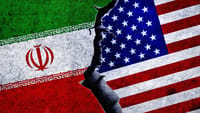
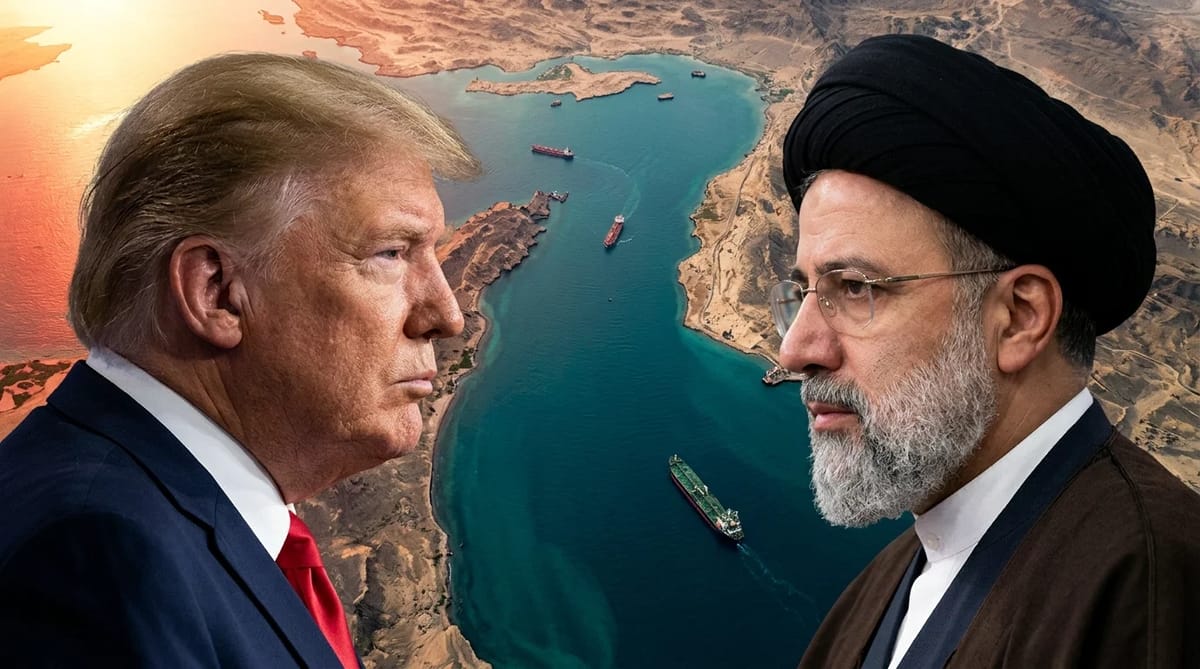
Iran has published the terms of a draft 14-point memorandum of understanding with the United States, revealing sweeping demands that include $300 billion in economic reconstruction funding, full lifting of the naval blockade, and the reopening of the Strait of Hormuz under Iranian authority, while explicitly excluding both its ballistic missile program and its support for regional proxy forces from any negotiations.
The document, reported by Iran's state-linked Mehr news agency, has not been formally approved by Tehran, but its publication marked the most detailed public accounting yet of Iran's position heading into what would be a 60-day negotiating window on a final nuclear agreement.
The disclosure landed in Jerusalem like a thunderclap.
Israel had entered the current conflict with a firm, publicly stated demand: any agreement with Iran must address three core issues — the nuclear program, the ballistic missile project, and the dismantling of Tehran's network of armed proxy organizations across the Middle East. The revelation that both the missile program and the proxy file had been removed entirely from the American initiative drew fierce opposition in Israel, where officials had hoped to block a deal.
The one-page MOU is being negotiated between President Trump's envoys Steve Witkoff and Jared Kushner and Iranian officials, both directly and through intermediaries. In its current form, the framework would declare an end to hostilities and open a 30-day period of negotiations on a more detailed accord covering the Strait of Hormuz, Iran's nuclear program, and the lifting of U.S. sanctions.
Iran's 14-point draft sets demanding preconditions before substantive talks can begin. Tehran is calling for an immediate and permanent halt to fighting on all fronts, including Lebanon, along with an explicit American commitment not to interfere in Iran's internal affairs. On the economic side, Iran is demanding suspension of oil and petrochemical sanctions, full access to its frozen financial assets, and a U.S.-funded economic reconstruction package of no less than $300 billion. An additional $24 billion in frozen Iranian funds would need to be released during the negotiating period itself, with half available to Tehran before substantive talks even begin.
On the maritime front, the draft demands the naval blockade be lifted within 30 days, American forces withdraw from Iran's surrounding waters, and the Strait of Hormuz reopen under Iranian management. Iran has said it will provide information on, or personally remove, mines it placed in the strait, while the U.S. Navy would withdraw from the area following the passage's reopening.
The most contentious unresolved clause concerns Lebanon. Washington, according to the document, is willing to agree to a ceasefire there under terms that would preserve Israel's right to respond militarily to emerging threats. Iran is insisting on a complete and unconditional ceasefire, with no Israeli freedom of action.
Iran's core nuclear commitment in the draft would see Tehran reaffirm its obligations under the Nuclear Non-Proliferation Treaty, surrender enriched uranium above the 3.67 percent threshold, halt long-term enrichment activities, and forswear acquiring nuclear weapons by any means. A monitoring mechanism would be established and ratified by the U.N. Security Council.
The two sides remain divided over timing. The United States wants substantive negotiations to begin within two weeks of the MOU's signing. Iran is asking for 60 days before talks begin in earnest.
In Jerusalem, officials are watching the developments with deep frustration and little leverage. Israeli security and government officials now privately acknowledge that having been caught off guard by the speed at which the framework agreement took shape, Israel's ability to meaningfully influence the outcome of the 60-day negotiating period that follows is extremely limited. What remains, according to Israeli officials cited by the Hebrew-language outlet Kikar HaShabbat, is hope, that Iran's new supreme leader, Mojtaba Khamenei, will ultimately refuse to give his final approval to the deal.
What remains, for now, is a waiting game Jerusalem did not choose and cannot control, watching from the sidelines as the two powers that most determine its fate negotiate a framework that strips out the very guarantees Israel went to war to secure.