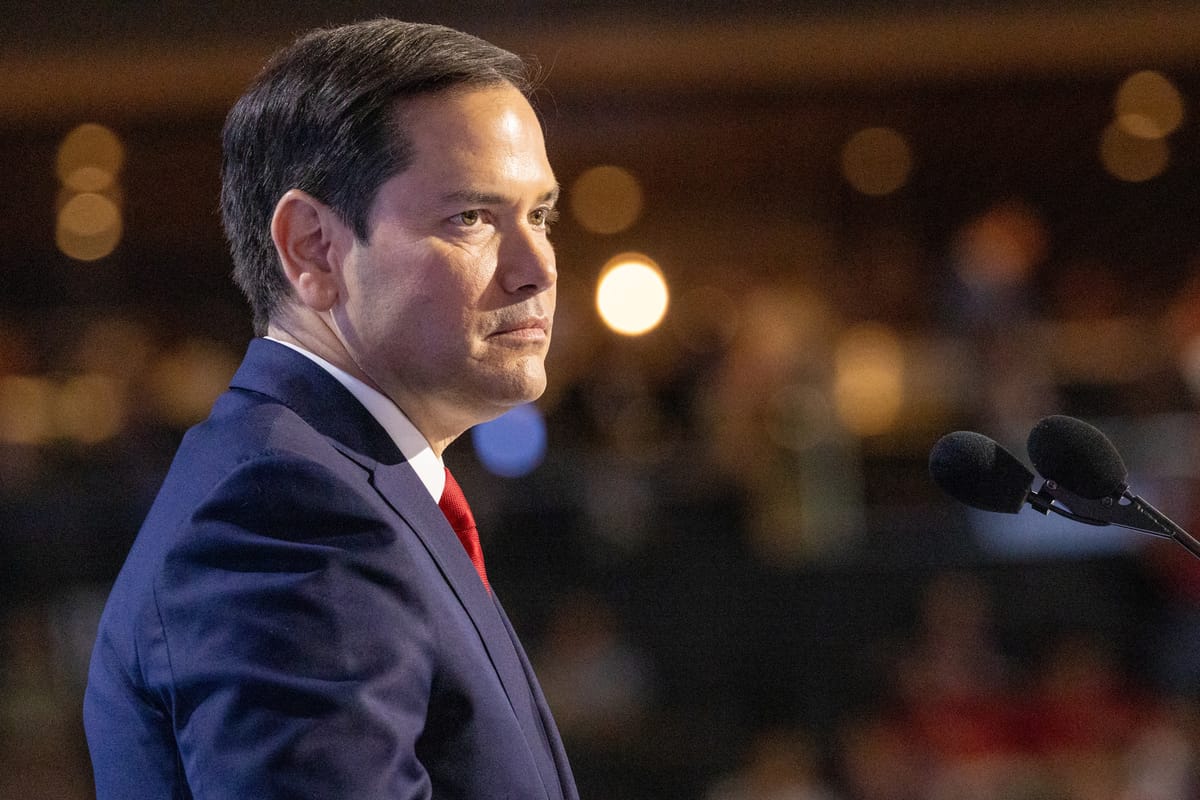
In the urgent, behind-the-scenes maneuvering that preceded Israel’s recent military strikes against Iran, Secretary of State Marco Rubio emerged as a pivotal architect in securing President Trump’s "green light," according to reports from Israeli daily Israel Hayom and senior diplomatic sources.
Yet even as Rubio’s hawkish intervention demonstarted Israel’s deep transactional access to the upper echelons of the Trump administration, it has laid bare a brewing, highly volatile ideological rift within the White House over the ultimate trajectory of American power in the Middle East.
The private deliberations of recent days have pitted the administration’s traditional national security hawks against the ascendant, transactional practitioners of Trump’s "America First" doctrine. It is a battle for the president’s ear that fundamentally threatens to rewrite the terms of the U.S.-Israel alliance.
The Executive Rift: Hawks vs. Insularists
The internal battle line is sharply drawn between two distinct factions competing to dictate the endgame with Tehran:
- The Maximum Pressure Camp: Led by Rubio and Secretary of War Pete Hegseth, this faction operates on the traditional neoconservative premise that the Iranian regime yields only to overwhelming force. Rubio has argued forcefully that any long-term diplomatic concessions from Tehran are structurally impossible without the credible threat of American and Israeli military and economic devastation.
- The Transactional Realists: Championed by Vice President JD Vance and flanked by influential presidential envoys Jared Kushner and Steve Witkoff, this circle views the Middle East through the lens of cost-mitigation and definitive exits. Vance has seized upon recent, surprisingly flexible diplomatic overtures from Tehran, arguing they represent a historic window to codify a verifiable nuclear settlement and wind down regional entanglements.
Rubio’s Leverage and the "Green Light"
For Israeli Prime Minister Benjamin Netanyahu, Rubio has served as an indispensable diplomatic conduit. When Jerusalem sought American political cover for its targeted operations against Iranian nuclear and military infrastructure, it was Rubio’s aggressive advocacy within the National Security Council that helped neutralize hesitation from the administration's more cautious factions.
Even as a precarious ceasefire extension looms, Rubio has continued to publicly defend Israel’s unilateral operational latitude, asserting that "Israel has every right to respond... or to prevent that from happening" if targeted by Iranian proxies like Hezbollah.
The Limits of Convergence
But Rubio's ability to shield Israeli military objectives may have reached its structural limits, overridden by a White House increasingly determined to secure a landmark diplomatic victory on its own terms.
In public remarks that sent shockwaves through Jerusalem, Vice President Vance signaled that Washington’s priorities have diverged from Israel's broader regional ambitions. Vance explicitly stated that the administration’s single, unyielding objective is a verifiable mechanism to permanently bar Iran from acquiring a nuclear weapon, and that Trump will dictate terms accordingly.
"Israel may like that, they may not like that," Vance noted with striking candor, emphasizing that the administration would prioritize American geopolitical interests above the strategic preferences of its closest regional ally.
The Deal on the Table
The contours of the settlement Trump is currently pursuing represent a sweeping departure from both the 2015 nuclear accord and Israel's preferred policy of total regime containment. According to senior officials, the framework currently under negotiation centers on a series of highly transactional tradeoffs:
A strict 3.67 percent cap on Iranian uranium enrichment.The immediate, verified surrender or destruction of Iran's existing stockpiles of highly enriched fissile material.
The phased release of $25 billion in frozen Iranian assets, explicitly tethered to an intrusive, zero-notice verification and inspection regime designed to supersede the loopholes of past agreements.
The unfolding drama highlights the profound paradox of the current administration: even as Israel successfully leverages allies like Rubio to secure immediate tactical permissions, it faces a White House fundamentally less committed to Israel’s long-term regional hegemony, and far more consumed by the art of the deal.