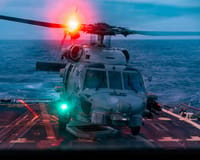
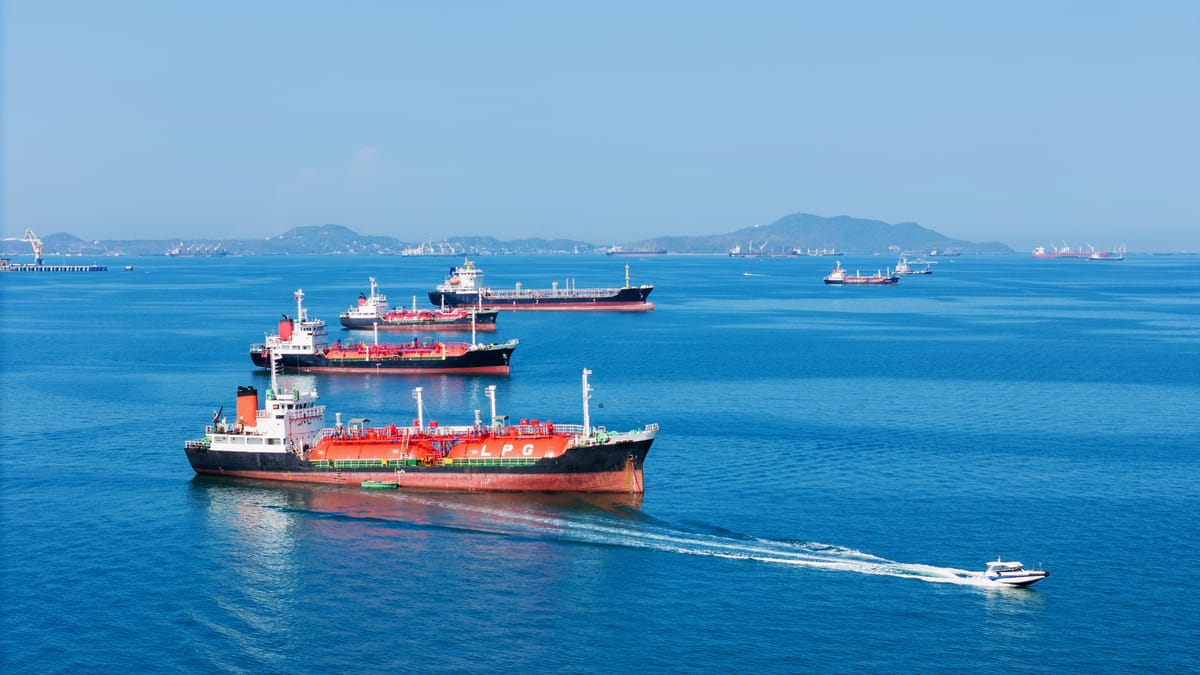
The U.S Navy has successfully guided approximately 70 commercial vessels through the Strait of Hormuz over the past three weeks without Iran's knowledge or consent.
According to a report by The New York Times, Despite President Trump’s public announcement that the 24-hour operation known as "Project Freedom" had concluded, it has now been revealed that Washington has quietly maintained intense efforts behind the scenes to bypass Iranian control in the vital waterway.
The Secret Transit Tactics
United States Central Command (CENTCOM) orchestrated the classified operation, actively directing vessels in and out of the Persian Gulf without seeking authorization from Tehran, which heavily monitors the region.
To evade detection in the narrow chokepoint, the majority of the commercial ships receiving American military guidance turned off their transponders and radar tracking systems. U.S.
officials declined to disclose the specific types of vessels involved or their exact transit paths, but they noted that at least one route was plotted far from the Iranian coastline, keeping closer to Omani territorial waters.
This stealth transit option has become a critical alternative for shipping companies unwilling to pay Iranian transit fees or subject their vessels to Tehran’s intrusive maritime inspections. U.S. officials acknowledged that the operation is intentionally kept under wraps to prevent Iran from targeting the specific companies and vessels cooperating with Washington.
"Although U.S. forces are not escorting, we continue to communicate and coordinate with commercial vessels seeking to pass freely and safely through the Strait of Hormuz, a critical international corridor for regional and global economies," said CENTCOM spokesman Captain Tim Hawkins.
A Severe Blow to Tehran's Economy
Maritime analysts explain that independently verifying the exact number of these covert crossings is nearly impossible due to the deliberate blackout of the ships' tracking systems.
Noam Raydan, a senior fellow at the Washington Institute for Near East Policy, noted that the number of successful transits is higher than expected, adding, "I doubt names will be revealed, especially if certain companies are worried about future retaliation from Iran for coordinating with the United States."
In parallel to guiding these ships, the United States has been maintaining a strict naval blockade in the Gulf of Oman since mid-April. Targeting vessels that have visited Iranian ports, the U.S. Navy has already intercepted and delayed 116 ships. This aggressive naval enforcement has crippled Iran's oil exports, even though Tehran still exerts influence over roughly half of the visible traffic remaining in the Strait of Hormuz.
Escalating Geopolitical Tensions
The operation comes amid a significant hardening of Washington's foreign policy. Over the past 24 hours, President Trump has further tightened conditions for any potential negotiations, taking an uncompromising stance against Iranian regional aggression.
In response to the mounting American economic and military pressure, the Tehran regime has fiercely pushed back, issuing an official statement declaring that it will absolutely refuse any future agreement regarding its nuclear program under the current conditions.