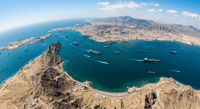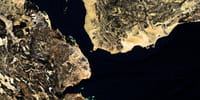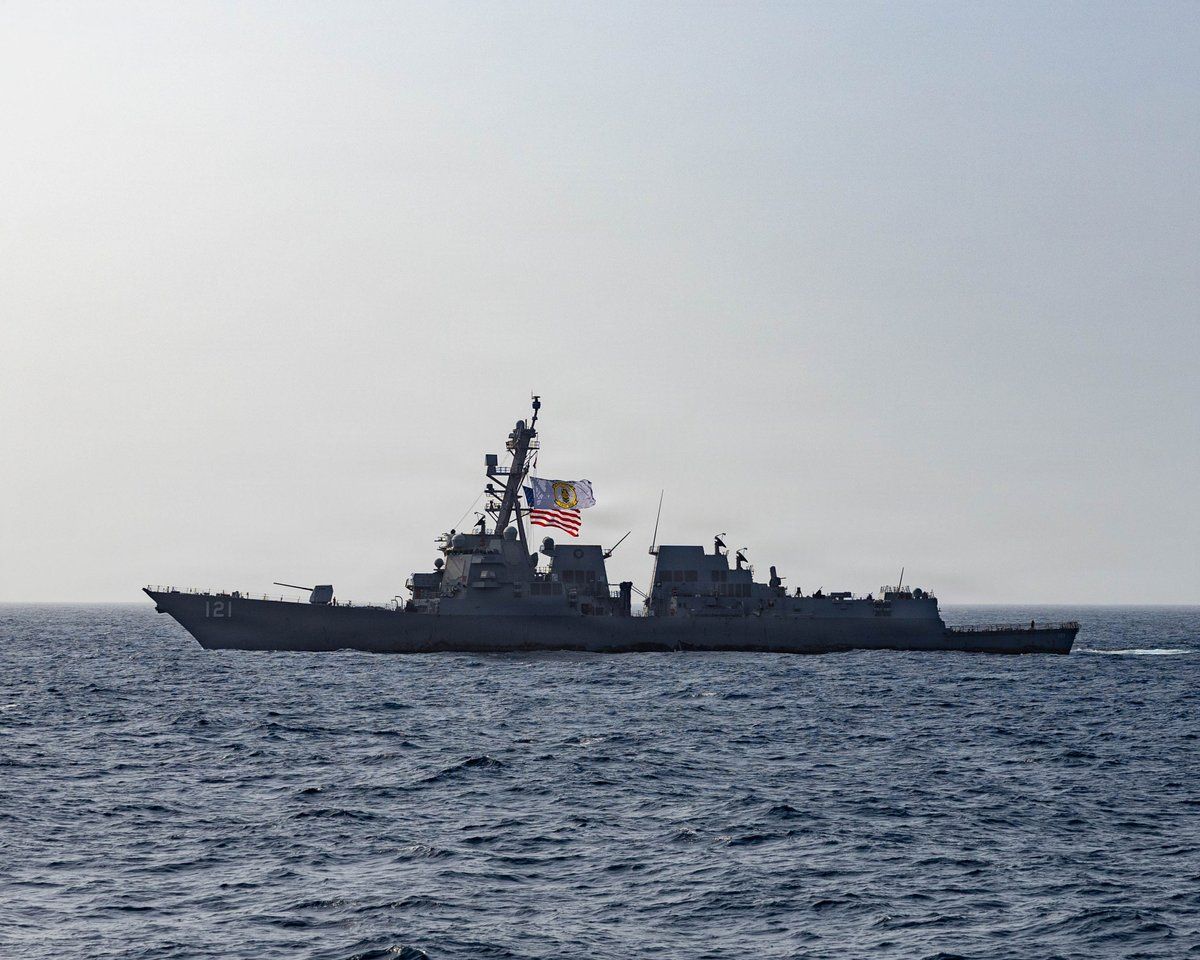
The United States military has quietly established a secure maritime transit lane inside the Strait of Hormuz, allowing millions of barrels of crude oil to reach global energy markets daily despite the ongoing war in the region. According to US officials, the operation has been running covertly for several weeks, successfully mitigating severe global oil supply disruptions caused by regional hostilities.
Every night, between 15 and 20 commercial tankers enter and exit the strategic waterway via a designated southern route running along the coastline of Oman. This protected channel currently facilitates the movement of nearly 10 million barrels of oil per day, representing approximately half of the pre war export capacity flowing out of the Persian Gulf.
The military operation involves a coordinated effort to escort both loaded tankers leaving Gulf ports and empty commercial vessels entering from the Arabian Sea to collect additional crude. "We have controlled the southern route of the Strait of Hormuz for two months. The Islamic Revolutionary Guard Corps can be a nuisance, but they do not control the strait. We control it," stated a US official with direct knowledge of the mission.
The operational task force overseeing convoy scheduling and air defense coordinates movement from military headquarters at Fort Bragg in North Carolina alongside Gulf regional partners. Ships assemble into designated single file convoys during specific night windows to minimize exposure, with US Air Force fighter jets providing active air cover against Iranian cruise missiles and unmanned aerial vehicles.
This maritime corridor became operational following a targeted two week campaign by US Central Command that destroyed key Iranian coastal radars and surveillance nodes. As a result, Iranian forces have been largely blinded in the southern strait, relying on limited restored radar units and Revolutionary Guard speedboats for basic reconnaissance.
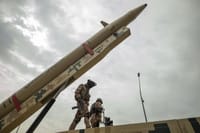
Because Iranian forces lack precise tracking data, they frequently fire drones and cruise missiles blindly toward estimated convoy locations. While some commercial vessels have sustained damage, US air defense forces have intercepted numerous incoming strikes, including a recent engagement where US assets shot down eight Iranian drones and two cruise missiles in a single night.
US President Donald Trump confirmed the high volume of maritime oil traffic during a recent broadcast statement, reiterating that formal diplomatic negotiations with Tehran remain suspended. "A huge amount of oil is coming out of the Strait of Hormuz. Negotiating with them is a waste of time. The Iranians still have a little strength left to fight, but overall they are a shadow of what they were," Trump stated.