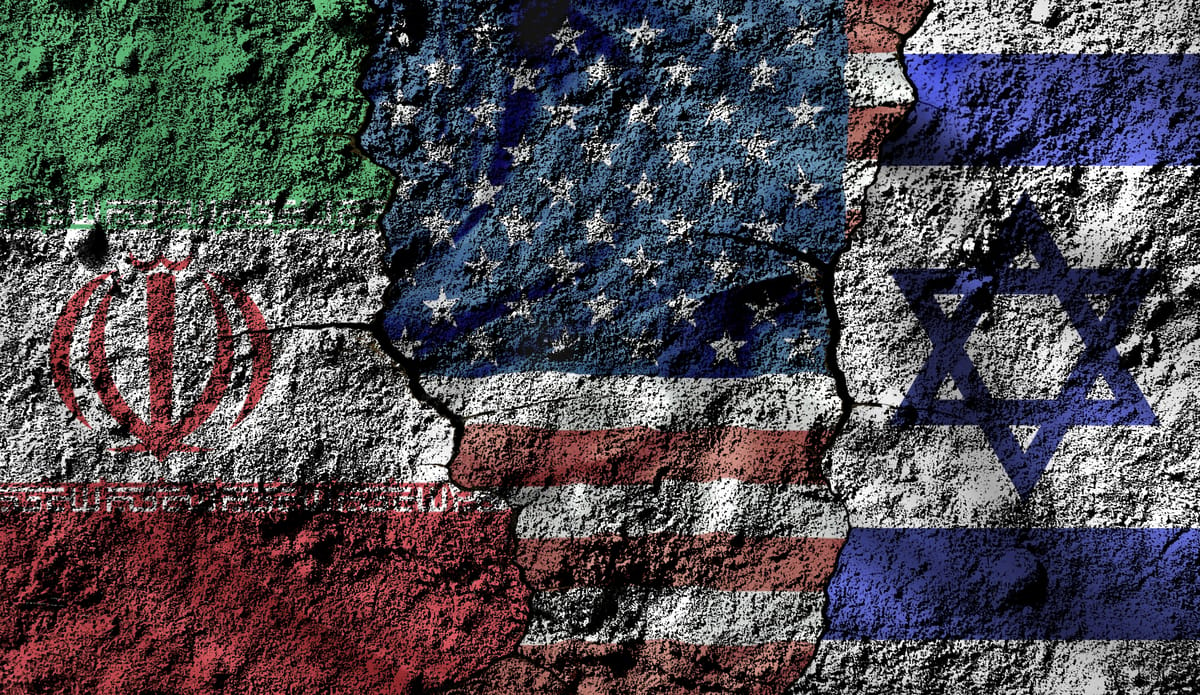
The United States denied Israel's formal request to review the full text of the memorandum of understanding reached with Iran ahead of its signing ceremony, Channel 12's Yaron Avraham reported Tuesday, in a disclosure that lays bare the depth of the rupture between Washington and Jerusalem over the Iran deal.
The request, made by senior Israeli officials, was straightforward: show us what you signed. The answer from Washington was no.
The denial is extraordinary by any measure of the US-Israel relationship. The two countries maintain one of the deepest intelligence-sharing partnerships in the world, coordinating on Iran-related threats as a matter of routine. Israeli officials have for decades been read into sensitive American assessments on Iranian nuclear activity, missile programs, and proxy networks. The idea that Israel would be refused access to the text of an agreement that determines the future of those very threats — an agreement whose terms will shape Israeli security for years — represents a breach with no recent parallel.
It also puts a sharper edge on something Prime Minister Benjamin Netanyahu admitted publicly last week: that Israel does not know all the details of the secret agreement signed with Iran. At the time, the admission was remarkable. It now emerges that this was not an oversight or a matter of timing. Israel asked. Washington said no.
Israeli officials had sought to review the full draft text specifically to assess what the MOU commits to regarding Hezbollah in Lebanon, Iran's nuclear enrichment infrastructure, and American obligations toward Tehran's proxy networks. These are not peripheral Israeli concerns. They are the core of what the past year of fighting has been about. And the United States, Israel's closest ally, declined to share them before putting its signature on the document.
The MOU — described by American officials as a preliminary framework rather than a final treaty — reportedly covers an immediate cessation of hostilities, the reopening of the Strait of Hormuz, provisions related to Iran's enriched uranium stockpile, and a 60-day negotiating window on nuclear talks, sanctions relief, and regional security. Qatar and Pakistan served as mediators. Israel was not in the room.
Netanyahu has stated that Israel is "not a party" to the MOU and does not consider itself bound by its terms, particularly those involving Lebanon, where IDF forces remain deployed and where Hezbollah fired a Kornet anti-tank missile at Israeli soldiers and struck Metula on the same day the deal was being celebrated in Washington.
Far-right ministers have been less diplomatic. National Security Minister Itamar Ben-Gvir said flatly: "This agreement does not bind us. Israel is not subject to the United States. We are an independent and sovereign nation."
The opposition has drawn different conclusions. Several figures have described the situation as a "strategic failure" — arguing that Israel allowed itself to be sidelined from a negotiation that determines its security environment, and is now being denied even the courtesy of reading the result.