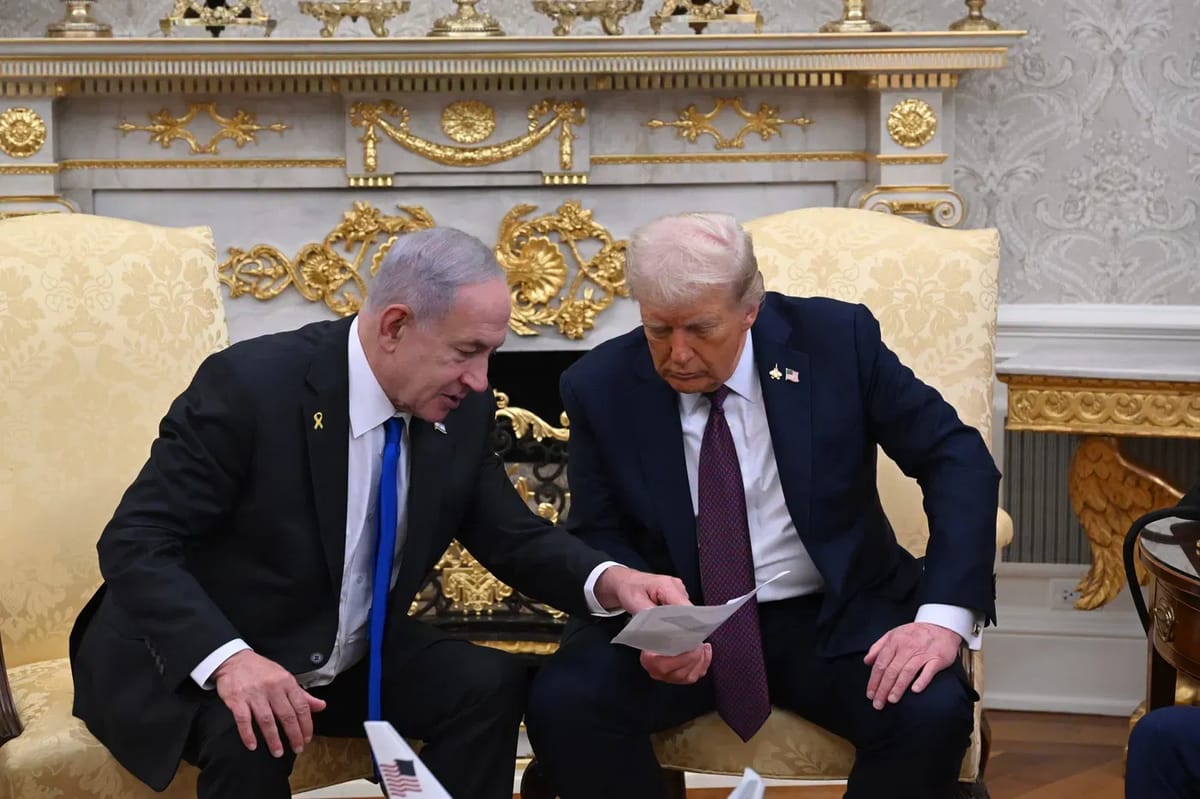
Prime Minister Benjamin Netanyahu raised the possibility of enforcing a complete land blockade against Iran during recent White House discussions with US President Donald Trump, according to diplomatic reports published on Friday. The proposed strategy aims to cut off Tehran's overland commercial networks, preventing the regime from circumventing active maritime blockades to transport oil, dual use equipment, and commercial goods.
The proposal was evaluated during bilateral meetings on Tuesday as part of broader discussions regarding kinetic and non kinetic measures to intensify economic pressure on Tehran. By targeting overland trade corridors, the administration seeks to force the Iranian regime back to negotiations under tightened economic constraints.
A senior Israeli official emphasized the potential impact of total land isolation during strategic evaluations. "What if you simply block the land? Suppose Iran cannot bring anything in and cannot take anything out, then everything can change," the official stated regarding the tactical objective.
Executing a full land blockade presents significant operational challenges, as Iran shares terrestrial borders with seven nations, including Iraq, Turkey, Pakistan, Afghanistan, Turkmenistan, Armenia, and Azerbaijan. Implementation would require convincing neighboring governments to close or heavily restrict major border crossings, limiting the flow of military equipment and dual use imports.
Military analysts noted that securing full cooperation across all border points remains complex, particularly regarding nations like Iraq and Pakistan. US Army Reserve Officer Seth McFarland evaluated the strategic feasibility of the plan during media assessments, noting the extreme difficulty of full implementation.
"If you take away Iran's ability to trade, you isolate them economically. Enforcing a full land blockade would be almost impossible, but that is the way to bring them to their knees," McFarland stated.
American officials reportedly view current efforts to open the Strait of Hormuz as having reached operational limits, prompting leadership to evaluate alternative pressure tactics. Alongside land blockade options, officials continue to weigh diplomatic agreements, sustained naval blockades, and targeted military strikes without committing exclusively to a single course of action.
According to briefing documents provided to Reuters, defense analysts emphasize that even partial compliance from neighboring border states would severely disrupt Iranian military supply chains and energy exports.