For months, Donald Trump’s threats against Iran were background noise. Each new warning to “finish the job” turned out to signal restraint rather than imminent action. That pattern appears to be breaking.
With the US midterm elections on Tuesday, the political brake that has held back a renewed campaign is about to come off. Washington has warned Gulf allies to prepare for a possible new round of strikes on Iran as early as November 4, a day after the midterms, according to three senior Gulf Arab officials. The officials expect the strikes to be brief but intense, and say the Gulf states are pressing Washington to de-escalate amid fears of Iranian retaliation.
The machinery is in place
The clearest signal came Thursday. CENTCOM commander Adm. Brad Cooper presented military strike options to Trump during a rare White House meeting, joined by Defense Secretary Pete Hegseth and Joint Chiefs Chairman Gen. Dan Caine, according to the Wall Street Journal. Cooper rarely briefs the president in person, raising the possibility that the administration is moving closer to authorizing significant military action.
The hardware has been moving for weeks. The Pentagon has sent additional air defense systems, ammunition, and equipment to the region, relocated some troops away from vulnerable bases, and is transferring another Patriot battery to Israel. Two US officials told CNN that forces in the region could launch new operations, potentially on a large scale, within 96 hours of an order from Trump.
Israel, for its part, is ready. The IDF has finalized its defensive and offensive preparations for a potential resumption of hostilities, though the decision rests with Trump, Yedioth Ahronoth reported Sunday.
A deal no one can reach
What makes this moment different from earlier saber-rattling is that the diplomatic track has hit bedrock. The gap is no longer about details or sequencing alone; it is about whether Iran keeps a nuclear program at all.
Trump’s core demands are that Iran give up uranium enrichment on its soil, ship out its enriched uranium, and stop threatening shipping through Hormuz, and only then receive significant economic relief. Tehran, by contrast, has demanded that the US end its blockade, lift oil sanctions, release frozen assets, and end the war “on all fronts”, a euphemism for an Israeli pullout from southern Lebanon, in exchange for only an initial seven-day ceasefire followed by negotiations.
Iran is not softening. Mohsen Rezaei, head of the Supreme National Security Council, said Saturday there can be no talks on Iran’s nuclear program unless Washington accepts its demands, and that the Strait of Hormuz will stay closed until then.
Israeli experts read the Iranian mood the same way. INSS Iran specialist Raz Zimmt said Tehran’s working assumption is that renewed war is a matter of time, because the gap with Washington is extremely difficult to bridge.
The site that was never hit
If strikes come, one target is already being named publicly. Trump said Saturday that the US still has to deal with “one or two sites,” which could be done in minutes, pointing specifically to Pickaxe Mountain.
The facility, buried under a mountain south of Natanz, was not hit in either US-Israeli campaign, the UN nuclear watchdog has never accessed it, and the US and Israel believe Iran moved centrifuges and some highly enriched uranium there. IAEA chief Rafael Grossi told the Security Council last week that inspectors still cannot verify the location of roughly 440 kilograms of highly enriched uranium.
Then came a remark that will reverberate in Jerusalem. Rezaei said Tehran is debating whether to lift its longstanding ban on nuclear weapons should hostilities resume, though he said no decision has been taken. Whether meant as deterrence or as leverage, it hands the case for preemption its strongest argument yet.
Tehran’s rebuild is the hidden accelerant
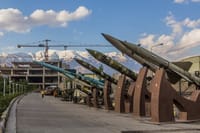
Beneath the nuclear question sits a quieter but equally urgent concern: Iran’s missile force is coming back faster than anyone predicted.
Israeli officials believe Iran is prioritizing missile production over restoring its whole military-industrial base. If it returns to manufacturing 100 to 300 ballistic missiles a month, it could rebuild its arsenal to June 2025 levels by early or mid-2027 and pose a potentially prohibitive threat by 2028, the Jerusalem Post reported. US intelligence has detected activity at several underground facilities, including the Khojir complex, and Tehran is building new underground assembly sites to shield production from future strikes.
That timeline creates its own logic. Every month of delay makes the next campaign costlier and the Iranian response more dangerous.
Iran is preparing for war, not concessions
Tehran’s leadership has made its posture explicit. Supreme Leader Mojtaba Khamenei ordered the armed forces to respond immediately and without “geographic limits” to any threat, and to update the target list to bring US and Israeli “physical and non-physical” assets within reach.
The escalation has already started at sea. Since October 29, Iran has attacked at least four tankers in and around the Strait of Hormuz, including the first limpet-mine attack in the Gulf since at least 2019.
Notably, Iran is avoiding Israel itself. JINSA president Michael Makovsky said Iran has not directly attacked Israel since early June because it correctly fears hard retaliation against its energy facilities, leadership, missiles, and perhaps its nuclear sites.
Netanyahu’s window
The Israeli political calendar adds another layer. Netanyahu has been eager to move. An Israeli security source told CNN the prime minister tried to convince Trump to carry out a joint strike before the elections, but Trump did not give the green light. Channel 12 reported an “unprecedented confrontation” between Netanyahu and IDF Chief of Staff Eyal Zamir over an unspecified military action that defense officials feared could spark a swift clash with Iran before the vote.
The election produced no clear winner, leaving Netanyahu as caretaker for what may be a lengthy coalition standoff. Even without a fresh mandate, he would still briefly hold the authority to order a new campaign before a new government is formed.
What could still stop it
None of this is locked in. Secretary of State Marco Rubio said Saturday that Trump has not made a decision about fresh strikes. Back channels are active: Rezaei said the US tone had “completely changed” after Vice President JD Vance sent a letter to Iranian officials seeking to revive talks, and Iranian negotiators met Qatari mediators in Doha on Saturday after more than 12 hours of talks in Tehran on Friday, coordinated with Washington. The leaders of Saudi Arabia and Turkey have urged Trump to give diplomacy more time.
But a softer tone from Washington has not produced a softer position from Tehran, and the fundamentals that brought both sides here have not moved. With the ballots counted on Tuesday night, the decision will sit with one man. All the preparations suggest he has already been given everything he needs to say yes.