Get our mobile app
Download on the App StoreGet it on Google Play

History and the present

Chareidim face 1879 dilemma on coalition

UTJ and Shas weigh coalition options after right-wing bloc delivered budgets but no draft law and left offers deal but demands service for all. Precedent from Galicia's gedolim may hold the answer.

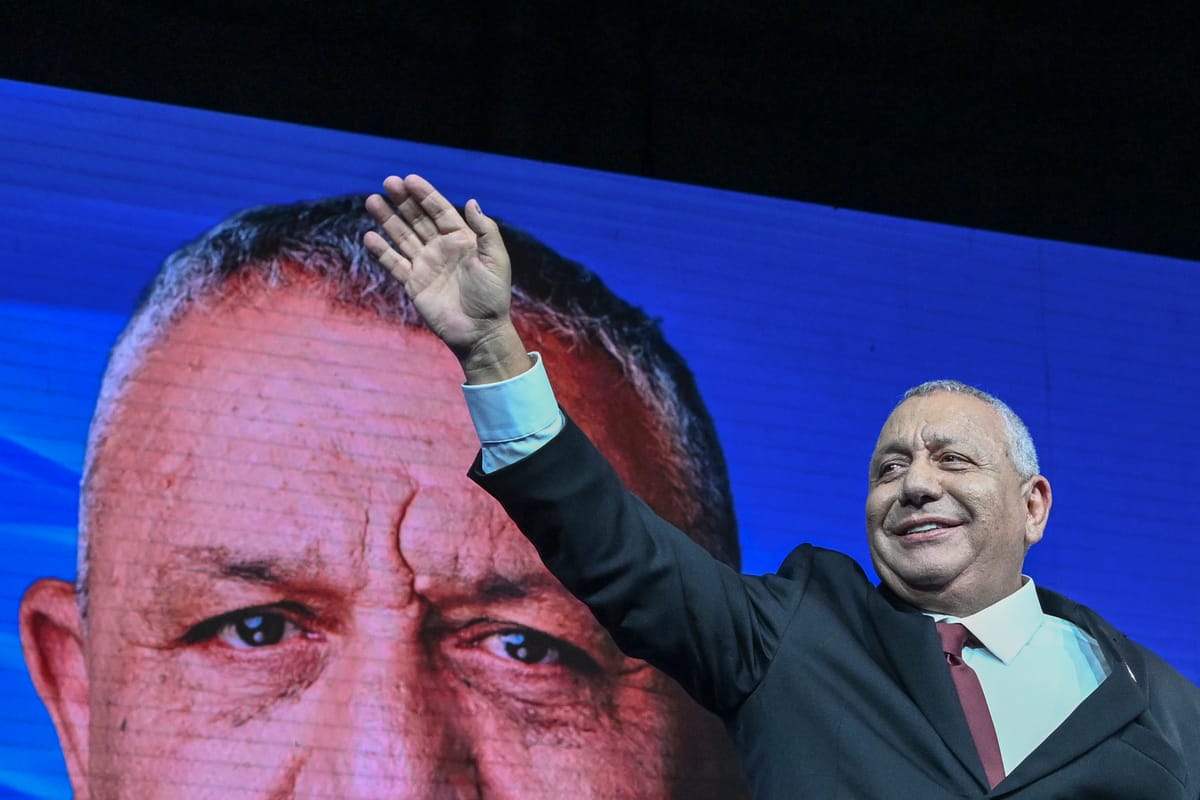
Gadi Eisenkot

"Our Christian brethren" (unzere brider dia kristen), read the headline in the chareidi newspaper Machzikei HaDat on 3 Tammuz 5639 (25 June 1879), on the eve of elections to the Austrian parliament in the Austro-Hungarian Empire.

The paper's instruction to its readers was explicit: "Unite with the Christian candidates that the Christians have put forward, so that the Christian candidate will win, and in any case will bring more benefit to Jewry than a progressive Jew who does great harm to the holy Torah... and all the rabbis and tzaddikim of all the cities of Galicia have agreed to these words."

Rav Shimon Sofer, son of the Chasam Sofer and Av Beis Din of Krakow, and the Admor Rav Yehoshua of Belz stood at the head of Machzikei HaDat. The organization was established to block the Shomer Yisrael association of the maskilim, which sought to change the structure of the kehillos in Galicia and establish a seminary for rabbis. Ahead of the elections, the organization formed an alliance with the Polish Club. Rav Sofer was elected to parliament from the Kolomyia-Sniatyn-Buchach district, and was the only one of the organization's four candidates to win.

Dr. Kopel Blum describes in the Buchach memorial book that Rav Sofer did not speak in parliament, because he did not have sufficient command of the official languages. Nevertheless, he attended all the votes and voted with the Poles. On Friday afternoons they even arranged a minyan for him in the parliament building, so that he could daven with a minyan and remain present for the votes. He served in parliament until his passing in 5643 (1883).
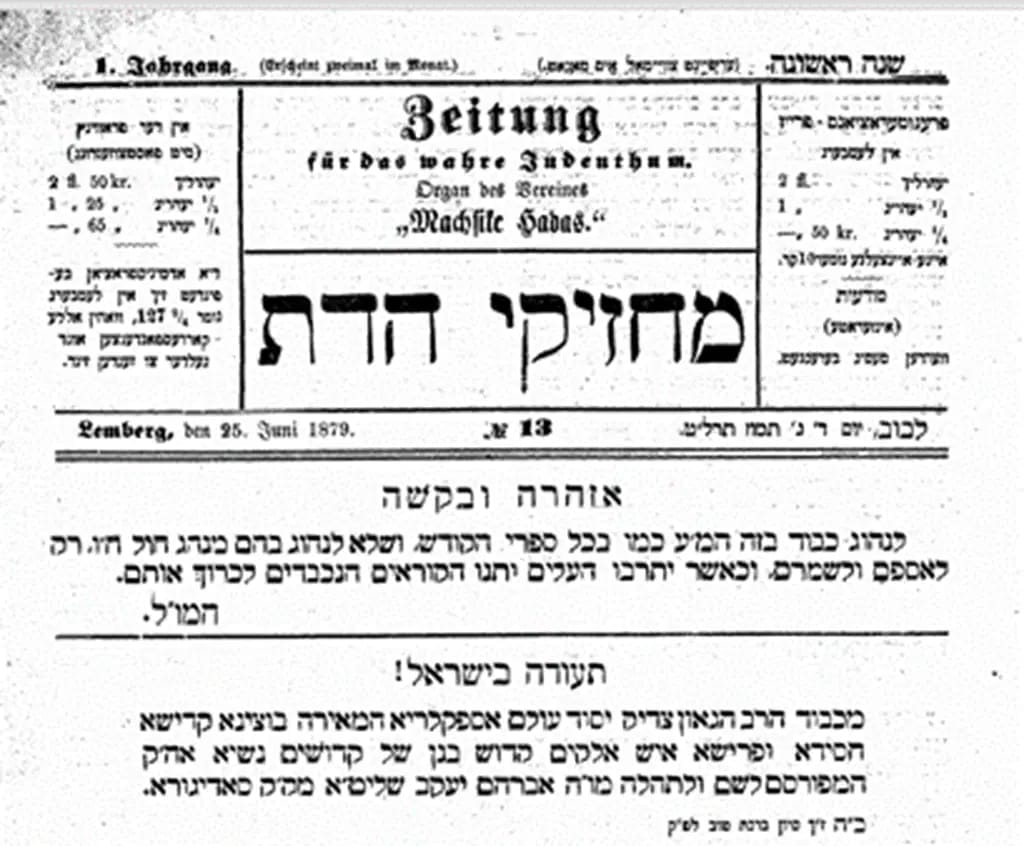
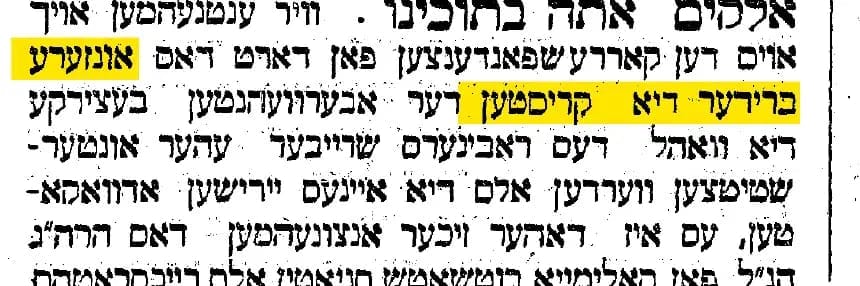
"Our Christian brethren" — from Machzikei HaDat newspaper
"Our Christian brethren" — from Machzikei HaDat newspaper (Photo: Historical Jewish Press)
"Our Christian brethren" — from Machzikei HaDat newspaper
"Our Christian brethren" — from Machzikei HaDat newspaper (Photo: Historical Jewish Press)

The dilemma then was clear: with whom do you form an alliance, with a conservative gentile or with a Jew who seeks to change the Torah? The gedolim of Galicia ruled in favor of the gentile.

In 2020 (5781), when the possibility arose that United Torah Judaism would sit in a coalition with Mansour Abbas, the same principle returned in the psak of Maran HaGaon Rav Chaim Kanievsky zt"l: a conservative Muslim Arab is preferable to a secular leftist permissive Jew. We know how that ended. The alliance with Abbas did not materialize, with Bennett and Lapid forming a government with Ra'am. The chareidim remained outside for a year and a half, from Tammuz 2020 (5781) until Teves 2022 (5783).

This week the dilemma returns, in a different form. For nearly four years the chareidim sat in a right-wing government, received budgets and portfolios, but did not receive a draft law. According to the results published before counting the double envelopes, Netanyahu's bloc has 53 mandates, the change bloc 48, and the Arab parties 19. Netanyahu cannot form a government without parties from the bloc opposing him. In contrast, the chareidim together with the change bloc reach 63 mandates, without the Arabs.

And from here comes today's dilemma: the first option is to remain loyal to the right-wing bloc, which did not bring the draft law. The second option is to consider cooperation with the left-wing camp, which might offer a more acceptable draft arrangement.

On election night, a source in Shas said that if there is a reasonable draft law, they might join an Eisenkot government later, and this is also the view in Gur chassidus. On the other hand, Eisenkot himself set a draft law or service for all as a threshold condition for entering the government before the elections. And ten days ago he clarified that the chareidim will need to be drafted, and will not be able to make do with national service.

And there is also a third option: a government of the chareidim together with the left and the Arabs. And then perhaps we will merit a new term, "our Muslim brethren"...

The chareidim and the Arabs have a shared interest in this matter, since Eisenkot has clarified that he demands that the Arabs be integrated into national service. One can assume that the Arab parties will demand exemption from the draft for the chareidim as well as a condition for their support, and the left will be forced to swallow the frog. The chance of this is slim, but it is certainly on the table.

In 5639 the rival was the secular maskil Jew, and the solution was an alliance with the gentile. In 5787 we are talking about the same rival, the secular Jew, but he is actually the one who may offer an arrangement.

The test of Machzikei HaDat is the same test of our day: who will bring more benefit to chareidi Jewry.

  • Yisrael Shapira is a historian and senior lecturer, researcher of Eretz Yisrael and tour guide | author of the books 'The Rare, Holy and Wet Places', 'Gaza Forever', 'The Holy Places in Lebanon', and 'Secrets of the Maccabees' | For responses, comments, to send materials and ideas and to book lectures, please contact: sisraerl@gmail.com
Ready for more?

Join our newsletter to receive updates on new articles and exclusive content.

We respect your privacy and will never share your information.

Enjoyed this article?

Yes
No
Follow Us:

Unmissable content


Loading comments...

Also of Interest