Iran will keep the Strait of Hormuz closed until the United States meets seven conditions and guarantees Iranian interests, Mohsen Rezaei, secretary of Iran’s Supreme National Security Council, said Saturday on Iranian state television. Tehran is waiting for a final American response, which he indicated could arrive as early as Sunday.
Rezaei said each of the seven conditions contains two or three further conditions, and that the guarantees Iran seeks range from financial matters to the other issues the conditions cover. He also said Washington’s tone had “completely changed,” calling it a very good sign.
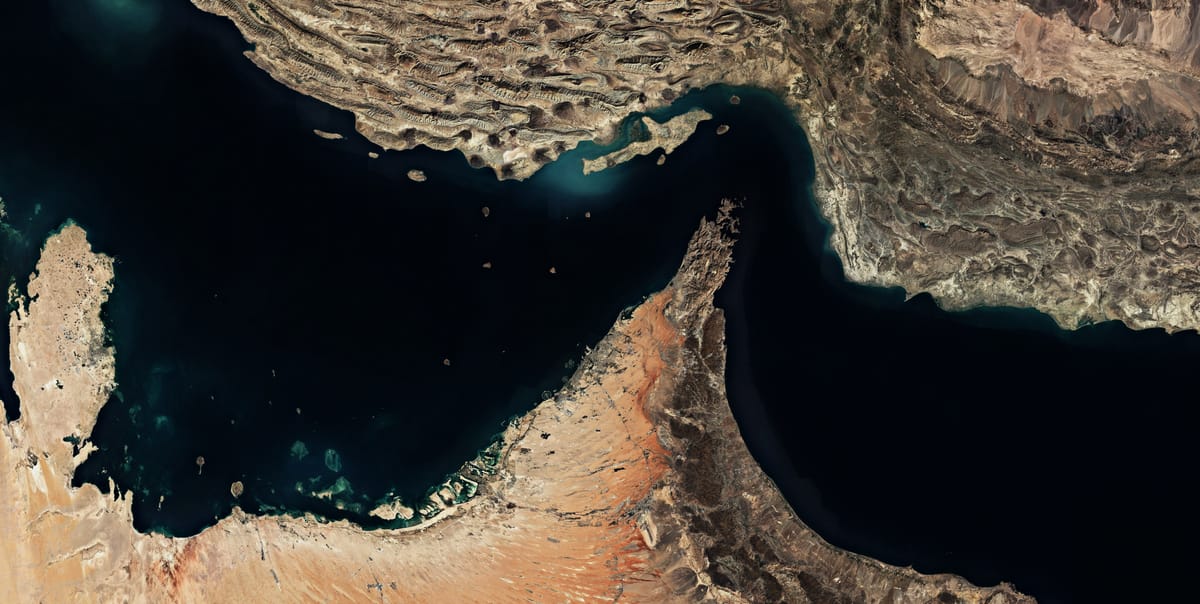
He outlined how a deal would be carried out on the water. If the American reply arrives, Rezaei said, implementation of the agreements could begin in a corridor through the center of the strait. He described those waters, which Iran shares with Oman, as under Iranian administration, and said ships using a reopened strait would follow a route agreed on by Tehran and Muscat. Washington has previously rejected joint Iranian-Omani management of the waterway and insists on free passage under international law.
Rezaei, a former commander of the Islamic Revolutionary Guard Corps, has been wanted by Interpol since 2007 over the 1994 bombing of the AMIA Jewish community center in Buenos Aires. He is also the official to whom US Vice President JD Vance addressed a letter. On Saturday, Rezaei said he had read the letter but had not yet replied. As JFeed reported on October 29, Iran confirmed receiving the letter. The Wall Street Journal reported that Vance sent it at President Trump’s direction to explore whether negotiations could resume. Trump later denied directing the outreach and said it concerned Iran’s need for medical supplies. Iran’s Tasnim news agency said at the time that Washington must meet Tehran’s seven conditions and that any position contradicting that framework was unacceptable.
On October 31, Foreign Minister Abbas Araghchi told Al Jazeera that Tehran saw no need to meet American officials for now. He said Iran’s conditions include lifting the sanctions imposed after the Islamabad memorandum of understanding and reducing US forces in the region. “Our conditions are clear, and mediators are continuing their consultations regarding them,” Araghchi said.
Earlier this week, Lebanon’s Al-Akhbar, a Beirut daily aligned with Hezbollah, reported that Iran had agreed in principle to a mediation framework but rejected the nuclear requirements attached to it. Under that account, Tehran would discuss its nuclear program only after the war ends, the US naval blockade is lifted and the Strait of Hormuz reopens.