Get our mobile app
Download on the App StoreGet it on Google Play

48 hours to the midterms

Trump's Congress at risk in midterms

With two days until the US midterm elections, Republicans face the prospect of losing control of the House and possibly the Senate. 

Trump's Congress at Risk: the Seats that Could Flip to Democrat in 48 Hours | DEEP DIVE

The US congressional elections, set for Tuesday 3 November, are approaching their moment of decision, and President Donald Trump's Republicans are facing the prospect of a significant shift in the balance of power in Washington.

Both houses of Congress are up for election, and in both, battles are under way that could determine who controls the American political system in the final two years of Trump's term.

In the House of Representatives, whose 435 members are all standing for election, Republicans hold a razor-thin majority of around 218 seats to the Democrats' 214, with one independent and two vacancies. Democrats need a net gain of just three seats to secure a majority.

In the Senate the picture is more complex: Republicans hold 53 seats to the Democrats' 47, meaning Democrats would need a net gain of four seats to reach a majority of 51. In the event of a 50–50 tie, the deciding vote of Vice President J.D. Vance would leave control in Republican hands.

Under US law, the midterm elections put all 435 House seats and 35 of the 100 Senate seats up for election.

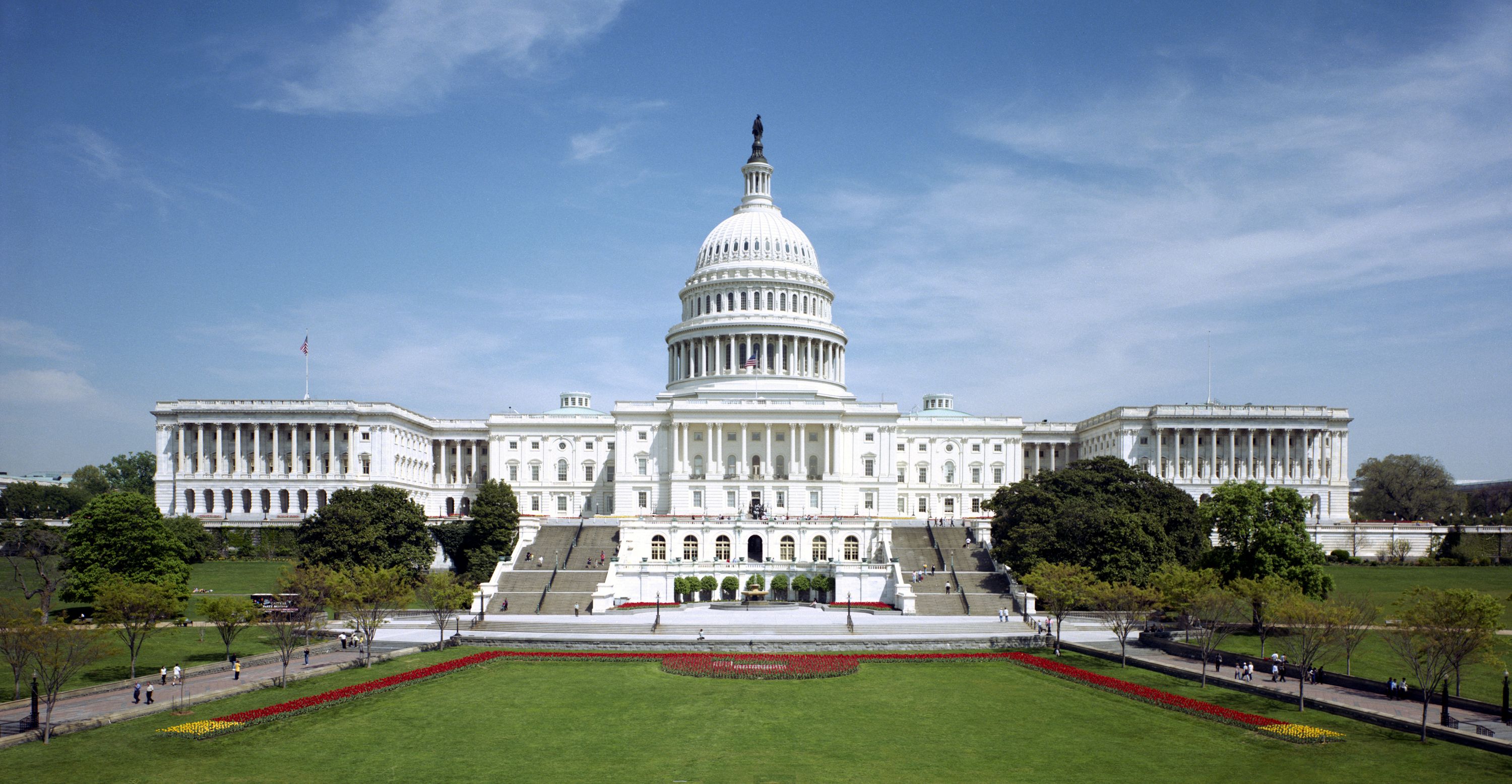
The US Capitol
The US Capitol (Photo: Shutterstock)

The battle for the Senate: Ohio, Maine and Kansas in focus

One of the central races is in Ohio, where Republican Senator John Husted is facing former Democratic Senator Sherrod Brown.

Polls published in October showed a lead for Brown, the Democrat, including 46.6% to 43.8% in a Suffolk poll for USA Today, while another poll recorded a tie at 47% each.

Maine is also seeing a tight contest. Republican Senator Susan Collins, seeking a sixth term, is up against Troy Jackson. In several recent polls Jackson the Democrat leads by four to seven points, though other surveys point to a small advantage for Collins.

In Alaska, Republican Senator Dan Sullivan is facing Mary Peltola, a former Democratic congresswoman. Some polls point to an advantage for Peltola, others to a small lead for Sullivan. The race is particularly striking because Trump won Alaska by a significant margin in the previous election.

Kansas, considered a Republican stronghold, has also become an unexpected battleground. Senator Roger Marshall is facing Adam Hamilton, and in several recent polls Hamilton has even led him. Trump won the state by around 16 points in 2024.

Alongside these, Republicans are facing challenges in South Carolina and Nebraska. In South Carolina, Senator Darlene Graham leads Annie Andrews by a narrow margin, while in Nebraska the latest poll pointed to a close race between Senator Pete Ricketts and independent candidate Dan Osborn.

Three further seats previously held by Republicans are now open: in Iowa, Ashley Hinson is facing Democrat Josh Turk; in North Carolina, Michael Whatley is up against former Governor Roy Cooper; and in Texas, Ken Paxton is facing Democrat James Talarico. In the latter two races, polls published in October gave the Democratic candidates an advantage, with gaps in Texas reaching as much as eight points.

Michigan is one of the most important Senate battlegrounds, and according to the latest polls published up to 1 November, the Democratic candidate is leading, though the race remains competitive.

The Michigan Senate race: Abdul El-Sayed versus Mike Rogers

Abdul El-Sayed (Democrat)

A doctor and public-health activist who has held positions in Detroit's health system. Running on a progressive platform that includes expanding health insurance and sharp criticism of Israel's policies.

Mike Rogers (Republican)

A former congressman aligned with Trump and a supporter of Israel. Lost to Elissa Slotkin in the 2024 Senate race and is now seeking the seat.

In summary: in nearly all the close Senate races, Democrats hold a slight advantage or the contest is worryingly even, with Democrats needing to take back just four of the seats up for election.


Michigan Senate candidate Abdul El-Sayed, critic of Israel
Michigan Senate candidate Abdul El-Sayed, critic of Israel (Photo: social media)

The House: Democrats target a string of districts

In the House of Representatives, Democrats are focused on exploiting the Republicans' narrow majority. Among the key districts where close battles are under way are three in Pennsylvania: in the 7th district, Democrat Bob Brooks leads Republican Ryan Mackenzie; in the 8th, Paige Koganti leads Rob Bresnahan; and in the 10th, Janelle Stelson is facing Scott Perry, with the latest polls pointing to a small gap or even a tie.

In Arizona's 1st district, a poll from late October gave Democrat Amish Shah a lead of around 4.4 points over Republican Jay Feeley. Iowa's 1st district is also considered a risk point for Republicans, after incumbent Representative Mariannette Miller-Meeks won the previous election by fewer than 800 votes.

Further battlegrounds are in New Jersey, where Tom Kean Jr is facing Rebecca Bennett; in New York, where Mike Lawler is up against Kate Connolly; and in Wisconsin, where Brian Steil faces Mitchell Berman. In California, Colorado, Michigan, Ohio and Florida, too, there are districts where Democrats are attempting to flip seats from Republican hands.

The national picture gives Democrats a tailwind: in polls conducted in the final week of October, they registered a lead of around 4 to 13 points on the question of which party voters should choose for the House. That said, this is a generic party vote and not district-by-district polling.

In short, the picture in the House also looks fairly bleak for the Republican Party and President Trump.

President Trump
President Trump (Photo: Shutterstock)

What happens if Trump loses Congress?

Loss of the House alone would give Democrats control of congressional committees and allow them to launch investigations into the administration, summon officials and demand documents.

They would also be able to obstruct the passage of budgets and new legislation, and even open impeachment proceedings against the president. However, actual removal from office requires conviction by a two-thirds majority in the Senate.

If Democrats also take control of the Senate, they would gain further significant powers: they would control Senate committees and could delay or block confirmation of federal judges, ambassadors and senior administration officials, appointments that require the upper chamber's approval.

A scenario in which Democrats take both houses of Congress would be a significant political blow to Trump. He would remain in the White House and continue to hold the powers of the presidency, but would be forced to contend with a Congress controlled by his opponents, which could block a central part of his legislative agenda and intensify oversight of the administration's activities.

Even so, a Democratic majority in both houses would not allow them to pass any law they wish: the president could impose a veto, and overriding it would require a two-thirds majority in each chamber.

In other words, in a situation where Democrats control Congress, a state of gridlock would emerge on legislation, the president could not legislate without the Senate, and Congress could not legislate in the face of an expected Trump veto.

The decision will be made at the ballot box on 3 November, when a small number of seats may determine whether Trump continues to work with a Congress controlled by his party or finds himself facing an opposition in control of both legislative chambers.

Ready for more?

Join our newsletter to receive updates on new articles and exclusive content.

We respect your privacy and will never share your information.

Enjoyed this article?

Yes
No
Follow Us:

Unmissable content


Loading comments...

Also of Interest