Get our mobile app
Download on the App StoreGet it on Google Play

When governments steal

Syria printed watermark on 20m passports

When Syrian officials chose an iconic Damascus souk photograph for the country's new biometric passport in 2023, they forgot one detail: the photographer's name and watermark, lifted straight from the internet, now appears in every copy, and survived the fall of Assad

Syrian Passport Printed Photographer's Watermark on 20 Million Copies

In the heart of Damascus's Old City, beside the historic citadel and the grand Umayyad Mosque, lies Al-Hamidiyah Souk, one of the most famous and bustling markets in the Arab world. The covered commercial corridor stretches some 600 meters, packed with hundreds of shops, crowded with visitors, and filled with the scents of spices, fabrics, jewelry, copperwork, traditional sweets, and the famous Damascene ice cream.

The market began its development around 1780, during the reign of Ottoman Sultan Abdul Hamid I, and was completed in the late 19th century under Abdul Hamid II. For hundreds of years it has served not only as a commercial center, but as the cultural and social artery of the capital. One of the market's most iconic features is its arched metal roof.

After a heavy fire destroyed the old roof in 1912, a sturdy metal structure was installed to protect passersby from summer heat and winter rains. Over the years, tiny openings appeared in the metal roof; through them, sunlight streams in, painting golden points of light and enchanting shadow-play on the floor — a sight that became Damascus's visual signature.
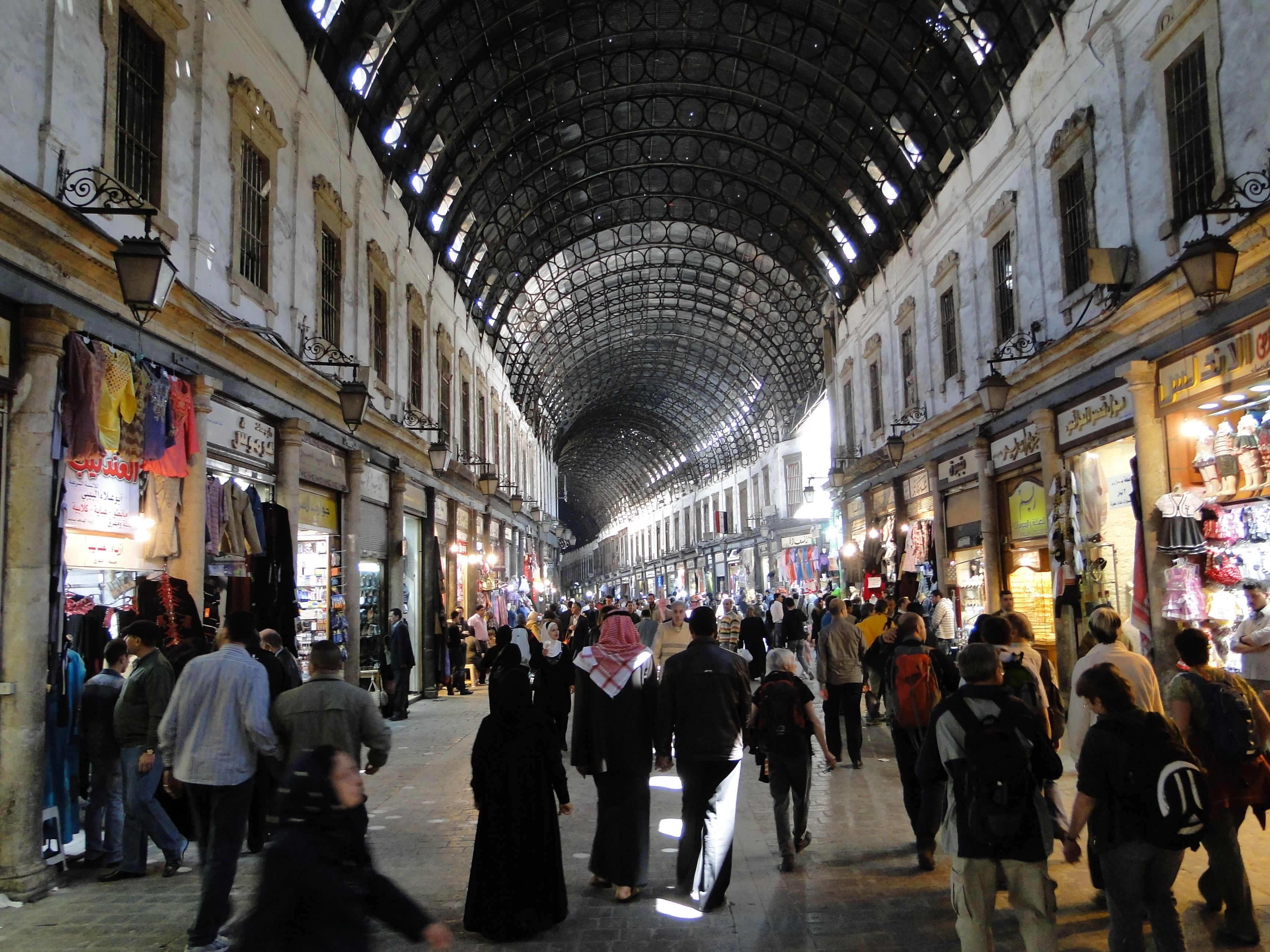
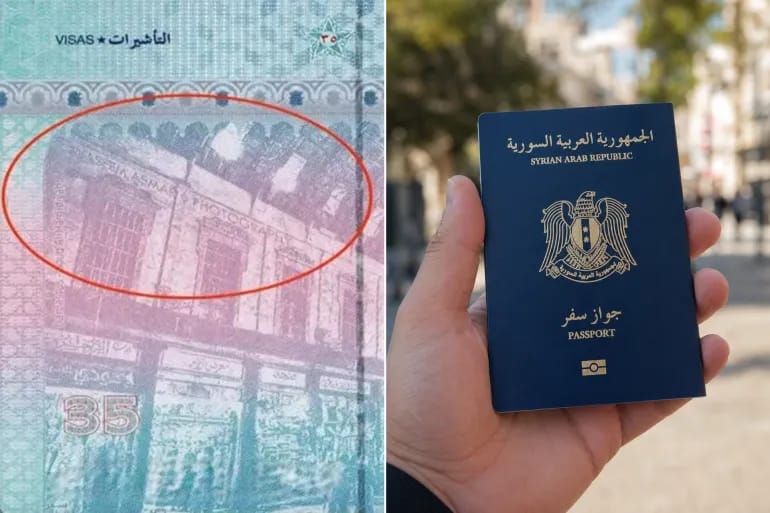
Photo: By Bernard Gagnon - Own work, CC BY-SA 3.0, https://commons.wikimedia.org/w/index.php?curid=10289578

When the designers of Syria's new biometric passport set about choosing sites to represent the country, Al-Hamidiyah Souk was a natural and obvious choice.

The passport, launched in August 2023 during Bashar Assad's rule, was devoted entirely to showcasing Syria's architectural and historical crown jewels.

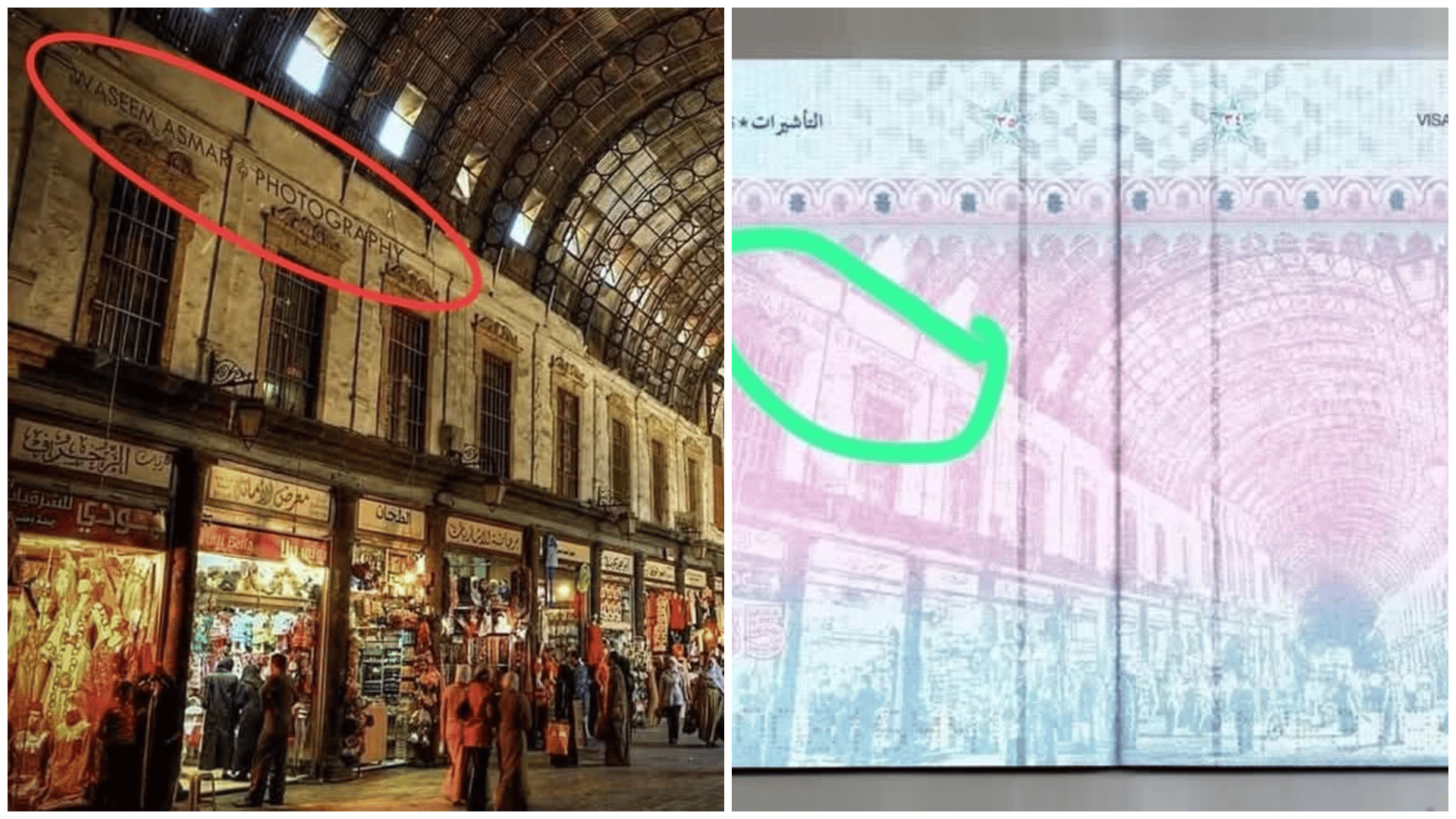
On pages 34 and 35 of the passport, a stunning double-width photograph of the market was embedded: the covered passage, the crowded shops, and those famous beams of light streaming through the ceiling.

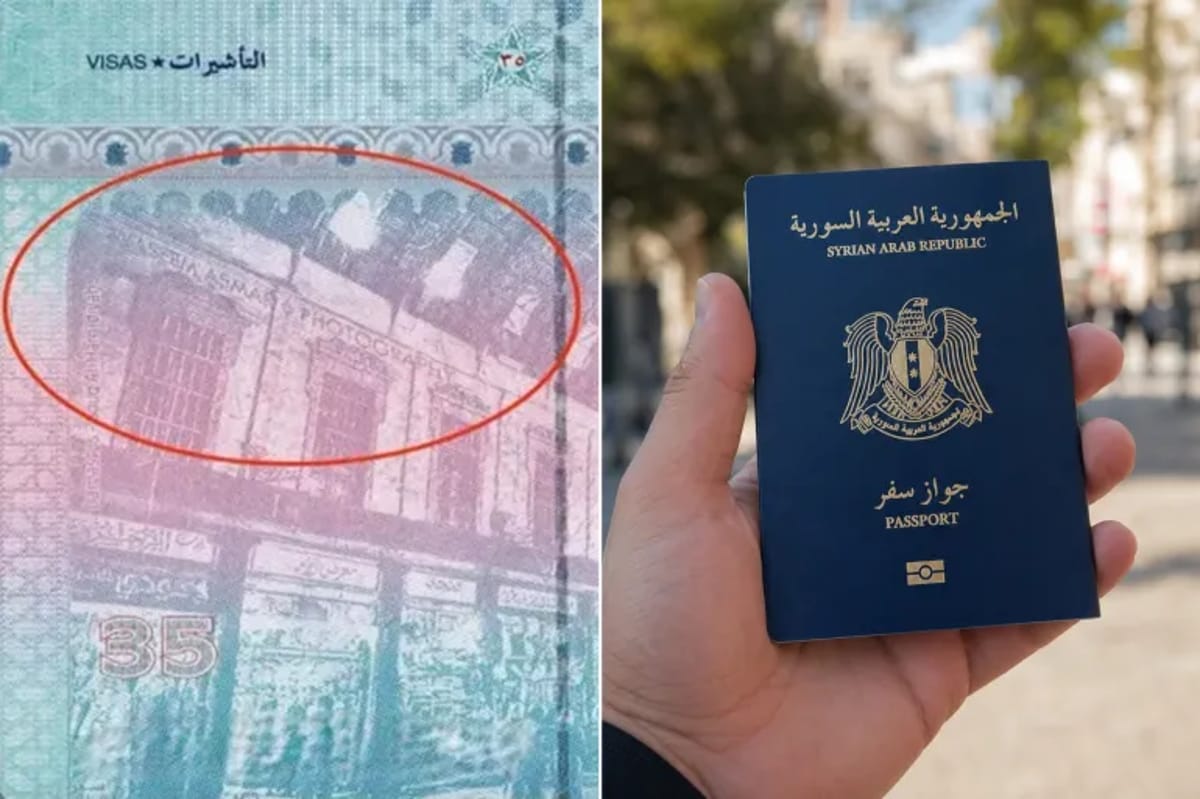
But alongside the national grandeur, alert passport holders who looked closely noticed an odd and embarrassing detail. In the upper corner of the image, in large, clear, perfectly legible English letters, appeared the inscription:

"WASEEM ASMAR PHOTOGRAPHY"

This was not a shop sign inside the market, nor graffiti on an ancient wall. It was a typical commercial watermark, the kind photographers embed on their online work to prevent unauthorized use.

The man behind the signature is Waseem Asmar, a Syrian photographer, engineer and entrepreneur operating under the brand "Simography." In 2009, during his first visit to Damascus, Asmar toured the historic market and captured the beautiful image with his camera. As many photographers who upload their work to the internet do, he embedded his name and watermark on the file to protect his copyright.

Nearly 15 years pass.

In 2023, Asmar received a surprising message from a stranger online, who told him he had spotted his name printed inside an official Syrian passport.

The embarrassment was colossal: it turned out that whoever was responsible for designing the passport on behalf of the Syrian government had simply downloaded an image of the market from the internet, without contacting the photographer, without requesting permission, and without even bothering to remove the prominent watermark in editing software.

The protected file was copied as-is straight into the national printing plate.

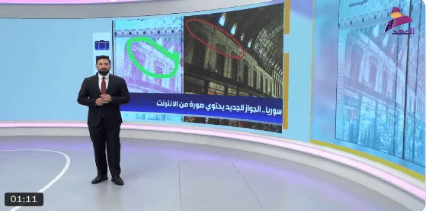
The embarrassing item on television
The embarrassing item on television (Photo: social media)

The story gained momentum when Asmar was interviewed by Al Jazeera and estimated that the image bearing his name had been printed on approximately 20 million copies of the Syrian biometric passport.

The passports were distributed around the world, and the photographer's private signature became an integral part of the country's official identity.

In December 2024, a massive political drama unfolded: the Assad regime fell. As part of the changes, in July 2025 Syria presented a new visual identity and a model of a new green passport. But as of August 2026, issuance of the new passport had not yet begun in practice. The Syrian public continued to receive and use the same blue biometric passport launched in 2023.

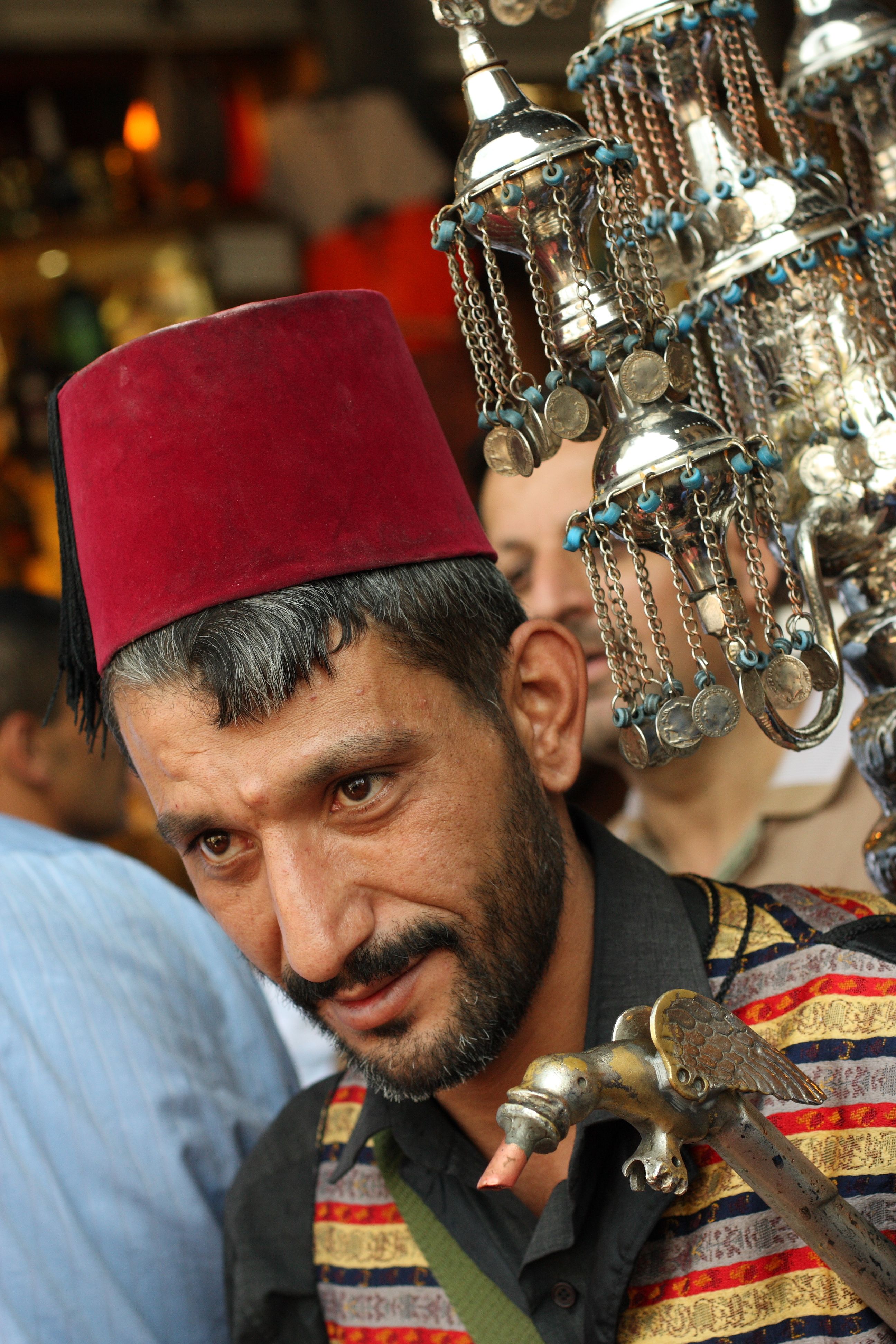
Vendor in Damascus market
Vendor in Damascus market (Photo: By yeowatzup - Souq al-Hamidiyya, Damascus, Syria, CC BY 2.0, https://commons.wikimedia.org/w/index.php?curid=24520340)

This led in the summer of 2026 to a wave of rumors on social media, with users accusing the new Syrian government of having downloaded a watermarked image from the internet. But the truth was historical: the mistake was made back in Assad's days, and the passports simply continued to be issued from existing stock and design.

The original photograph and the image in the Syrian passport
The original photograph and the image in the Syrian passport (Photo: social media)

Governments change, rulers fall, and regimes rise and disappear, but one photograph of an ancient market in Damascus apparently has stronger staying power than all of them.

Ready for more?

Join our newsletter to receive updates on new articles and exclusive content.

We respect your privacy and will never share your information.

Enjoyed this article?

Yes
No
Follow Us:

Unmissable content


Loading comments...

Also of Interest