
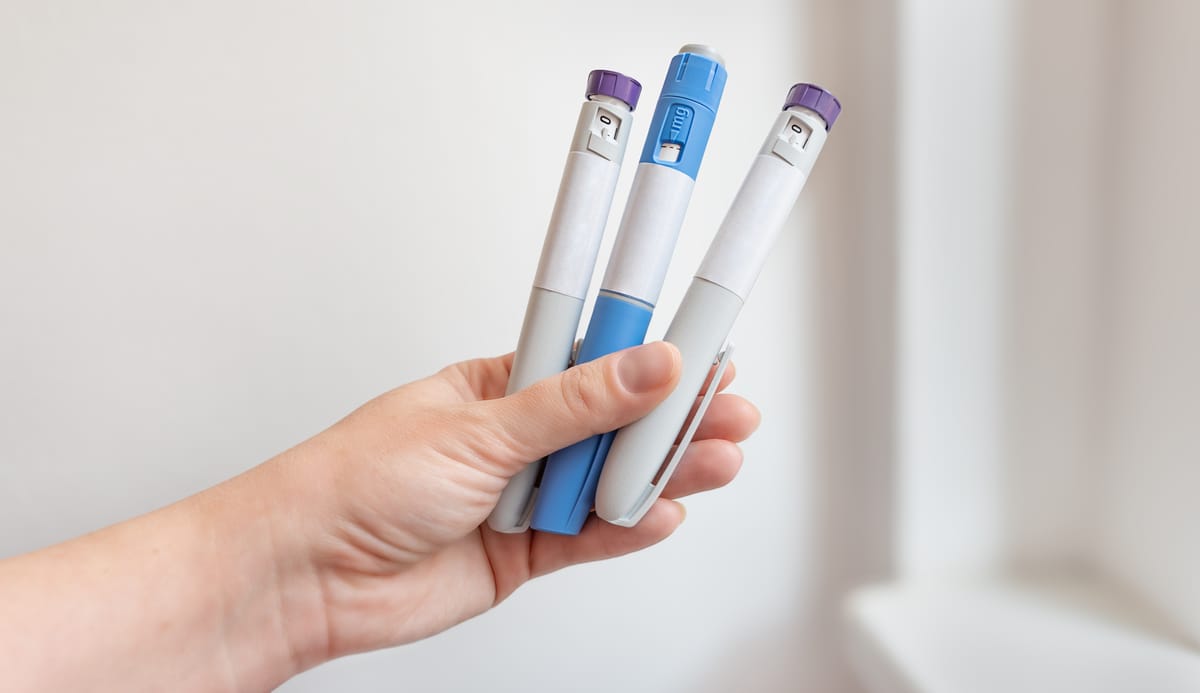
The US Food and Drug Administration is requiring manufacturers of all GLP-1 drugs, the popular class of diabetes and weight-loss medications that includes Ozempic, Wegovy, Mounjaro and Zepbound, to add a warning about a potential increased risk of a rare optic nerve condition that can cause permanent vision loss.
The condition, non-arteritic anterior ischemic optic neuropathy (NAION), occurs when blood flow to the front of the optic nerve is reduced. It typically causes sudden, painless loss of vision in one eye, and the damage can be permanent. The FDA said cases have been reported with every GLP-1 product currently on the market.
The warning will be added to the Warnings and Precautions section of the drugs’ labels, not as a more serious boxed warning. It applies to the entire class, including Rybelsus, Trulicity, Victoza and Saxenda.
The decision is based in part on an FDA analysis of 126 clinical trials involving more than 134,000 patients. Among GLP-1 users, the agency found 6.4 cases of NAION per 100,000 patient-years of treatment, compared with 3.8 among patients on a placebo or other diabetes drugs. A patient-year means, for example, 100,000 people treated for one year, or 50,000 treated for two. In total, the trials identified 15 probable cases: 10 among GLP-1 users and five among patients on a placebo.
The real-world data were more mixed. Observational studies found a statistically significant increase in risk among GLP-1 users compared with patients taking DPP-4 inhibitors, another class of diabetes drugs, but not compared with those taking SGLT-2 inhibitors such as Jardiance. A Cleveland Clinic study of about 220,000 patients with type 2 diabetes found no significant increase. For comparison, the general rate of NAION among adults over 50 ranges from 2.3 to 10.2 cases per 100,000 people per year.
The FDA concluded that there is a “potential increased risk of rare NAION events.” Novo Nordisk, the maker of Ozempic and Wegovy, said available research “does not establish that GLP-1 medications cause NAION.”
The agency said patients with a history of NAION are at higher risk. It advised doctors to consider stopping GLP-1 treatment if signs of the condition appear, “unless the benefits of treatment clearly outweigh the risk.” Patients who experience sudden vision changes, blurring or spots in their field of vision should seek medical attention immediately.
European regulators have already flagged the risk, and Britain’s medicines regulator issued a similar warning in February.