An Iraqi militia commander held in solitary confinement in a Brooklyn federal jail passed coded messages through his family to operatives planning an attack on a British air base housing American forces, federal prosecutors said on Tuesday.
The accusation is laid out in an eight-count superseding indictment unsealed in Manhattan. It charges Mohammad Baqer Saad Dawood al-Saadi, 32, a dual Iranian-Iraqi national, and two co-defendants with terrorism offenses on behalf of Kataib Hezbollah and Iran’s Islamic Revolutionary Guards Corps. The United States has designated both as foreign terrorist organizations.
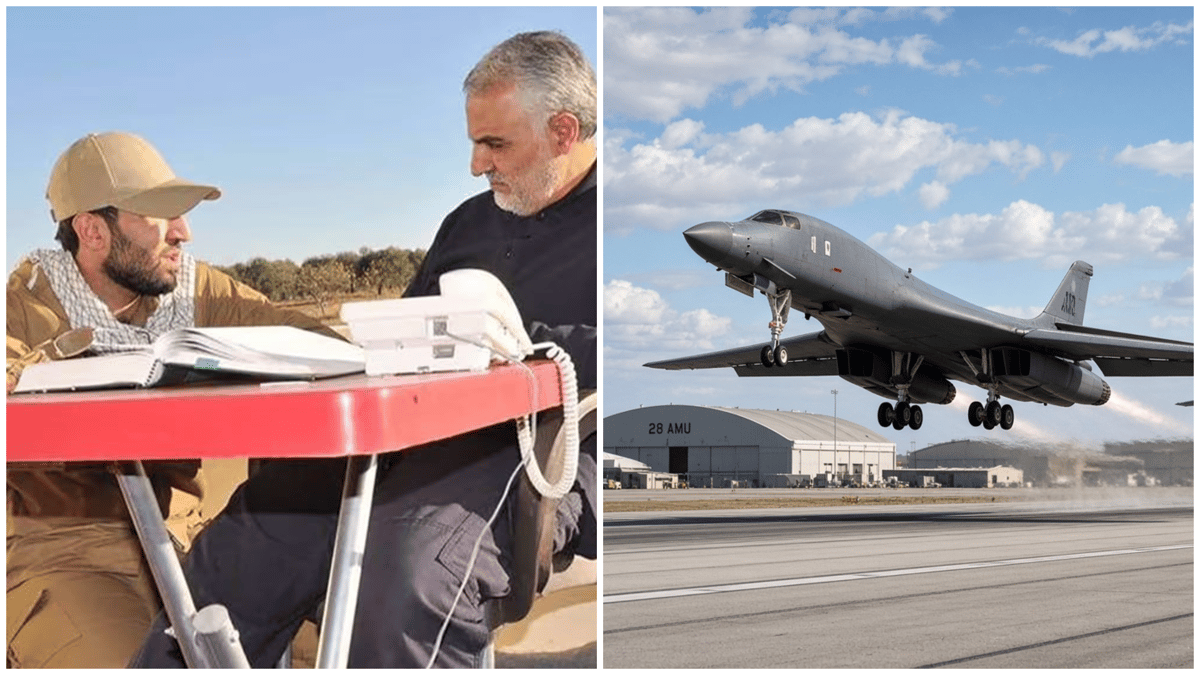
The indictment offers the first detailed account of an episode that had remained largely unexplained since Sept. 27. That morning, British police stopped three vans heading toward Royal Air Force Fairford in western England, where American B-1 bombers were stationed, and arrested their occupants.
According to prosecutors, the plot was organized by Mohammad Ali al-Hassani, 35, an Iraqi national, with Mohsen Mohajeri, 48, an Iranian national and Revolutionary Guards operative. Both were in Iran at the time and relied on a network of contacts in Britain.
On Aug. 22, prosecutors say, Mr. al-Hassani paid a man to film the perimeter of the base. In September, he paid others to buy vans and barrels of fuel, research large quantities of chemical accelerants and buy metal objects that could serve as shrapnel. At his urging, the vans were fitted with custom decals to make them look like vehicles belonging to a fuel delivery company and a swimming pool supply business.
On Sept. 26, according to the indictment, Mr. al-Hassani directed drivers to take the three vans toward the base, staying in frequent contact with them along the way. At least two of the vans hit a security roadblock and were turned back. British authorities recovered all three early the next morning.
Mr. al-Saadi had been in American custody for months by then. Prosecutors say he was arrested abroad around May 1 and brought to the United States, where he was held under special restrictions at the Metropolitan Detention Center in Brooklyn. He was allowed to speak only with his lawyers and immediate family. The FBI monitored and recorded every call.
Prosecutors say he used those calls to stay involved anyway. In conversations with his mother and sister in Iraq over the summer, he referred to Mr. Mohajeri by aliases, said he owed him money and passed along messages about “work.” Prosecutors say al-Saadi regularly used that term to describe terrorist activity. “What are they doing about all our old work?” he asked his sister on a July 30 call, according to the indictment. When he asked whether it had been canceled or merely paused, she replied that “it isn’t canceled.”
On Sept. 24, two days before the vans set out, Mr. al-Saadi asked how “Ali,” his name for Mr. al-Hassani, was doing. He was told that Ali had been transferred to the “International Section.” He then told his family to “give him money so we can do it,” according to the indictment.
Mr. al-Saadi’s lawyers have disputed that reading of the calls. In a court filing, they argued that prosecutors had offered no FBI declaration that anyone used coded language, only “the government’s lawyers’ speculation” about conversations translated from Arabic. Citing concerns about coded language, the government had limited him to a single hourlong call a month. Even so, he took part in nine phone or video calls from June through September, according to prosecutors.
The new indictment also ties the three men to a broader campaign. Prosecutors say they helped plan 18 attacks across Europe in the spring of 2026. All were claimed by a group calling itself Harakat Ashab al-Yamin al-Islamiya, which prosecutors describe as a front for Kataib Hezbollah. Seven of the attacks took place in Britain. They included arsons, explosives and the near-fatal stabbing in London of two Jewish men, one of them a dual American-British citizen.
According to prosecutors, the three men watched one London attack unfold in real time in mid-April, projected from a FaceTime call onto a large screen bearing the group’s logo. Mr. al-Hassani directed the attacker on the call to “light it” and “throw the fourth one,” while Mr. al-Saadi recorded the attack. AP reported that the target was a Jewish charity. The next day, prosecutors say, Mr. al-Hassani directed an attack on a London synagogue by video, telling the attacker to “light it up like a Christmas tree.” Prosecutors also say Mr. al-Saadi tried to carry out attacks in the United States in March and April, including targeting a synagogue in Manhattan.
“Anyone who plans a terrorist plot on a military base housing American servicemembers will be prosecuted by the United States government,” Attorney General Todd Blanche said. Jamie McDonald, the United States attorney in Manhattan, said the defendants had continued coordinating attacks “even after one of their co-conspirators was arrested and placed in federal custody.” The FBI director, Kash Patel, noted that one of the suspects allegedly sent coded messages from behind bars.
The charges include conspiring to provide material support to terrorist organizations, conspiring to bomb a place of public use and financing terrorism. Two counts carry a maximum sentence of life in prison.
Mr. al-Saadi pleaded not guilty in June to earlier charges and called himself a “prisoner of war.” His lawyers did not immediately respond to requests for comment. Mr. Mohajeri and Mr. al-Hassani are not in American custody, and prosecutors did not disclose their whereabouts.
In Britain, seven men were arrested after the Fairford incident and later released on bail. Two were then rearrested on suspicion of assisting Iranian intelligence and charged under the National Security Act. Britain linked the plot to Tehran, which has denied involvement. Days later, the United States withdrew its bombers from the base.
The indictment was unsealed as the American military moved tanker aircraft out of a second British base, RAF Mildenhall, this week, after what The Wall Street Journal described as a new threat from Iran.