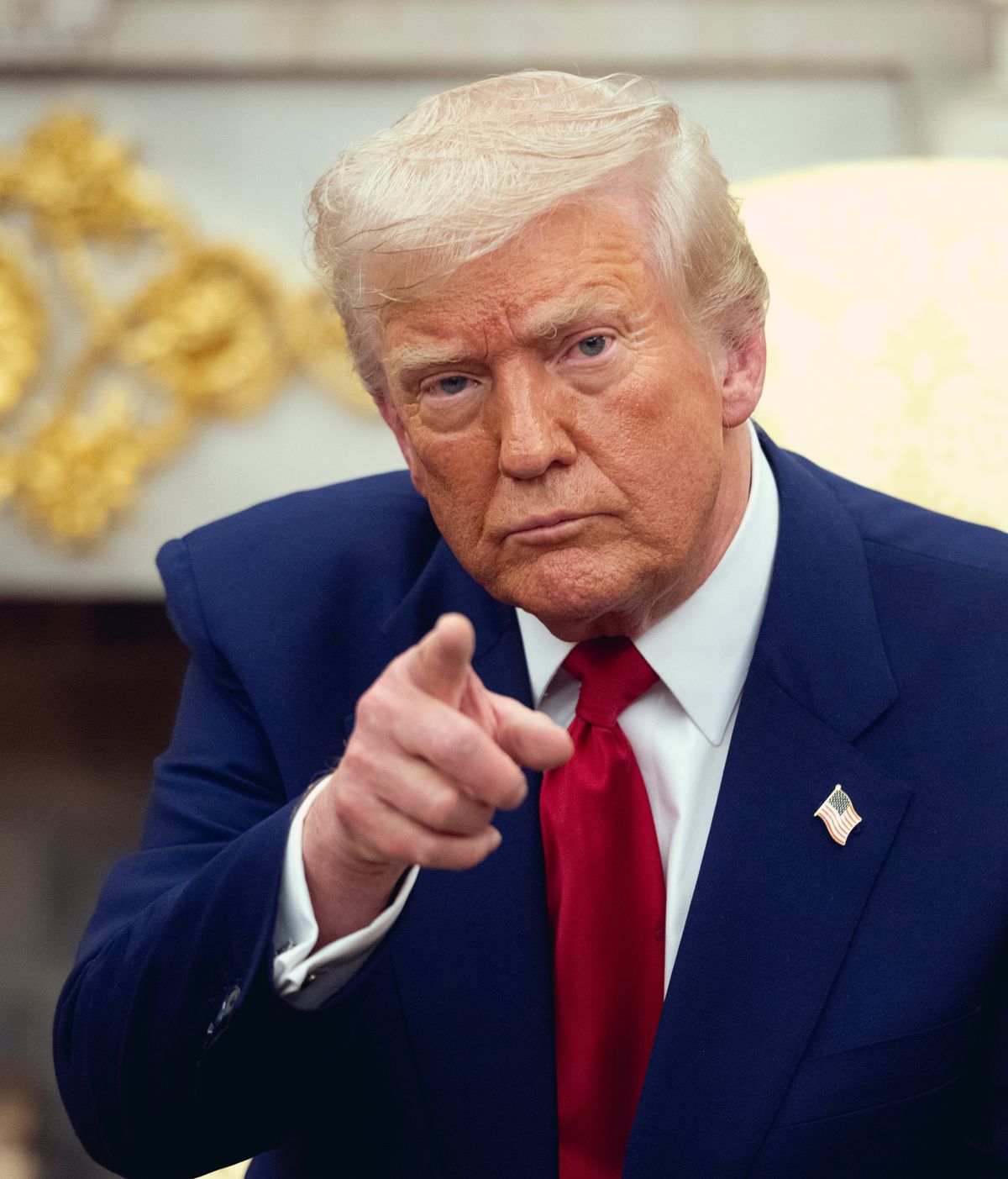
President Donald Trump is considering firing War Secretary Pete Hegseth and CIA Director John Ratcliffe over their internal opposition to the memorandum of understanding reached with Iran, a senior U.S. official told Israel Hayom, in what would represent a dramatic purge of two of his most senior national security officials.
The possible firings reflect a deepening fault line inside the Trump administration over the Iran deal, one that pits the president's own intelligence and defense chiefs against the diplomatic team that negotiated the agreement.
According to Axios, which independently confirmed the internal divisions, Ratcliffe told Trump and senior officials that intelligence gathered by U.S. agencies raised serious doubts about Iran's willingness to make the nuclear concessions Washington is seeking in any final deal. The intelligence showed that Iranian officials were discussing the agreement among themselves in ways that were inconsistent with what they were telling American mediators, a red flag that, according to sources, Ratcliffe described in stark terms to the president.
Ratcliffe was not alone. Hegseth also raised concerns and questions about the MOU in internal meetings, as did Secretary of State Marco Rubio, according to two sources familiar with the discussions.
On the other side of the table: Vice President JD Vance, special envoy Steve Witkoff, and Jared Kushner, all of whom advocated for the deal. According to the Israel Hayom report, Vance has developed particularly close ties with Qatar's leadership, and Gulf state pressure, led by Doha, has been a significant factor pushing the negotiations forward.
The internal battle reportedly became fierce. Israel Hayom reported that several weeks ago a fierce argument broke out among those involved in the negotiations, including between Vance and Trump himself. Hegseth and Rubio, backed by senior officials at the Pentagon and the State Department, argued that the Iranian regime was dying under economic pressure and that intensifying that pressure, rather than offering sanctions relief, was the correct path to either Iranian surrender or regime collapse.
They lost that argument. Trump chose the deal.
Now, according to the senior U.S. official who spoke to Israel Hayom, the president is considering moving to fire those who opposed him in order to eliminate further internal dissent.
Rubio appears to be in a safer position — for now. Despite having raised private doubts, the Secretary of State has been careful not to criticize the deal publicly, defending it before congressional committees even as questions mounted. That public discipline, sources suggest, is what is keeping him off the potential chopping block.
The divisions within Trump's inner circle carry significant implications for Israel. The officials most skeptical of the deal's durability — Ratcliffe, who is sitting on intelligence suggesting Iranian bad faith, and Hegseth, who has been pushing back on the diplomatic track, are precisely those whose removal would leave the administration's Iran policy in the hands of its most deal-enthusiastic figures.
A senior U.S. official familiar with the negotiations told Israel Hayom that when asked about the chances of reaching a final agreement, the response carried more than implied criticism of how the process has been conducted: "Given the way the negotiations have been conducted so far, there is reason to assess that yes."
The MOU's nuclear elements are conditional on a more detailed follow-on agreement to be negotiated over the next 60 days. Vance, Witkoff, and Kushner are expected to meet Iranian officials in Switzerland on Friday alongside Qatari and Pakistani mediators, where the formal signing ceremony is scheduled to take place.
Israel's security cabinet is expected to convene in the coming hours.