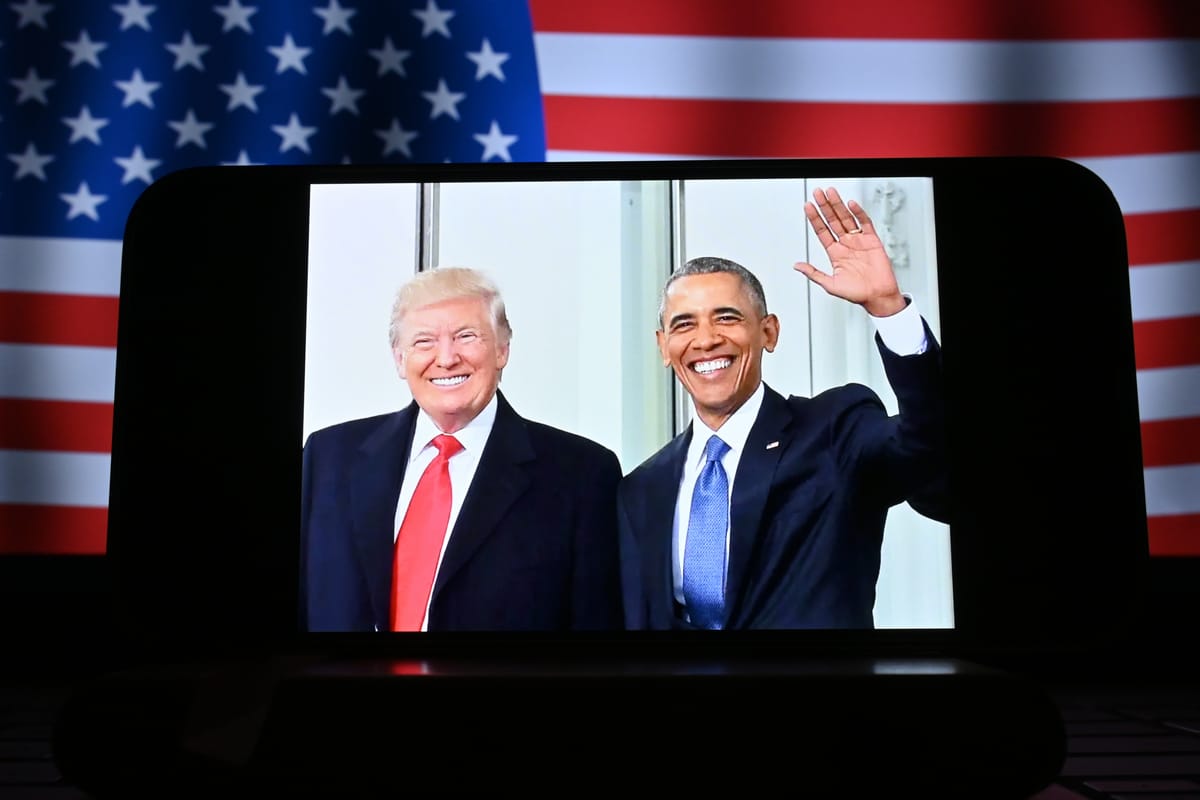
Donald Trump spent eight years calling the Obama Iran nuclear deal the worst agreement in American history. He tore it up in 2018, reimposed sanctions, and promised the world something far better. Now, with his own memorandum of understanding with Tehran signed and a formal deal expected Friday in Switzerland, analysts across the political spectrum are asking the obvious question: which agreement was actually worse?
The answer, by nearly every measurable metric, is Trump's.
What Obama Got
The 2015 Joint Comprehensive Plan of Action, known as the JCPOA, was a 160-page multilateral agreement negotiated over two years with six world powers: the United States, United Kingdom, France, Germany, Russia, and China. Its nuclear terms were concrete and immediately verifiable.
Iran was required to relinquish almost all of its enriched uranium stockpile and dismantle thousands of its most advanced centrifuges. Iran cut its enriched uranium stockpile by 98%, to under 300 kilograms, with enrichment capped at 3.67%, far below weapons-grade. IAEA inspectors were granted continuous access and monitoring authority, with the right to access any suspected covert site within 24 days, a transparency standard beyond anything previously negotiated with any country.
In exchange, Iran received phased sanctions relief and access to frozen assets. Critics put the total value of unlocked assets at around $100 to $150 billion.
The deal had significant weaknesses. It did not restrict Iran's ballistic missile program or its regional proxy activity, including support for armed groups in Lebanon, Yemen, Iraq, and Syria. And it contained sunset clauses, with enrichment limits set to expire after 15 years and centrifuge restrictions lifting after 10, with monitoring of uranium mines and mills continuing for 25 years. Critics, including Trump, argued the sunset provisions gave Iran a guaranteed pathway to nuclear weapons by the early 2030s.
Those criticisms were not wrong. But they describe a deal that at least constrained Iran's nuclear program verifiably, in real time, with inspectors on the ground.
What Trump Got
Trump's 2026 memorandum of understanding was bilateral, negotiated in secret, mediated by Pakistan, and signed without Israel, America's closest regional ally, in the room or even informed of the terms.
On the nuclear file: nothing has been resolved. Trump acknowledged in interviews that Iran will be permitted to continue enriching uranium on its own soil at low levels, identical in structure to the terms of the JCPOA he spent years denouncing. The entire nuclear question has been deferred to 60 days of future negotiations, with no inspectors, no verification, and no dismantlement of any centrifuges. Iran's stockpile of uranium enriched to 60% purity, just short of weapons-grade and far beyond anything permitted under the JCPOA, remains intact. Under the deal, Iran will dilute rather than export that stockpile, keeping it on Iranian soil.
The war handed Iran a weapon far more immediately usable than nuclear weapons: control of the Strait of Hormuz, which ordinarily carries about a fifth of global oil and natural gas supplies. Under the final terms, the United States formally recognized Iranian and Omani joint sovereignty over the strait's maritime navigation services, with Tehran set to collect tolls from commercial vessels after a 60-day grace period.
On money: the JCPOA unlocked an estimated $100 to $150 billion in frozen assets over years of verified compliance. Trump's deal releases $24 billion before negotiations on the nuclear file have even begun, and commits the United States to a $300 billion reconstruction fund for Iran, a figure that dwarfs anything Obama offered by a factor of more than two.
On missiles and proxies: the JCPOA did not address them either. But Trump explicitly promised his deal would. It doesn't. There is no reference to Iran's ballistic missile program or its proxy network anywhere in the memorandum of understanding.
On inspections: the JCPOA had the most intrusive inspection regime ever negotiated. Trump's deal has no inspection provisions at all for the interim period. Whatever verification mechanisms emerge, if any, will be negotiated in the 60-day window.
On multilateral backing: the JCPOA carried the signatures of six world powers and the European Union, creating a unified sanctions architecture. Trump's maximum pressure strategy unraveled the deal's multilateral constraints, and his 2026 agreement is a bilateral U.S.-Iran arrangement. European nations have signaled they will lift their own sanctions only if Iran takes verifiable steps to halt military nuclear development, a conditionality that may or may not align with what Washington agreed to.
The Bottom Line
The truth is that the ultimate consequences of the deal Trump is now considering make it worse than Obama's. Obama negotiated from a position of Iranian weakness, with a sanctions coalition intact and Iran's enrichment program not yet at 60% purity. Trump negotiated after a war that degraded Iranian nuclear infrastructure but also handed Tehran unprecedented economic leverage over global energy markets, a hardened new supreme leader with no religious prohibition against the bomb, and a domestic Iranian political environment in which the IRGC is now dominant and openly calling for nuclear weapons.
When Trump pulled out of the Iran nuclear deal in 2018, Iran expanded its program dramatically, including developing advanced centrifuges that enrich uranium more efficiently and producing 60% enriched uranium, which is just a step away from weapons grade. A new nuclear deal will have to be far more robust. The deal Trump is signing is, by every available measure, less robust.
Obama got centrifuges dismantled, uranium shipped out of the country, inspectors on the ground, and a multilateral coalition. He paid roughly $100 to $150 billion for it.
Trump got a 60-day negotiating window, enrichment continuing on Iranian soil, no inspectors, no dismantlement, Iranian sovereignty over the world's most critical shipping lane, and a $300 billion reconstruction bill. He paid for it with a war.