
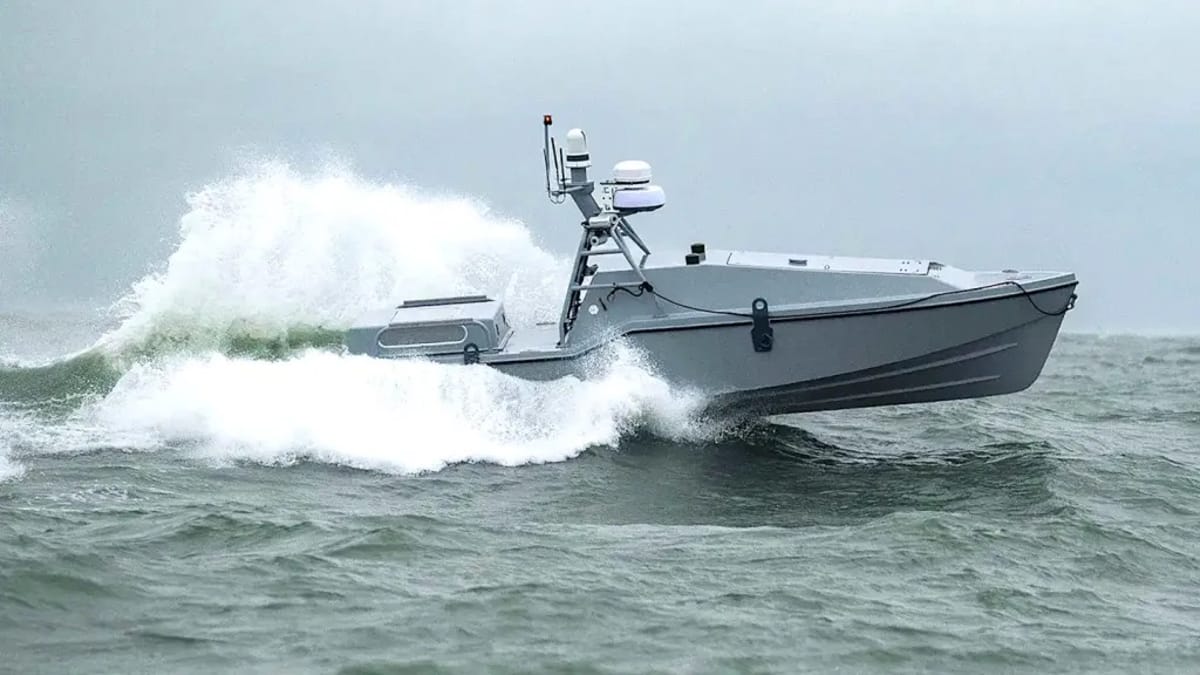
The night between Sunday and Monday this week was a turning point in the world of modern warfare. This was not just another attack from the air, it was the first time in US military history that suicide surface vessels were used in combat.
All at once, and as if out of nowhere, the silence that enveloped the strategic Iranian naval base at Bandar Abbas was shattered by a massive explosion. CENTCOM cameras captured the moment when the unmanned surface vessels (USVs) maneuvered with surgical precision into the facility, scoring direct hits on an Iranian Ghadir-class submarine and maintenance facilities, turning them into a fireball of molten steel.
The vessel that executed the mission is the Saronic Corsair, an unmanned surface vessel measuring approximately 7.3 meters in length. It is a highly sophisticated machine capable of carrying an explosive payload of about 450 kilograms over a vast range of more than 1,000 nautical miles.
The "Corsair" is not just an explosive boat, it is a versatile vessel operated by "Task Force 59," the Fifth Fleet's experimental unit that integrates artificial intelligence into daily operations.
What is a USV?
A USV, which stands for Unmanned Surface Vessel, is essentially a boat or ship that operates without officers and sailors on board. These vessels are controlled remotely via satellites and advanced communication systems, or they operate completely autonomously based on artificial intelligence, independently navigating and bypassing obstacles in the open sea.
Who Uses Them?
The use of USVs is currently divided among three main global forces:
- Western Powers (The US and its allies): The US Navy leads the development of large USV ships for long-range surveillance missions, submarine detection, and even attacks, as seen this week in the first operational use by the US Central Command, CENTCOM.
- Armies in Asymmetric Conflict (Ukraine): Ukraine has become a global pioneer in the massive operational use of cheap and fast USVs, often called "suicide boats." Through them, it has managed to disable a significant portion of Russia's Black Sea Fleet without needing expensive warships of its own.
- The Axis of Evil and Terror Organizations (Iran and the Houthis): Iran develops and distributes armed and suicide USVs to its proxies in the Middle East. The Houthi rebels in Yemen regularly use them in attempts to strike commercial shipping vessels in the Red Sea.
Types of USVs and Their Primary Uses
The world of unmanned surface vessels is composed of a variety of sizes and purposes:
- Reconnaissance and Intelligence USVs: Used for gathering intelligence and scanning the sea. These are quiet vessels, sometimes solar-powered, capable of staying at sea for long months and transmitting a live situational picture of ship movements.
- "Suicide" USVs (One-way): Used for target attack and destruction. This is a fast, small, and low-profile boat, making it difficult to detect on radar, loaded with hundreds of kilograms of explosives and steered directly into the hull of an enemy ship or a port.
- Defense and Mine Detection USVs: Used for securing ports and clearing pathways. These vessels are equipped with specialized sonars that scan the seabed to locate and neutralize naval mines without risking human lives.
- Search and Rescue USVs: Used to assist combatants at sea. These can quickly reach disaster areas, throwing rescue equipment, or picking up survivors, as occurred for the first time last month when an American USV rescued the crew of an Apache helicopter shot down by Iran in the Sea of Oman, marking the first maritime rescue in history conducted by a robot.
Why is the World Transitioning to USVs?
- Preservation of Life and Saving Human Lives: This is the most important advantage. Complex and dangerous naval missions near enemy shores are carried out without risking combatants and sailors.
- Significantly Lower Cost: Building a warship, such as a frigate or destroyer, costs hundreds of millions of dollars and takes years. In contrast, a fast attack USV boat costs a fraction of that amount, and hundreds of units can be produced in a short time.
- Stealth ("Low Signature"): These boats are very small, sometimes made of composite materials, and sail at water level. They are nearly invisible to the radars of large ships, especially at night.
- Asymmetric Warfare: These vessels allow small nations or relatively weaker forces to threaten major naval powers, as seen with Russia and Ukraine, and neutralize their physical advantage.
The State of Israel and the Naval Front
For the State of Israel, the naval front is its central lifeline, as over 90% of the country's trade and imports arrive by sea. The IDF is considered one of the pioneers in the world in developing and using USVs, primarily for defensive purposes.
- Border Protection and Gas Rigs: The Israeli Navy has been operating USVs for years, such as Rafael's "Protector," to patrol along the coasts of Gaza and Lebanon. These vessels are equipped with day and night cameras, public address systems, and remotely controlled weapons, with the goal of preventing terrorist infiltration from the sea and securing strategic gas rigs.
- The Counter Threat: On the other hand, the IDF must deal with Iranian developments delivered to Hezbollah and the Houthis. The Houthis in Yemen have already proven their capability to launch explosive USVs over long distances in the Red Sea, which requires the Navy to constantly update the detection and weapon systems on the new "Sa'ar 6" corvettes.