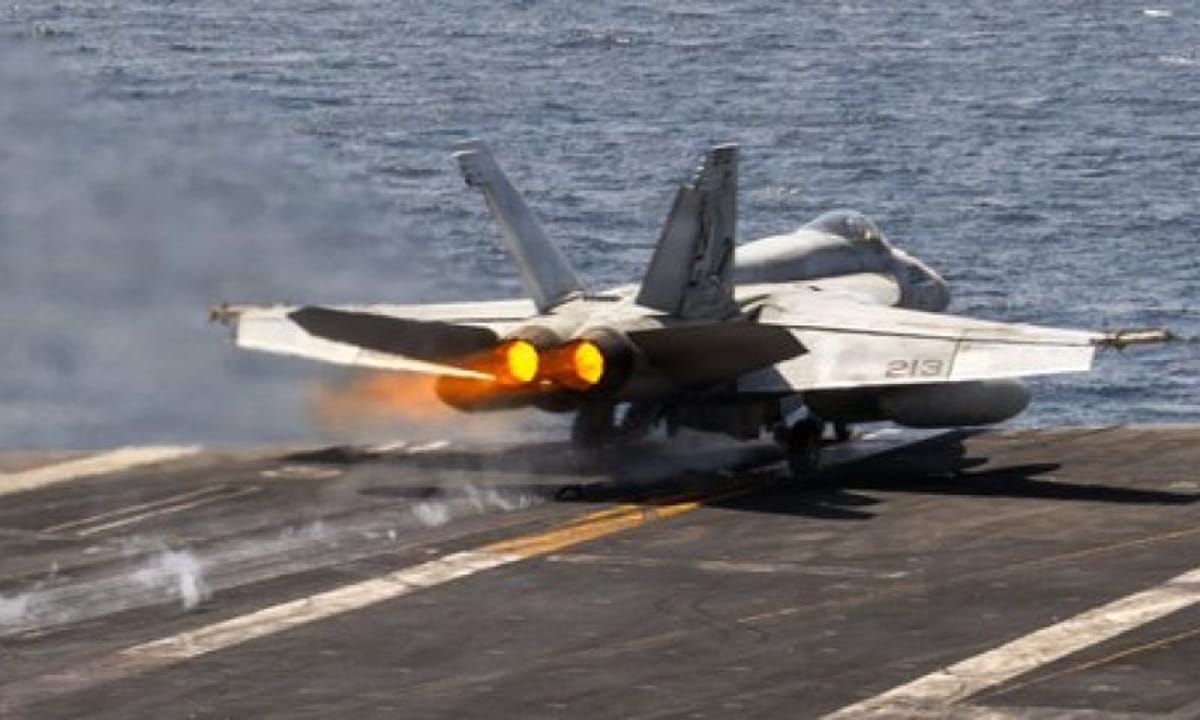
The long simmering geopolitical friction between Washington and Tehran has exploded into a full scale military campaign following a series of coordinated, deep penetration air strikes executed by the United States armed forces. Operating under the direct authorization of President Donald Trump, fighter groups attached to the United States Air Force and Navy deployed precision guided munitions to systematically dismantle high value defensive assets across southern Iran. The heavy bombardment was launched as a direct, punitive response to the previous destruction of an American Apache combat helicopter over the strategic waters of the Strait of Hormuz.
According to formal operational logs released by United States Central Command, the extensive air campaign rolled through three distinct, consecutive waves of tactical bombardment. The precision strike packages successfully located and destroyed a network of advanced surface to air missile batteries, ground control communication facilities, and early warning surveillance radars positioned along the coastline. Defense planners in Washington emphasized that the kinetic action constituted a strictly proportionate response designed to neutralize the immediate threat posed to global commercial shipping and allied deployment groups.
President Trump utilized his public communications channels to deliver a fierce rhetorical broadside against the clerical regime, stating that their military apparatus is currently in a state of absolute and total shambles. The president asserted that significant branches of the Iranian armed forces, specifically their conventional navy and air force wings, have been so thoroughly defeated that they practically no longer exist. Trump added that Tehran has historically operated with a surplus of aggressive rhetoric but possesses very little actual capability, concluding that the traditional bully of the Middle East is finally dead.
The tactical situation on the ground remains highly volatile as international monitoring agencies track subsequent regional escalations. Shortly after the initial American bombs impacted their targets, the Iranian Khatam al Anbiya Central Headquarters ordered a direct ballistic counterattack against Western installations. Paramilitary units attached to the Islamic Revolutionary Guard Corps launched a salvo of long range missiles directed at the Al Azraq Air Base in Jordan, targeting specialized hangars housing advanced F 35 stealth fighters and vital theater command centers.
The scope of the retaliatory exchange extended across multiple sovereign boundaries, drawing neighboring defense forces directly into the active airspace war. The Jordanian military command quickly confirmed that its own defensive grid successfully intercepted and destroyed five of the incoming ballistic warheads before they could impact the installation. Despite these high profile interceptions, hardline political figures in Tehran, including Parliamentary Speaker Mohammad Baqer Qalibaf, insisted that their defense capabilities remain completely intact, warning that their forces stand prepared to deliver an immediate, unyielding response to any further Western incursions.