The framework agreement signed between Israel and Lebanon in Washington may become one of the most consequential diplomatic moves in the region - not because it immediately ends the conflict, but because of what it places in the fine print.
At the center of the agreement is a staged mechanism: Hezbollah and other non-state armed groups must be disarmed, their military infrastructure must be dismantled, the Lebanese army must deploy effectively on the ground, and only then can Israel begin a gradual withdrawal from Lebanese territory.
That is the central point. This is not an automatic Israeli retreat. It is a performance-based framework.
For Israel, that distinction is critical. Previous arrangements in Lebanon often collapsed because they relied on promises, international language, or weak enforcement mechanisms. This agreement attempts to reverse that logic. Israeli withdrawal is not treated as the starting point. It is treated as the result of verified security changes on the ground.
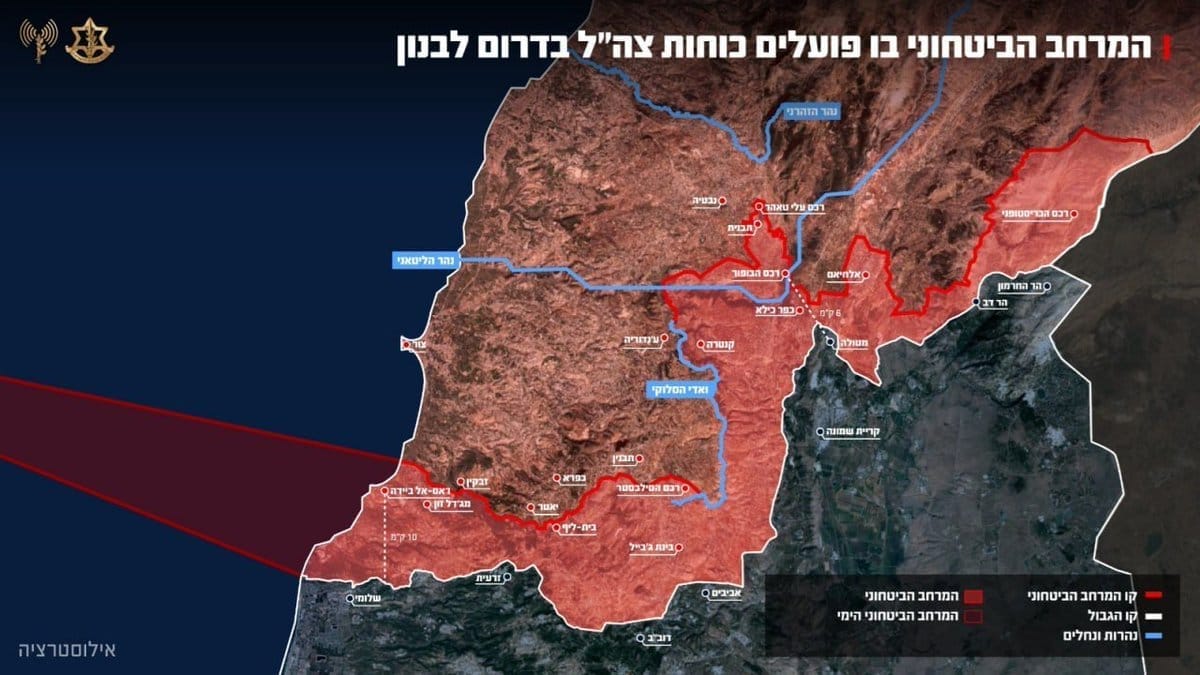
The agreement calls for pilot zones in southern Lebanon where the Lebanese army would gradually assume full security responsibility. In those areas, Israeli forces would only reposition after the disarmament of armed groups and the dismantling of their infrastructure are verified. International reconstruction efforts and the return of Lebanese civilians would then begin under the authority of the Lebanese state.
That structure directly targets Hezbollah’s core political and military model.
For decades, Hezbollah has operated as a state within a state: an armed force, political movement, Iranian proxy, and independent war-making machine inside Lebanon. The new framework challenges that arrangement by requiring Lebanon to restore the state’s monopoly over the use of force. In plain language, Beirut is committing to the principle that only the Lebanese government, through its official security forces, has the authority to decide matters of war and peace.
That is a direct blow to Hezbollah’s claim that it can act in Lebanon’s name without the approval of Lebanon.
The agreement also includes an important Israeli declaration: Israel says it has no territorial ambitions in Lebanon. That matters because it frames Israel’s military presence not as an occupation for its own sake, but as a temporary security requirement created by Hezbollah’s attacks, threats, and military infrastructure.
According to the framework, once the Hezbollah threat is removed through verified disarmament and security arrangements, the need for Israeli military action or presence inside Lebanon would no longer exist.
The American role is also central. The United States is expected to help facilitate a Military Coordination Group and support the verification process. Washington is also tying future assistance to Lebanon to measurable benchmarks, transparency, and continued oversight. That means Lebanon will not receive American backing simply for signing a document. It will have to show results.
The economic side of the agreement is equally important. The framework links Lebanese reconstruction and international support to security implementation. Funds are not supposed to flow to armed groups or entities connected to them. That provision is designed to prevent Hezbollah from turning reconstruction into another tool of political control.
If enforced, this could weaken Hezbollah not only militarily, but also financially and socially.
For Lebanon, the agreement offers a path toward restoring sovereignty and rebuilding destroyed areas under state authority. For Israel, it offers a path toward securing the northern border without withdrawing before Hezbollah is removed. For Washington, it is an attempt to turn military pressure into a diplomatic framework that separates Lebanon from Iran’s regional project.
But the agreement still faces a severe test.
Hezbollah has not disappeared. Iran has not given up its desire to use Lebanon as a forward base against Israel. And the Lebanese state has repeatedly failed in the past to enforce its sovereignty against armed groups.
That is why the agreement’s success will not be measured by speeches in Washington. It will be measured in southern Lebanon: whether Hezbollah is actually disarmed, whether the Lebanese army actually takes control, whether reconstruction money is kept away from armed groups, and whether Israel retains the ability to defend itself if the framework is violated.
The fine print is promising because it finally identifies the real problem: not Israeli withdrawal alone, but who controls Lebanon after Israel leaves.
If the answer is the Lebanese state, the agreement could mark a historic shift.
If the answer is Hezbollah, then the document will become another failed piece of paper in a long history of broken Lebanon agreements.
For now, the framework gives Israel, Lebanon, and the United States a serious test: can Lebanese sovereignty be restored not as a slogan, but as a reality on the ground?