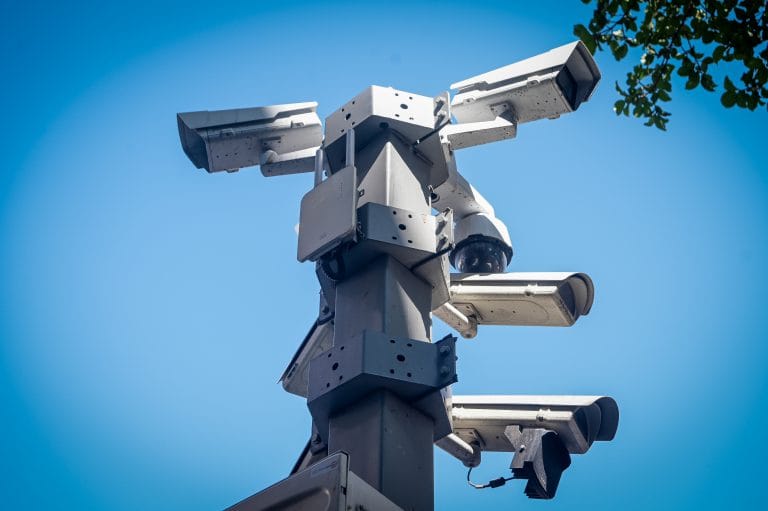

After the Legislation Committee approved today (Monday) the law proposed by Minister of National Security Itamar Ben-Gvir and Justice Minister Yariv Levin to authorize the use of cameras for facial recognition, political reactions continue to pour in.
Knesset member Yulia Malinovsky from Yisrael Beiteinu responded to the law by writing, "I have no confidence in this government, especially when it comes to dealing with tools that can jeopardize the security of the State of Israel and the privacy of its citizens. When it comes to biometric databases and such sensitive information, we need to handle it with the utmost caution."
Malinovsky continued: "The system that needs to oversee all of this is the judicial system that the current government is trying so hard to undermine. In the 20th Knesset, I introduced a law on the biometric database, where data retrieval in cases of serious crimes would only be allowed with the approval of a district court president. Given the recent actions of this government, soon the authority to access the data will be entrusted to Ben-Gvir.
"When legislating such a law, it should be done with careful consideration and with a thousand layers of protection, and extreme caution should be exercised in its use because there is a serious concern here about infringing on privacy, misuse by unscrupulous hands, and leaking information to our enemies. I have the feeling that the ministers who approved the law in the Legislation Committee rushed it through without deep thought about the consequences, and I am not at all sure about their true intentions," concluded the Knesset member.
Gilad Kariv: "We cannot separate the proposal from Ben-Gvir's attempt to be the de facto chief"
Knesset member Meirav Ben-Ari from the Yesh Atid party tweeted on her Twitter account: "Let's get things straight, the LPR Cameras Law is a law written by our government, neither Levin nor Ben-Gvir. The law is supposed to assist the police in enforcing the law and saving the lives of law-abiding citizens. Our government approved it, Pnina Tamano-Shata opposed it, and then it came to the Knesset for discussions and amendments, just like in a normal Knesset and a reasonable government. Here, both of these things don't exist."
Labor Party Knesset member Gilad Kariv also responded: "Technology is advancing rapidly – that's true. The fight against crime is an urgent national need – that's also true. But there are a few more things that are true: In the proposal for the biometric cameras law, there is no need for judicial approval. All decisions are made within the police. The law proposal does not include serious oversight mechanisms. The timeframes for activating the cameras are very extended. The proposal allows for extensive use of biometric data retrospectively. The Privacy Protection Authority, operating under the law, opposes the law proposal."