
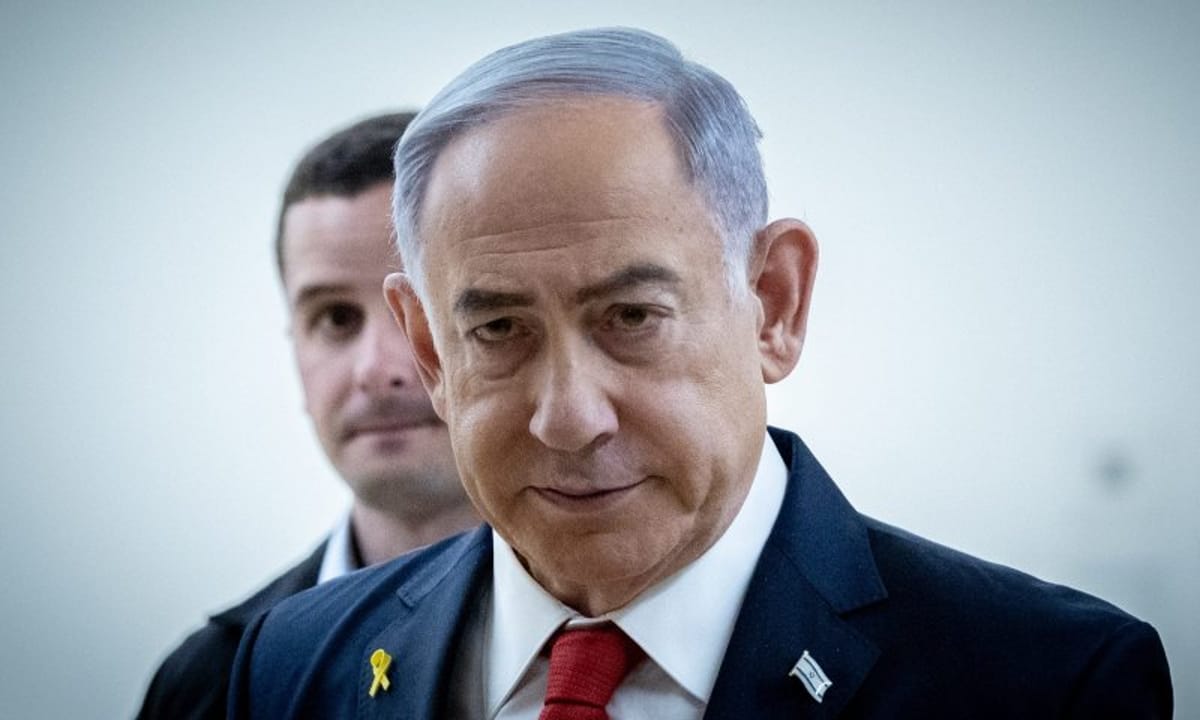
Benjamin Netanyahu can complain only to himself.
For more than a decade and a half, he built his political identity around the Iranian threat. He warned the world, lectured Congress, displayed diagrams at the United Nations, and presented himself as the one Israeli leader who truly understood Tehran’s nuclear ambitions. And yet, when the decisive moment came years ago, Iran was not stopped.
There are reports that Netanyahu and then-Defense Minister Ehud Barak seriously considered striking Iran in 2010 and 2011, but were blocked by military and cabinet opposition. Barak later said the IDF was not ready in 2010 and that key ministers opposed the move in 2011. That history does not absolve Netanyahu. It sharpens the indictment. Because whether he hesitated, was blocked, calculated too carefully, or failed to build the political and military conditions for action, the result is the same: Iran was allowed to reach a far more dangerous position. And Israel became more dependent on America to complete missions it might once have been able to handle more freely.
There is always a price for American help.
Right now, one of those prices appears to be Lebanon.
The reported Trump-Netanyahu blowup over Lebanon was humiliating, but it was not random. Axios reported that Trump became angry at Netanyahu over Israeli escalation in Lebanon, fearing it could damage U.S. negotiations with Iran. Reuters also reported that Trump said Israel would not send troops into Beirut after speaking with Netanyahu, while also communicating indirectly with Hezbollah through intermediaries. This is the cage Netanyahu built for himself.
If Israel cannot act independently against Iran, then Israel must accept American conditions. If America is negotiating with Iran, then Iran will demand a price. And if Lebanon is one of the fronts Iran can use to pressure Washington, then Israel’s northern border becomes part of the American-Iranian bargaining table.
That is not sovereignty. That is dependency.
Netanyahu’s defenders will say his caution eventually brought America into the Iran campaign. Perhaps. There is an argument that Netanyahu’s long game forced the United States to act when the threat became undeniable.
But caution that brings American action is not the same as strategy that guarantees Israeli security. After October 7, that distinction matters. A prime minister who cannot deliver the necessary security result will not be judged by speeches, warnings, or tactical victories. He will be judged by whether Israeli citizens are safer. And today, the answer is not obvious.
Hezbollah is still alive. Hamas has recovered significant strength in Gaza. Iran is negotiating hard with Washington. Israeli soldiers are still dying. The war continues with no clear end. Israel holds territory but often fails to translate it into permanent achievements. It conquers, withdraws, returns, strikes, pauses, and begins again.
Beaufort again.
Rafah again.
Iran again.
Lebanon again.
The pattern is no longer victory. It is repetition.
That is why the Trump leak matters. It revealed something deeper than bad chemistry between two leaders. It revealed the hierarchy. Trump spoke like the senior partner disciplining a dependent ally. The message was brutal: do not cross the line, do not embarrass me, do not ruin my negotiations, do not force my hand. The leak suggested Trump believes Netanyahu owes him personally, politically, even legally. It also carried the implication that Netanyahu himself has become part of Israel’s global problem: a leader whose conduct has helped make Israel more isolated. That is a devastating message. But it is also a lesson.
Netanyahu will learn from this leak to behave carefully. Not to break boundaries. Not to challenge the American president. Not to imagine that battlefield escalation in Lebanon is his decision. If Israel had full military freedom, this would matter less. If Israel had a prime minister who understood the strategic importance of preserving that freedom, it might not matter at all.
But Israel does not have that freedom. And Netanyahu, after years of managing threats instead of resolving them, now finds himself needing the very American permission he spent his career pretending Israel could live without.
That is the real humiliation.
Not that Trump shouted.
But that Netanyahu had to listen.