Eruv
A comprehensive guide to the eruv, the symbolic boundary that enables observant Jews to carry items in public spaces on the Sabbath
An eruv is a ritual enclosure used in Jewish law to extend the private domain for the purpose of carrying objects on Shabbat (the Sabbath). According to traditional Jewish law, carrying items from a private domain to a public domain, or vice versa, is prohibited on Shabbat. The eruv creates a symbolic boundary that transforms a public area into a shared private domain, allowing observant Jews to carry necessary items such as house keys, prayer books, medications, and push baby strollers within its boundaries during the Sabbath.
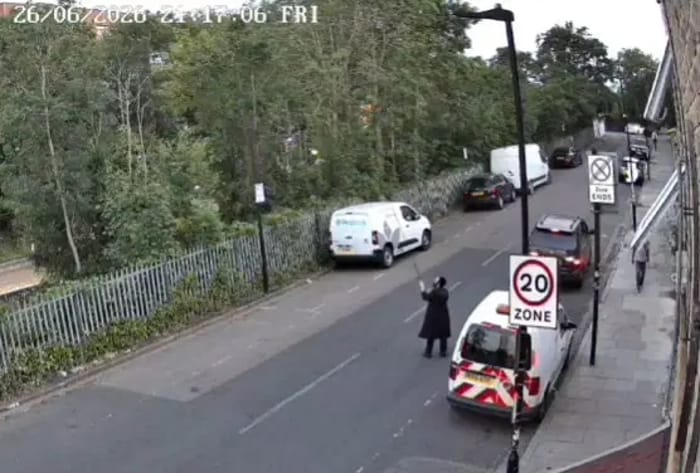
The construction of an eruv typically involves using existing structures such as walls, fences, and utility poles, connected by wire or string to create a continuous perimeter around a designated area. This boundary must meet specific halachic (Jewish legal) requirements, including having doorway-like structures at intervals and being inspected regularly to ensure its integrity. Modern eruvin (plural of eruv) often span entire neighborhoods or communities, incorporating natural boundaries like rivers or railway lines alongside man-made structures.
Eruvin have become increasingly common in urban and suburban areas worldwide, from major cities like London, New York, and Los Angeles to smaller communities seeking to accommodate their Orthodox Jewish populations. The establishment of an eruv often requires collaboration between Jewish communities and local authorities, as the boundary may need to cross public property or utilize municipal infrastructure such as telephone poles and street signs.
The presence of an eruv significantly impacts the quality of life for observant Jewish families, particularly those with young children, elderly members, or individuals with disabilities. Without an eruv, these community members might be unable to attend synagogue services or participate in community activities on Shabbat, as they cannot push wheelchairs, walkers, or strollers in public areas. The eruv thus serves as an important tool for community inclusion and religious observance.
Eruv projects sometimes generate public discussion and debate, both within Jewish communities and in broader society. Questions may arise regarding the use of public infrastructure, the visibility of eruv markers, and the relationship between religious accommodation and secular public space. Jewish communities typically work closely with municipal officials, utility companies, and neighbors to address concerns and ensure that eruv construction complies with local regulations while respecting community sensitivities.
The maintenance of an eruv requires ongoing commitment and resources. Communities typically establish eruv committees responsible for weekly inspections, particularly before each Shabbat, to verify that the boundary remains intact and halachically valid. Weather events, construction projects, or infrastructure changes can compromise the eruv's integrity, requiring prompt repairs to ensure its continued functionality for the community.