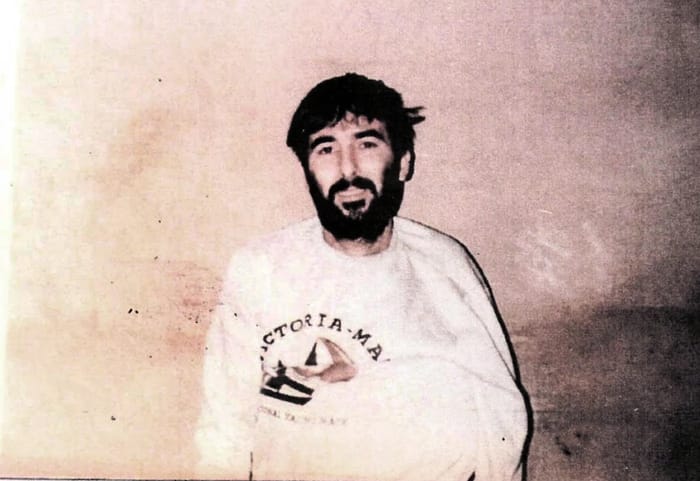
Ron Arad
Israeli Air Force navigator captured in Lebanon in 1986 whose fate remains one of Israel's most enduring missing persons cases
Ron Arad is an Israeli Air Force navigator who has been missing since October 16, 1986, when his aircraft was shot down over Lebanon during a combat mission. Born in 1958, Arad was 28 years old at the time of his capture and held the rank of Lieutenant Colonel. He was married to Tami Arad, and the couple had one daughter, Yuval, who was just one year old when her father disappeared. His case has become one of Israel's most prominent and emotionally charged missing persons cases, spanning nearly four decades.
The circumstances of Arad's disappearance began when his F-4 Phantom jet was hit by anti-aircraft fire during a mission against Palestinian targets in southern Lebanon. After ejecting from the aircraft, Arad was captured by the Amal militia, a Lebanese Shiite organization. Initial photographs and letters confirmed he was alive in captivity, but his trail went cold after he was reportedly transferred to Iranian-backed groups in 1988. Despite extensive diplomatic efforts, intelligence operations, and negotiations over the years, his whereabouts and condition remain unknown.
The Ron Arad case has had profound implications for Israeli military policy and national consciousness. His disappearance has influenced Israel's approach to prisoner exchanges, intelligence gathering in Lebanon, and military operations in the region. Successive Israeli governments have made locating Arad or determining his fate a priority, conducting numerous covert operations and diplomatic initiatives. The case has also affected Israeli military doctrine regarding pilot rescue operations and the treatment of missing soldiers.
Over the decades, various reports and alleged sightings have emerged, but none have been definitively verified. Intelligence agencies have pursued leads across the Middle East, particularly in Lebanon, Syria, and Iran. The uncertainty surrounding Arad's fate has made his case particularly difficult for his family and the Israeli public. His wife Tami became a prominent advocate for missing Israeli soldiers, and his daughter Yuval grew up in the shadow of her father's disappearance.
The emotional and political significance of the Ron Arad case extends beyond a single missing soldier. It represents Israel's commitment to its military personnel and the principle of leaving no soldier behind. The case has been invoked in numerous prisoner exchange negotiations and has influenced Israeli policy decisions regarding military operations and intelligence priorities in Lebanon. It remains a symbol of unresolved national trauma and the human cost of regional conflict.
International organizations, including the Red Cross, have been involved in efforts to locate Arad or obtain information about his fate. Despite these efforts and changing political dynamics in the Middle East, no conclusive information has emerged. The passage of time has made the case increasingly complex, with many individuals who might have had knowledge of Arad's fate having died or become unreachable.