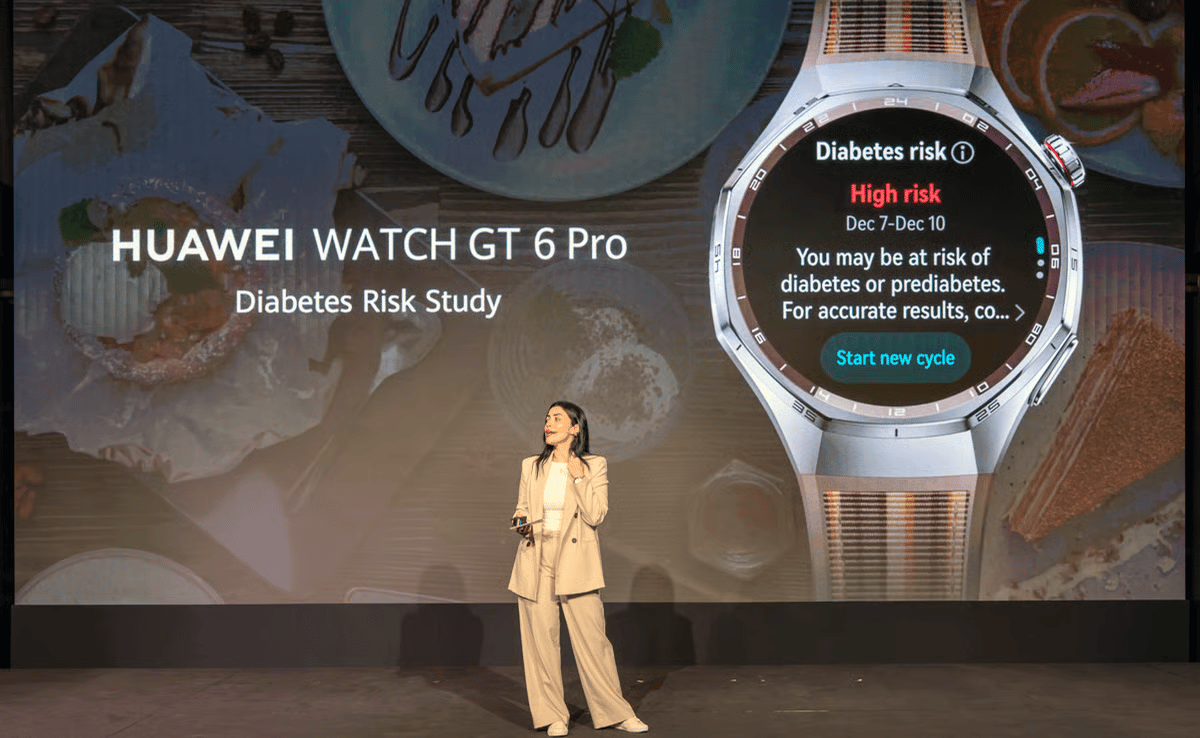
Huawei has expanded its wearable lineup with the Watch GT 7 series and the Watch D3, a smartwatch focused on blood-pressure measurement. At the same time, a senior company executive confirmed publicly for the first time that Huawei is developing a device to test blood-sugar levels, after roughly four years of research and development.
The new products were unveiled at Huawei's global launch event in Munich. Through them, the company is placing growing emphasis on health monitoring, alongside sports, fitness and daily tracking capabilities.
Watch GT 7 series: sport, design and health metrics
The Huawei Watch GT 7 series includes the GT 7 and GT 7 Pro models, aimed at users looking for a sports smartwatch with long battery life and a wide range of activity and health metrics. According to company announcements and reports from the launch, the series includes more than 100 workout modes, with emphasis on winter activities, cycling and AI-powered training analysis.
The watches incorporate Huawei's TruSense health platform, which provides data such as heart rate, sleep quality, blood oxygen saturation, stress level and additional metrics. The company also highlights risk-assessment tools for conditions such as diabetes and coronary heart disease, but it is important to distinguish: these are risk assessments and health insights, not direct glucose measurement or medical diagnosis.
In Europe, recommended pricing for the series starts at around 299 euros, though price and availability vary by country and model.
Watch D3: blood-pressure measurement from the wrist
Alongside the GT 7 series, Huawei launched the Watch D3, a new generation of its blood-pressure monitoring watch. Unlike most smartwatches, which use optical sensors primarily for heart-rate measurement, the D3 includes an inflatable airbag in the strap. The mechanism applies pressure to the wrist in a manner resembling a blood-pressure cuff, allowing direct measurements to be taken.
The watch supports 24-hour ambulatory blood-pressure monitoring, meaning repeated measurements throughout both day and night. The main innovation in the new model is the ability to measure before and after physical activity, intended to help users track blood-pressure response to exertion.
According to Huawei, the Watch D3 has a thickness of 11.3mm and weighs around 40 grams, and offers up to six days of battery life in regular use. Activating continuous 24-hour blood-pressure monitoring may significantly shorten battery life, to approximately one day. The watch carries CE marking under European Union medical-device regulations, but its actual availability depends on each country and the approvals of local regulators.
The blood-sugar device: first confirmation, few details
The most intriguing development is not the watch already unveiled, but a future device for blood-sugar testing. Yu Chengdong, CEO of Huawei's consumer business group, said at a recruitment event at Peking University that the company's blood-sugar testing technology has undergone four years of research, until it reached a level he described as acceptable and commercially viable.
However, Huawei has not yet revealed the form of the product, how it operates, its level of accuracy, launch date or the countries in which it will be sold. It is also unclear whether this is a dedicated device, an accessory, or technology that will be integrated into a smartwatch in the future.
The subject is particularly sensitive because blood-sugar measurement is a regulated medical field. For a product to present reliable glucose measurements for medical use, it will need to undergo clinical testing and appropriate regulatory approvals. Therefore, until full specifications are disclosed and the device's performance is independently verified, Huawei's existing watches should not be seen as a substitute for a home glucose meter, continuous glucose monitor or medical guidance.
What comes next?
The confirmation from a Huawei executive provides for the first time an official basis for reports of the company's activity in blood-sugar monitoring. If the product does reach the market, it may mark a significant step in the attempt to integrate advanced medical monitoring capabilities into consumer wearable products.
At this stage, the Watch GT 7 models are aimed primarily at fitness, sport and general health tracking, while the Watch D3 is focused on blood-pressure monitoring through a physical mechanism in the strap. Blood-sugar measurement remains a promise for the future, particularly interesting, but one for which the most important details are still missing: technology, accuracy, regulation and launch date.