He was already crying before the crowd had finished roaring.
Lionel Messi used the front of his white-and-blue, sweat-soaked jersey to wipe the tears from his eyes, a flood of emotions cracking his usually calm, confident demeanor after he gave Argentina an early lead in its World Cup opener against Algeria.
Then he scored again. And again.
By the time a crowd of 69,045, tilted heavily toward the three-time World Cup champions, rose to give him a standing ovation as he walked off the pitch, Lionel Messi had done something he had never done in 23 years and six World Cups: scored a hat trick on the sport's biggest stage. He had also, in the space of 76 extraordinary minutes, tied the greatest scoring record in the history of the men's game.
This was not just a football match. It was a farewell letter, written in goals.
The Numbers That Rewrote History
Let's start with the cold facts, because they demand to be stated plainly.
Messi's first goal of the night came at 17 minutes and equalled Kylian Mbappe's 14 goals at a World Cup, with the Frenchman having eclipsed the Argentine just hours earlier in France's 3-1 win over Senegal in New York. Messi, of course, was not going to be outdone.
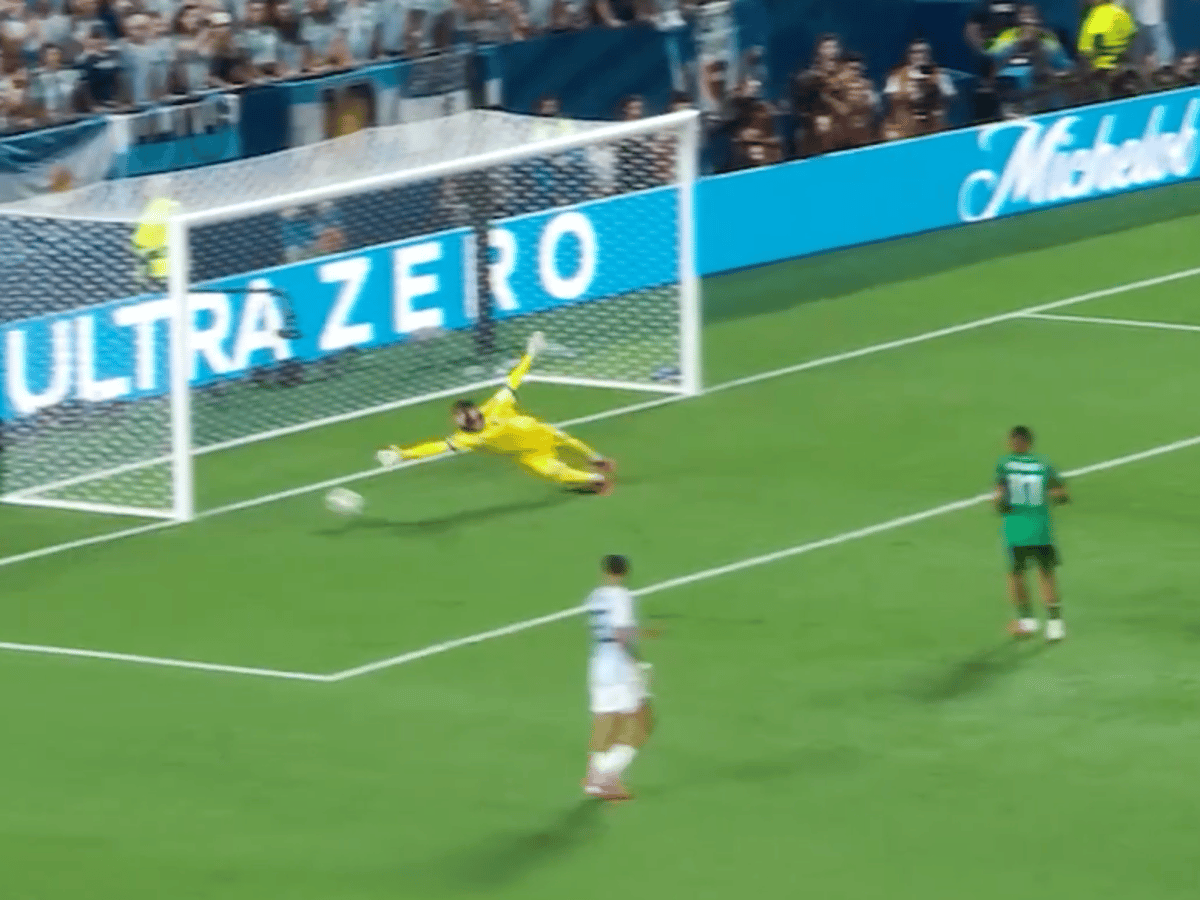
He netted his second to the right of the goal after Algerian keeper Luca Zidane offered a rebound, making it Messi's 15th World Cup goal. No sooner had Messi equalled the Brazilian Ronaldo's record than he completed his hat-trick and matched Miroslav Klose's record of 16 World Cup goals. It was also his 120th international career goal.
The match was also his 200th international appearance for Argentina, making him only the third male player in history to reach this incredible milestone, joining Cristiano Ronaldo with 228 caps and Bader Al-Mutawa with 202.
The Argentina captain was eventually substituted, and walked off the pitch as the crowd gave him a standing ovation. Messi, who turns 39 next week, was Argentina's youngest World Cup scorer and is now the oldest World Cup hat-trick scorer, a title he snatched from Ronaldo, who scored three times against Spain in 2018.
Messi also became the first player to score in five consecutive World Cup matches, with the latest being only his first in the 2026 edition.
Argentina's 3-0 win also moved Messi level with Klose for the most victories in World Cup history with 17.
Mbappé scored twice earlier that same evening and broke France's all-time World Cup scoring record. Erling Haaland scored twice for Norway. On any other night, either performance would have led every sports broadcast on earth. On June 16, 2026, they were footnotes.
The Tears Nobody Expected
But it was not the records that will define this night in memory. It was the tears.
Speaking to reporters during his post-match press conference, Messi was asked about the raw emotion he displayed. His answer was quiet and striking: "It was a matter totally unrelated to sports. I went through some difficult, complicated days."
He added: "I went through some difficult days, but I'm grateful to the entire delegation and my teammates because they were always by my side, giving me a lot of strength to help me get through it."
He kept the specific details private. He is entitled to that. But the image, the greatest player in the history of the sport, pressing his jersey to his eyes on the biggest stage on earth, carrying something only his inner circle knows, is one that will outlast every record he set on Tuesday night.
Fans around the world read it differently. Many interpreted the emotion as Messi acknowledging that this World Cup will indeed be his last in his career, that the goal could potentially be one of the last World Cup goals of his life.
Perhaps. Perhaps it was simply a man carrying a private weight, who found release in the only place he has ever truly been able to set it down: a football pitch, with a ball at his feet, and the world watching.