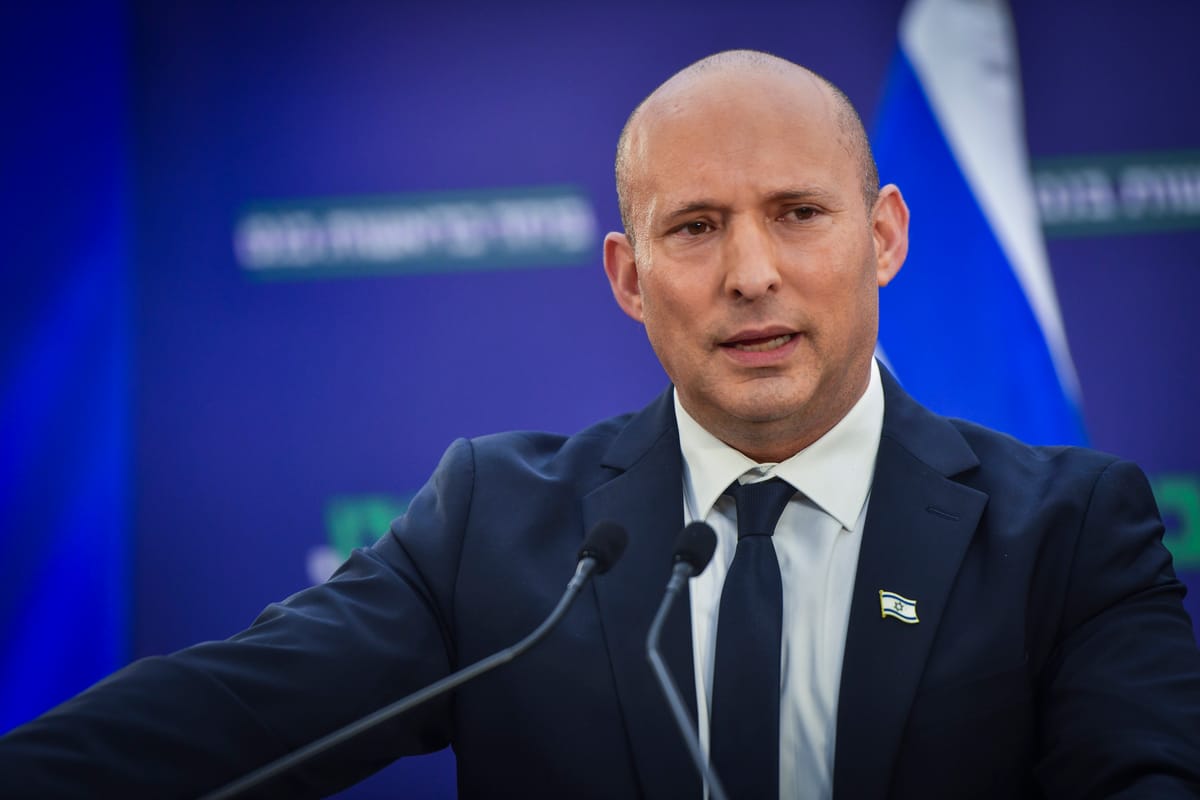
In Israeli politics, groundbreaking moves have a way of boomeranging back on their architects. Naftali Bennett, who is aiming with all his might to return to the Prime Minister's Office, may soon discover that the biggest obstacle in his path is one he dug himself.
To understand the trap Bennett now finds himself in, we need to revisit the maneuver that brought him to the premiership in the first place. Holding just six Knesset seats, Bennett identified the deadlock and the burning desire in the center-left camp to oust Benjamin Netanyahu. The rule he set for his future partners was simple and sharp: if you want to replace the government, the price is the premiership for me. In the end, the seemingly absurd scenario materialized, and Bennett served as prime minister on behalf of a tiny party in a rotation government with Yair Lapid.
But historic moves carry a long-term price. By agreeing to, and demanding, the role of prime minister with only six mandates, Bennett established a dramatic political precedent: the leader of the largest party in a coalition no longer holds an automatic right to lead the country.
Now that precedent is returning to his doorstep and completely reshaping the bloc's calculus. Bennett may present impressive poll numbers and aspire to lead the camp, but the rules of the game he himself wrote are now working against him. The day after the election, every potential partner in the bloc will argue, and justifiably from their perspective, that there is no obligation whatsoever to grant prority to whoever holds the largest faction.