From Aid to Trade — The Real Conversation
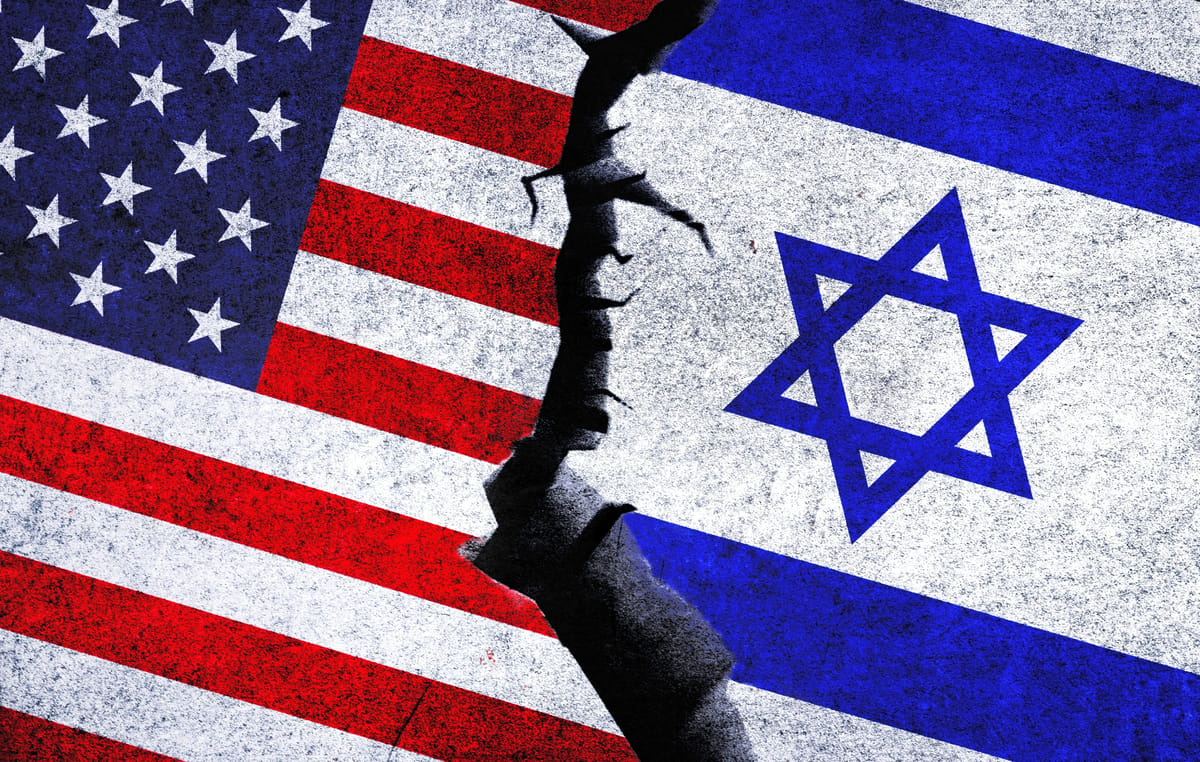
Israel's Defense Ministry and the Trump administration have launched formal talks on a new security cooperation framework to replace the current ten-year memorandum of understanding signed under the Obama administration, which expires in 2028. US Ambassador to Israel Mike Huckabee signaled the direction of travel earlier this week, writing on X that a new MOU with Israel "ends aid & will be based on trade."
Republican Reps. Marlin Stutzman of Indiana and Abe Hamadeh of Arizona introduced a resolution calling for the phased elimination of the $3.8 billion in annual US military aid to Israel, replacing it with a framework centered on joint defense cooperation, co-development, co-production, and mutual investment. The proposal carries Netanyahu's explicit backing, following a May 27 meeting in Jerusalem between Netanyahu and the two lawmakers.
National security officials in the Trump administration are actively discussing the details of a possible new arrangement, though Israel would still be expected to benefit from US support through other channels, including procurement contracts, joint development programs, and industrial cooperation.
What Trump's Team Really Thinks
The picture inside the Trump administration is more complicated than the public statements suggest. The debate comes amid eroding public support for Israel in the United States, including among younger Republicans, with a recent Pew Research Center survey finding that 60% of Americans hold an unfavorable view of Israel, up from 53% the previous year. Among Republicans under 50, the share with an unfavorable view rose to 57%.
Trump himself has not directly addressed the aid issue publicly, but has hinted more than once that he views the money America gives Israel as something for nothing. Asked last April whether Israel should get relief from his "Liberation Day" tariffs, Trump answered: "We help Israel a lot. You know, we give Israel $4 billion a year. That's a lot."
Netanyahu, for his part, has not adopted critics' arguments outright but is grudgingly accepting the fact that the mood in Washington is changing. The wide bipartisan support for military aid Israel once enjoyed is gradually evolving into bipartisan opposition, with Trump being opponent number one. Better, the calculation goes, that Israel accept the inevitable and win points with Trump by taking the lead on the issue.
One proposed formula, floated by experts on the US-Israel relationship, would have Israel pass a buy-American law equal to the level of annual aid and commit its sovereign wealth fund to investing in the Nasdaq, a MAGA-friendly structure that reframes the relationship as mutual economic benefit rather than one-sided American charity.
The Harder Question
The Goldstein post, whatever its merits as history, glosses over a more difficult present-day reality. Former US Ambassador to Israel Martin Indyk has suggested the US-Israeli relationship "would be a lot healthier without this dependence" - but experts note that Israel today is fighting on multiple fronts while simultaneously needing to rebuild its missile and ammunition stocks after two years of sustained warfare.
The IDF not only has to replenish its depleted stockpiles but is also expanding its manpower amid continued anxiety about regional threats, while Netanyahu seeks to boost defense spending by $80 billion over the next decade above pre-war levels. The idea of Israel unilaterally walking away from $3.8 billion in annual support at precisely this moment strikes most serious analysts as a fantasy.
What is not a fantasy is the structural transformation now underway. Both governments are moving, quietly and deliberately, toward a relationship built less on American largesse and more on mutual strategic interest. Whether that transition can be managed smoothly, particularly as Iran missiles continue to fall on Israeli cities, remains the open question neither Jerusalem nor Washington has fully answered.